Conditions of Production
2024 - present
In September 2020, Oleg was accepted into the MFA program at Stanford University and moved to the United States in January 2021. For the next four years he studied and worked in California. During this time, Russia underwent seismic shifts in both its domestic and foreign policy, fundamentally altering the country's social and political landscape.
Returning to his hometown of Saint Petersburg in August 2024, Oleg now experiences his familiar surroundings with fresh eyes, observing a reality that feels both new and unsettling. His ongoing project, provisionally titled Conditions of Production, is an attempt to develop a new visual and photographic language while continuing to point out the abnormality of the present historic moment.


Thousand Yard Stare
2024
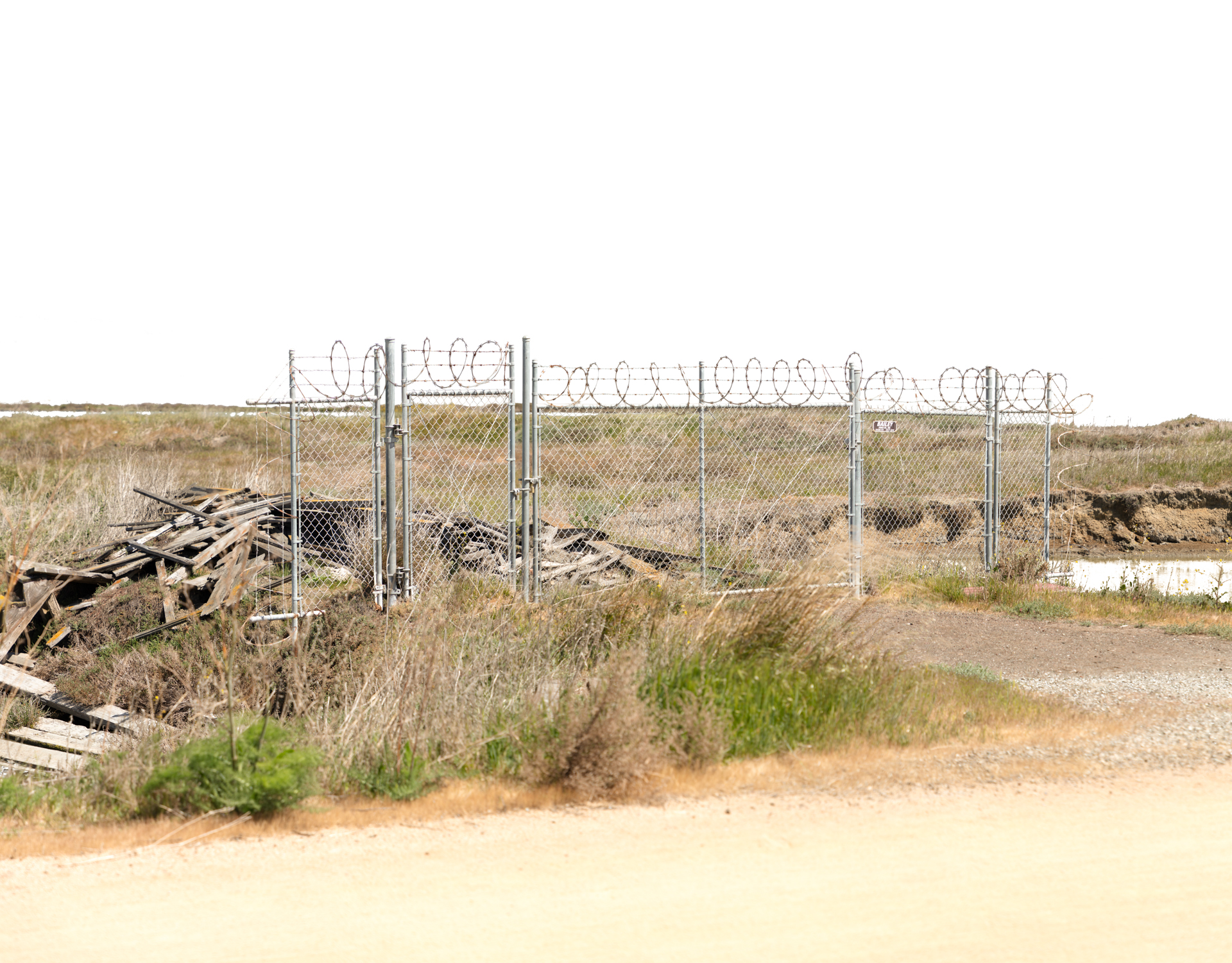
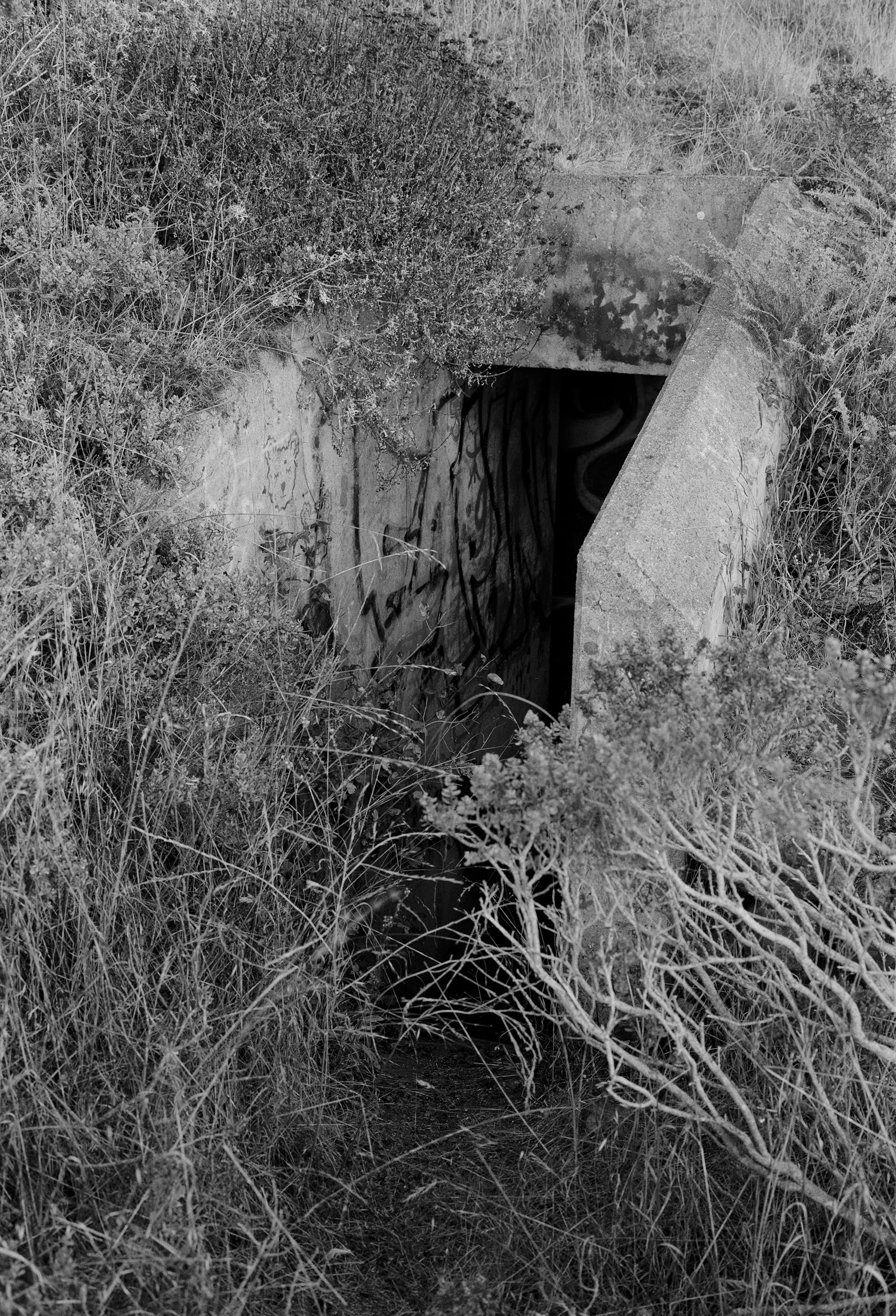
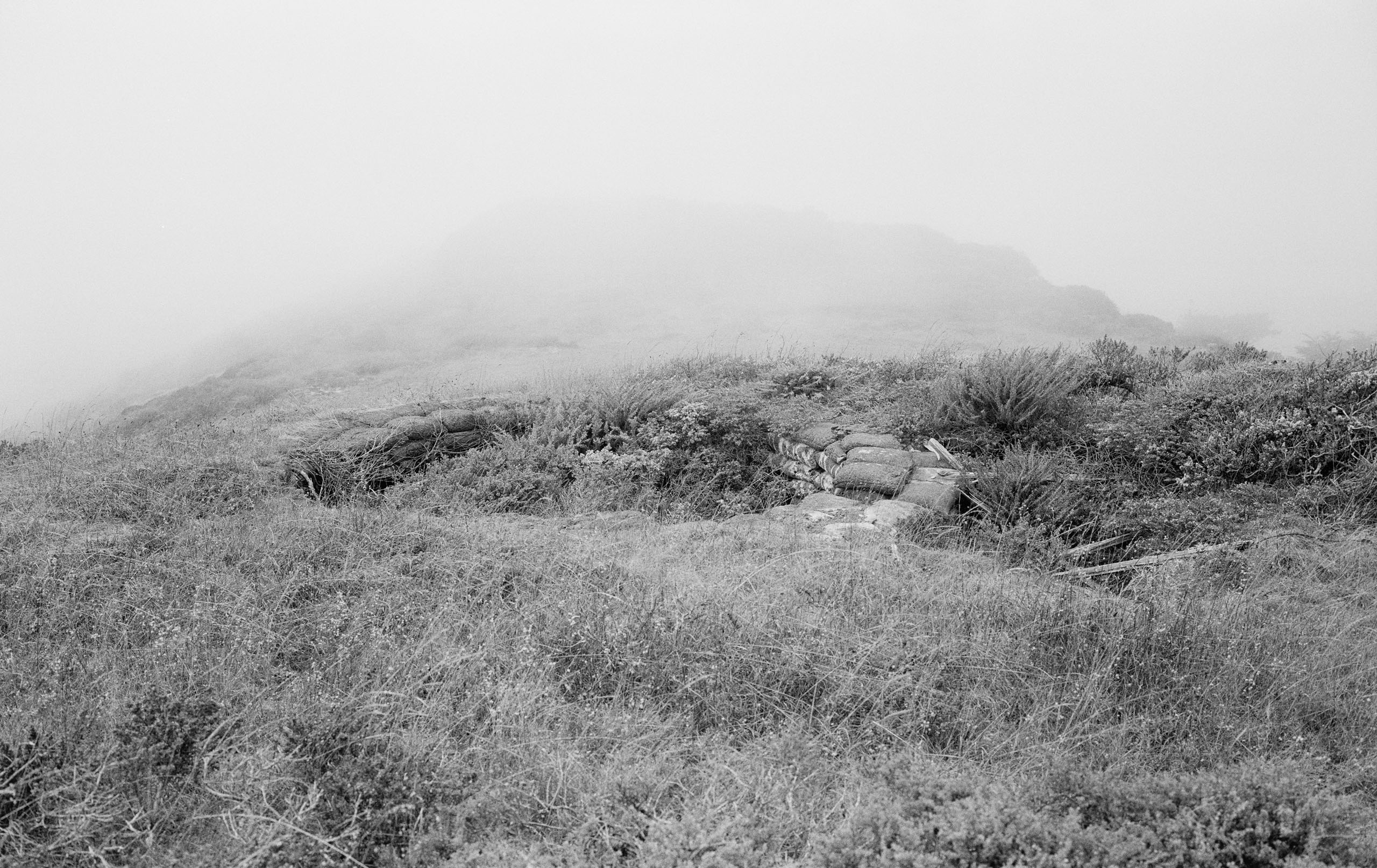
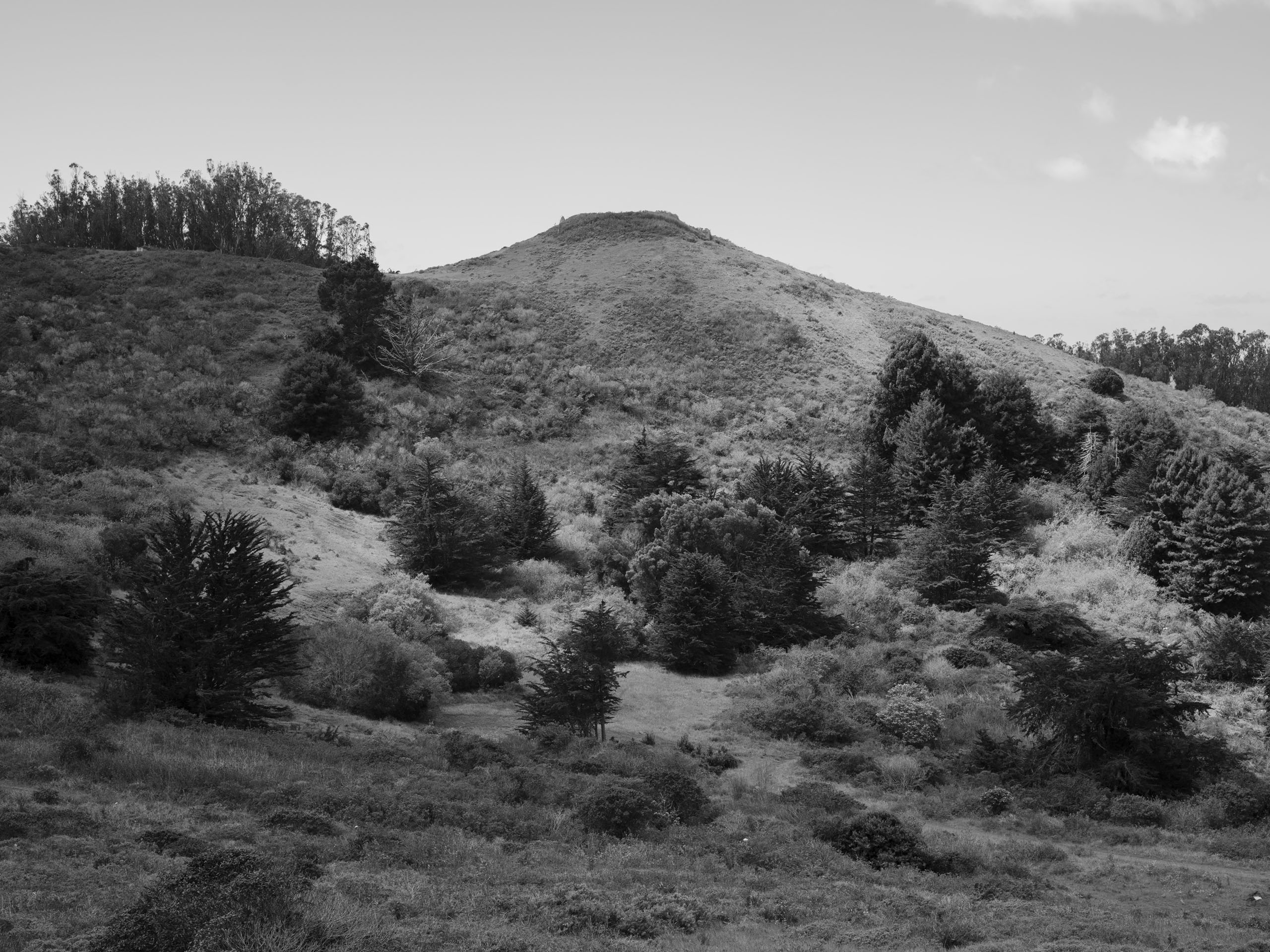
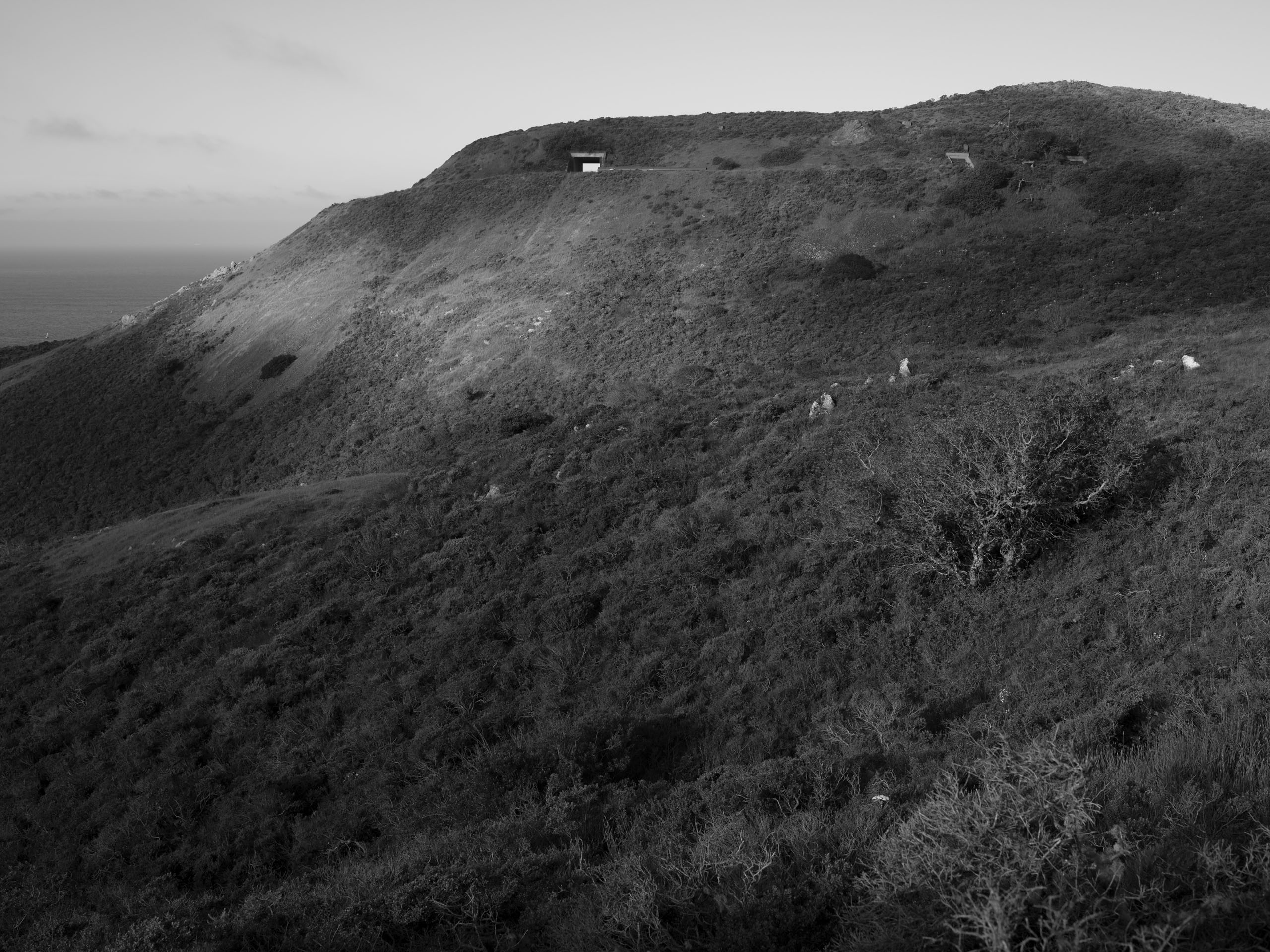
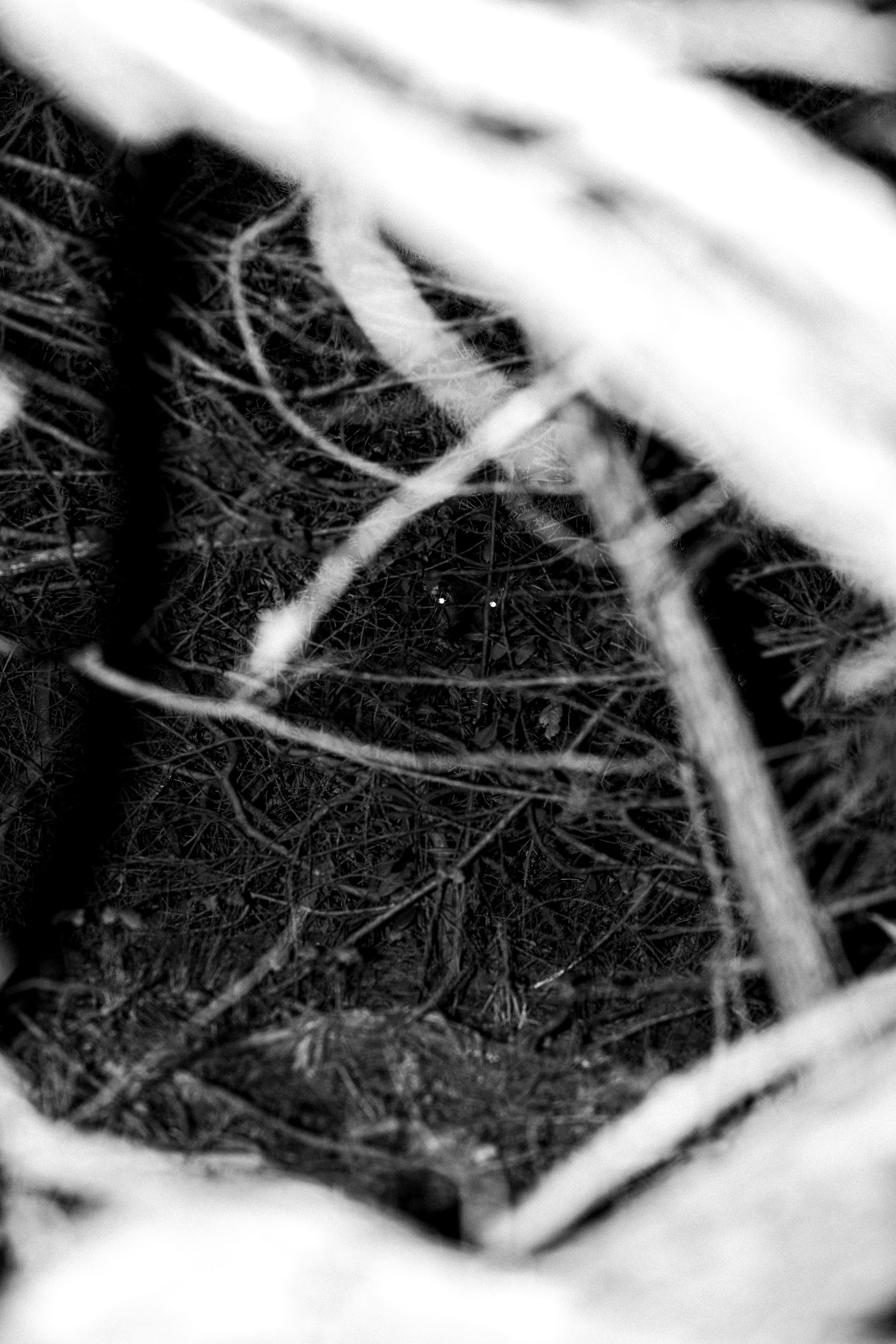
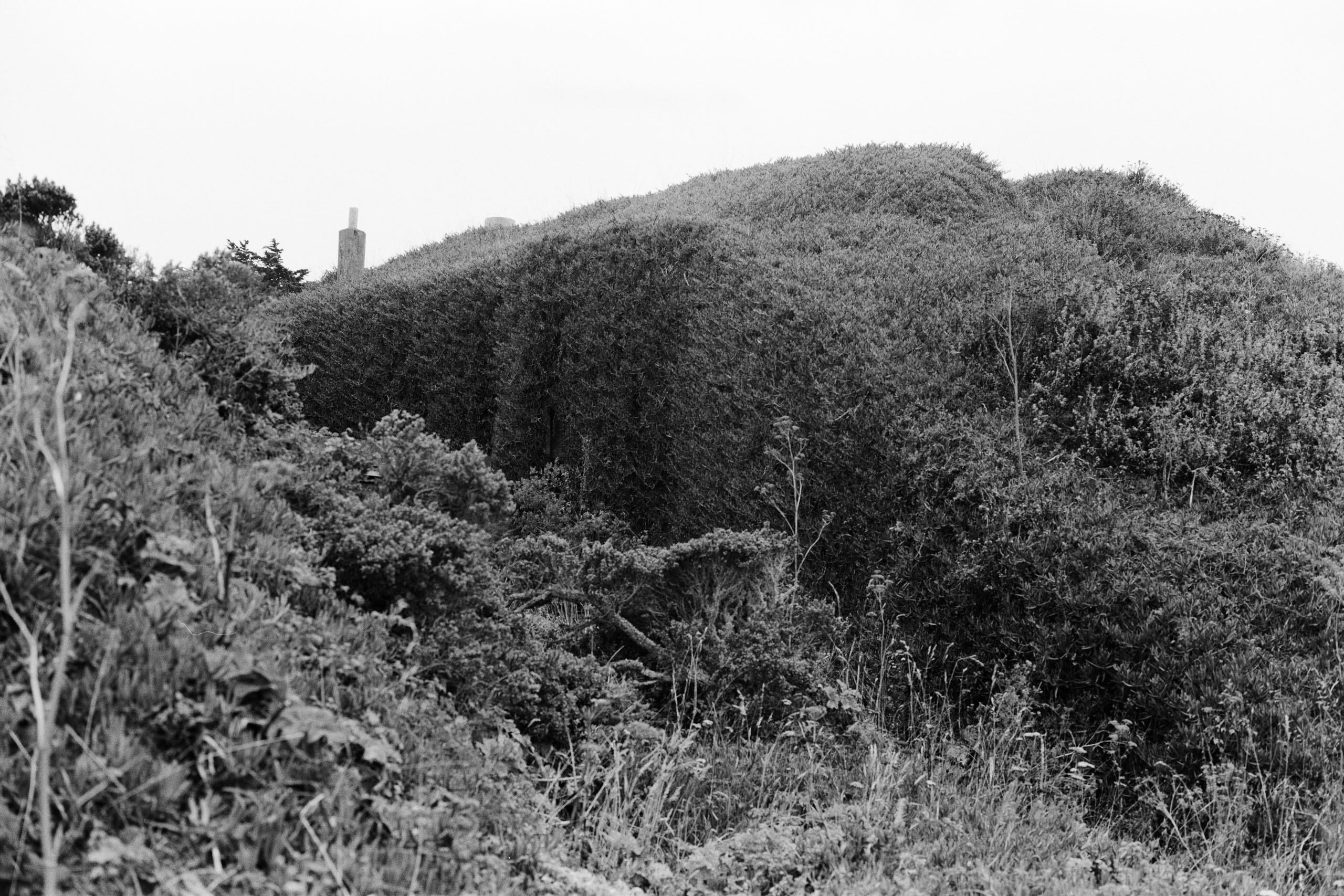
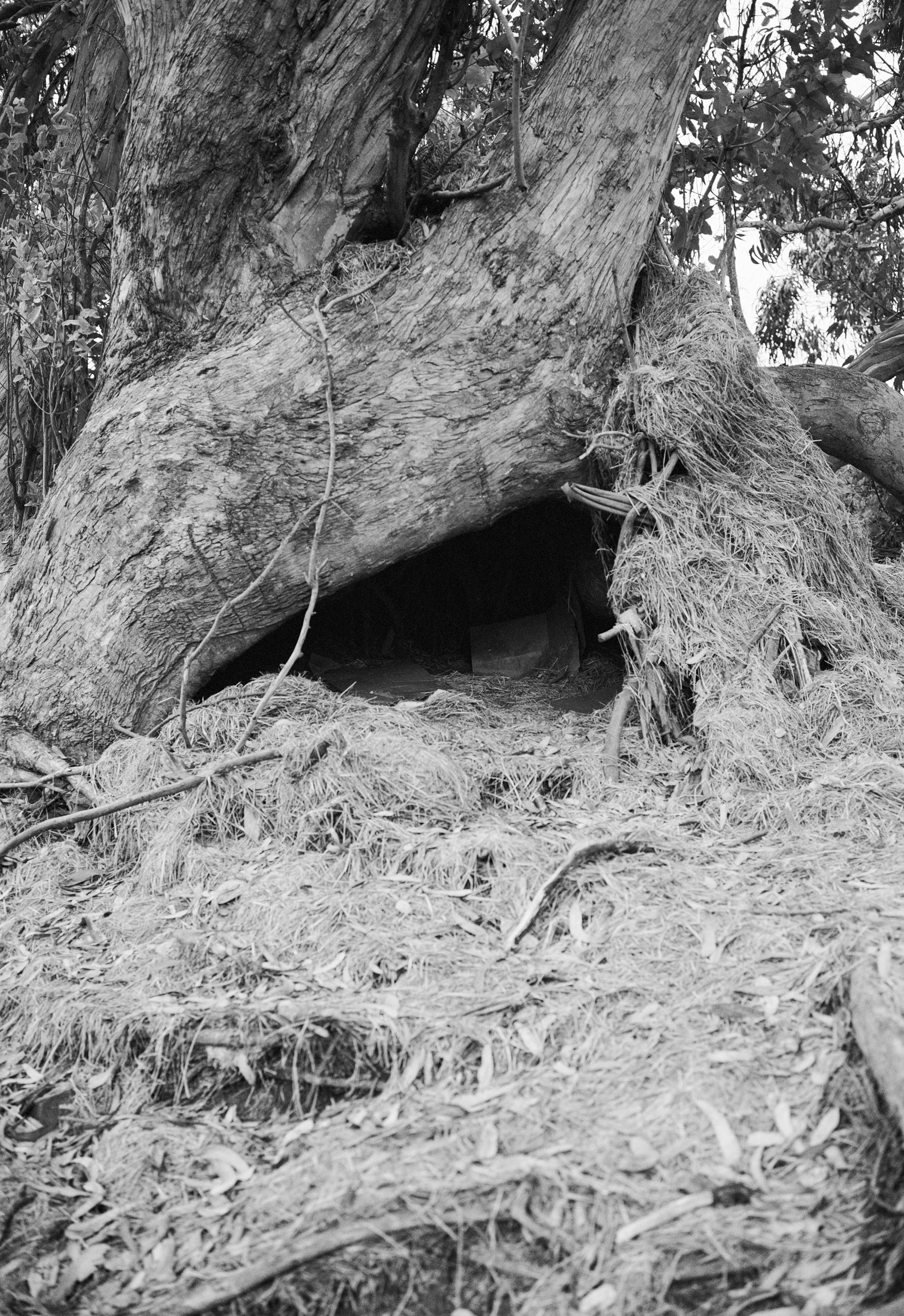
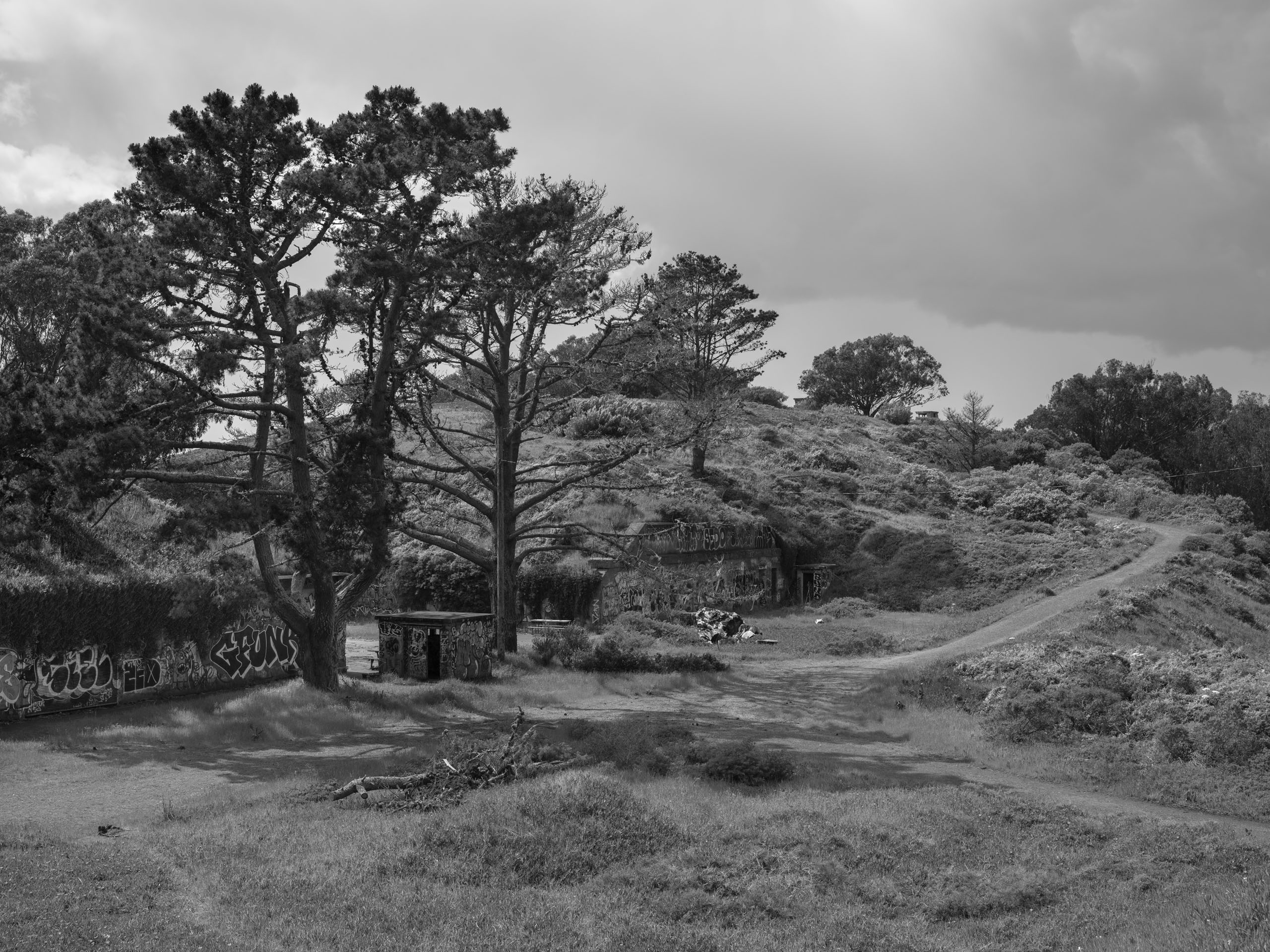
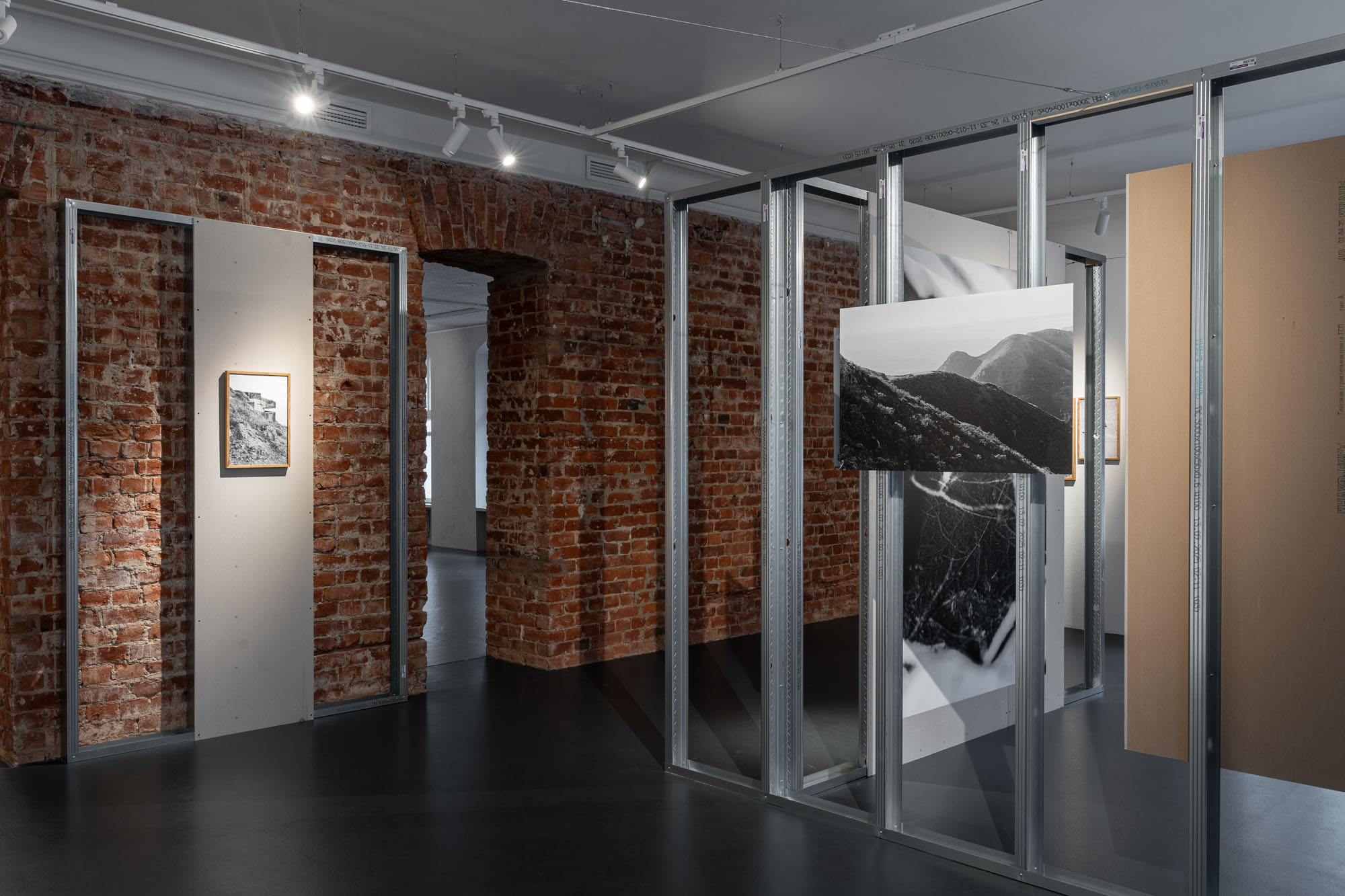
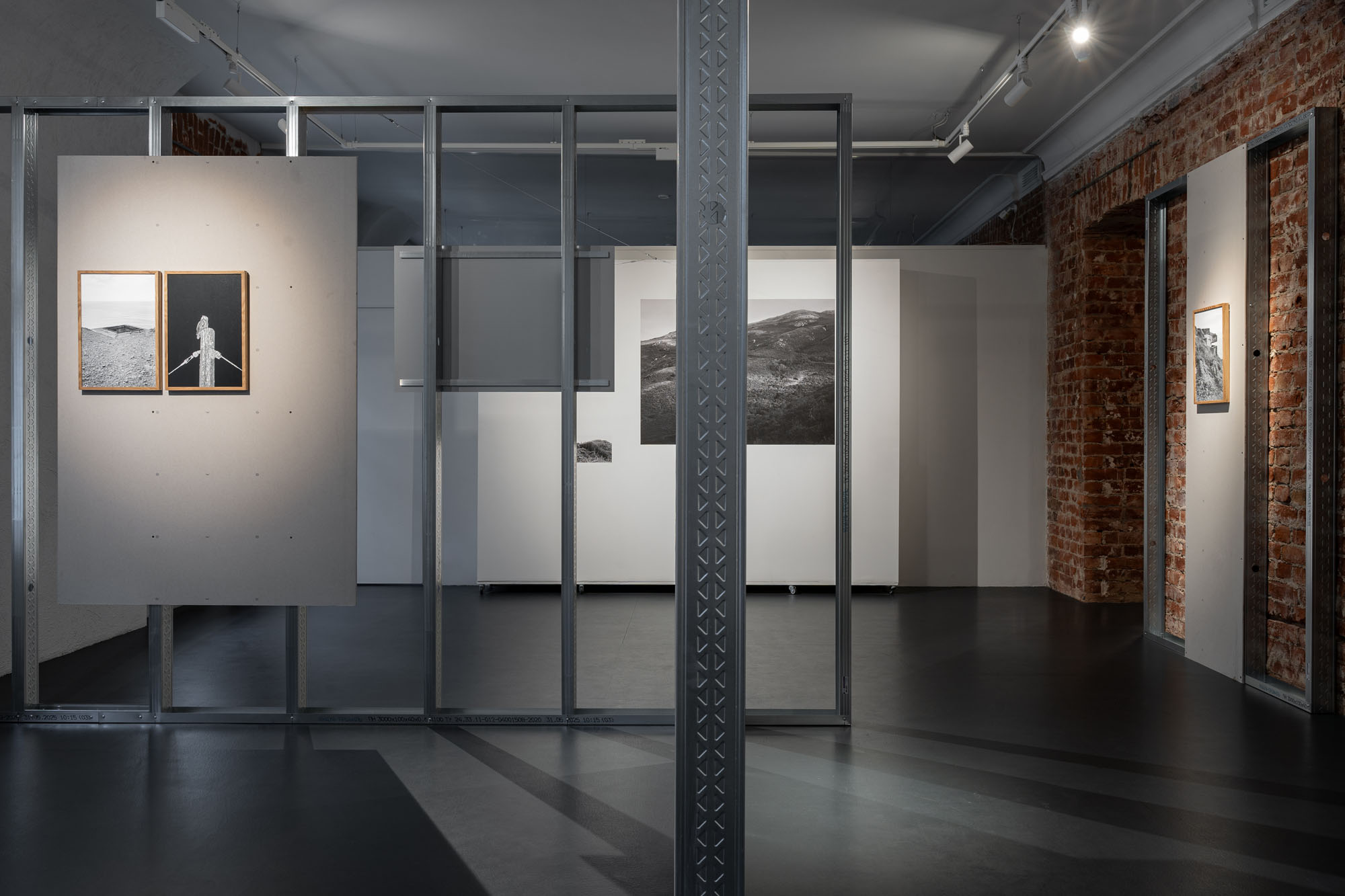
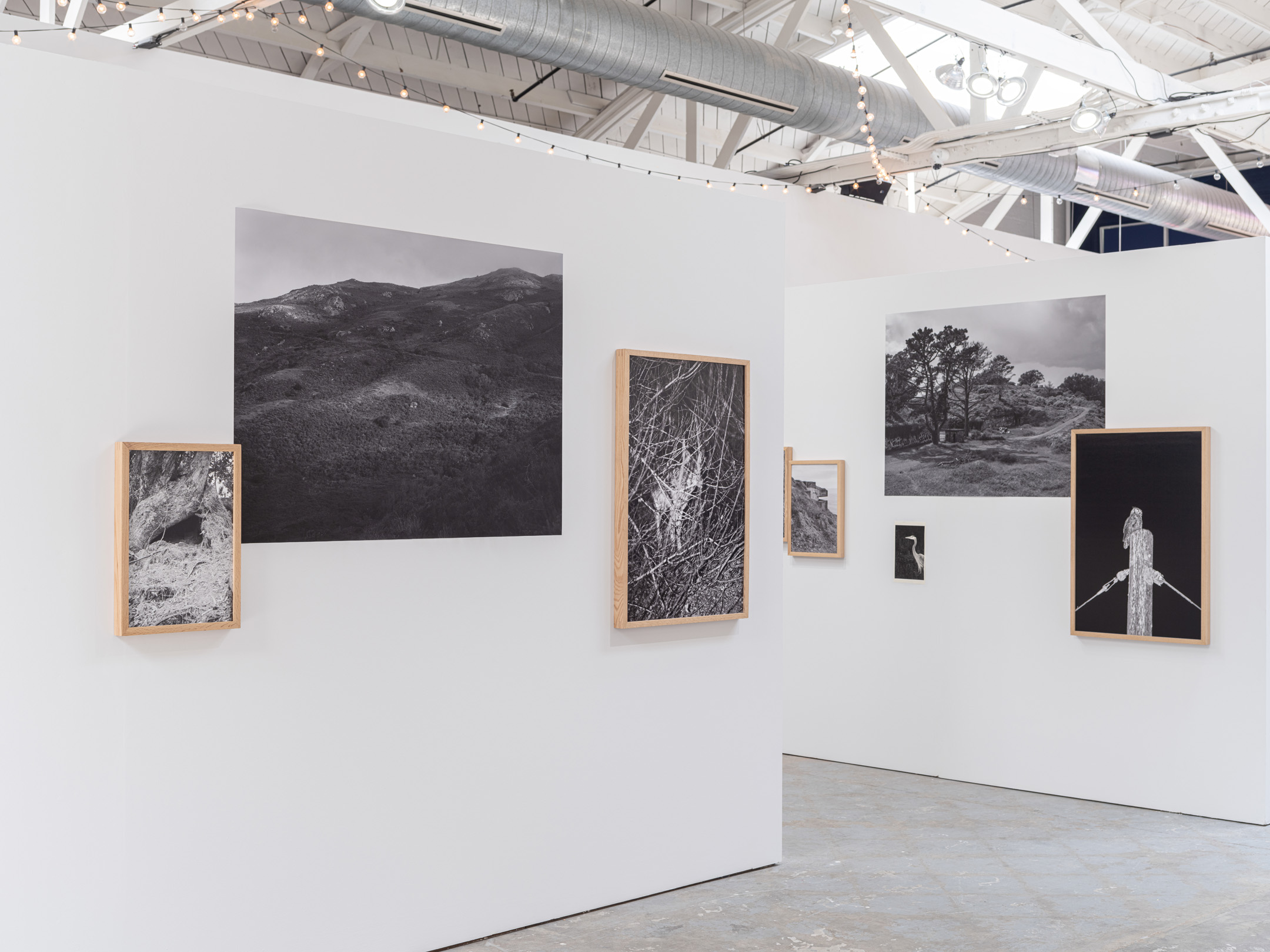
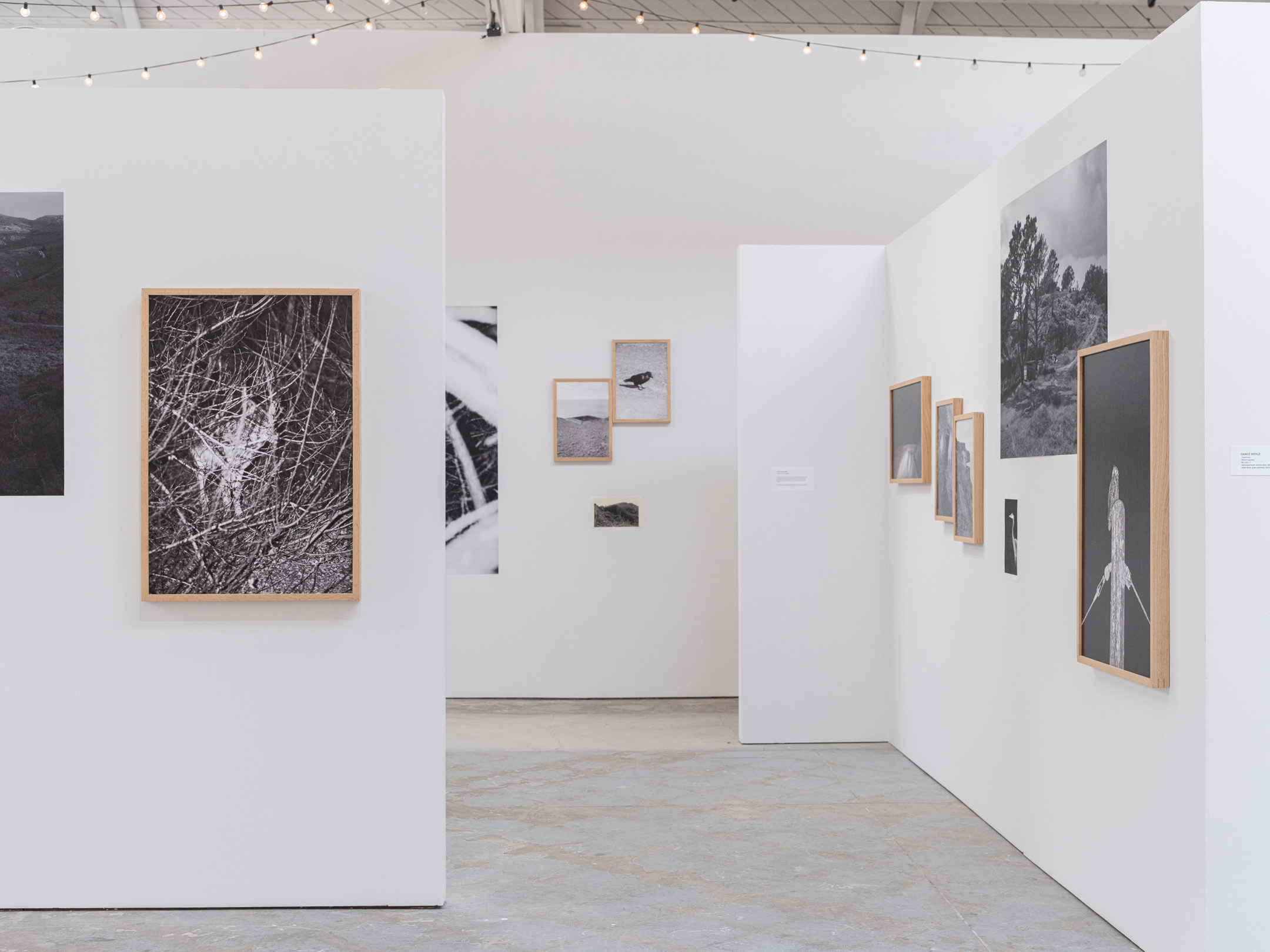
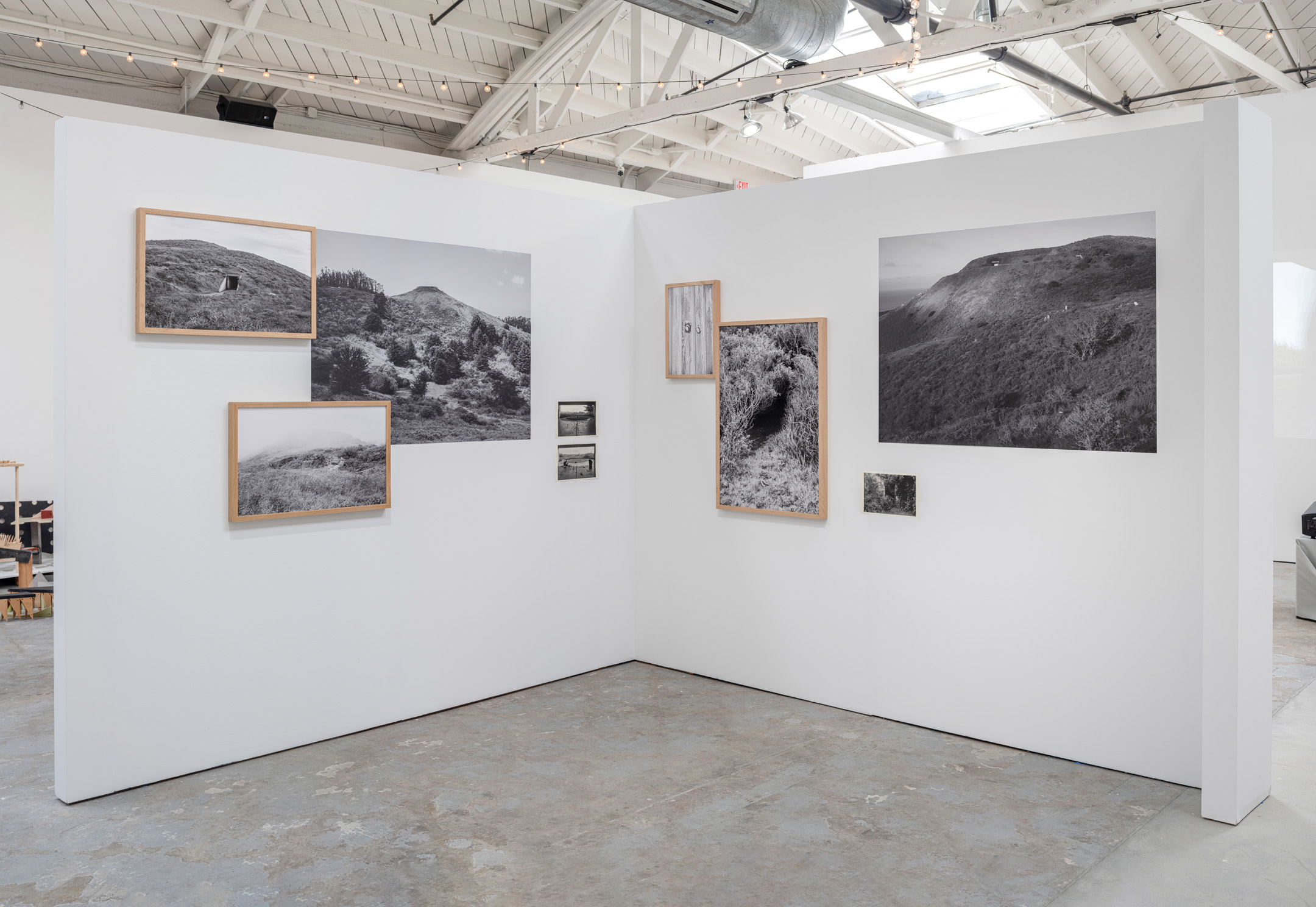
This project was realized as part of a year-long Graduate Fellowship at the Headlands Center for the Arts in Sausalito, California. The Art Center is in the Marin Headlands, part of the Golden Gate National Recreation Area. This area was a military base and a defensive outpost for nearly a century against potential sea attacks. During the Cold War between the U.S. and the USSR, it housed one of the Nike Missile Sites, designed to protect the region from a potential nuclear threat.
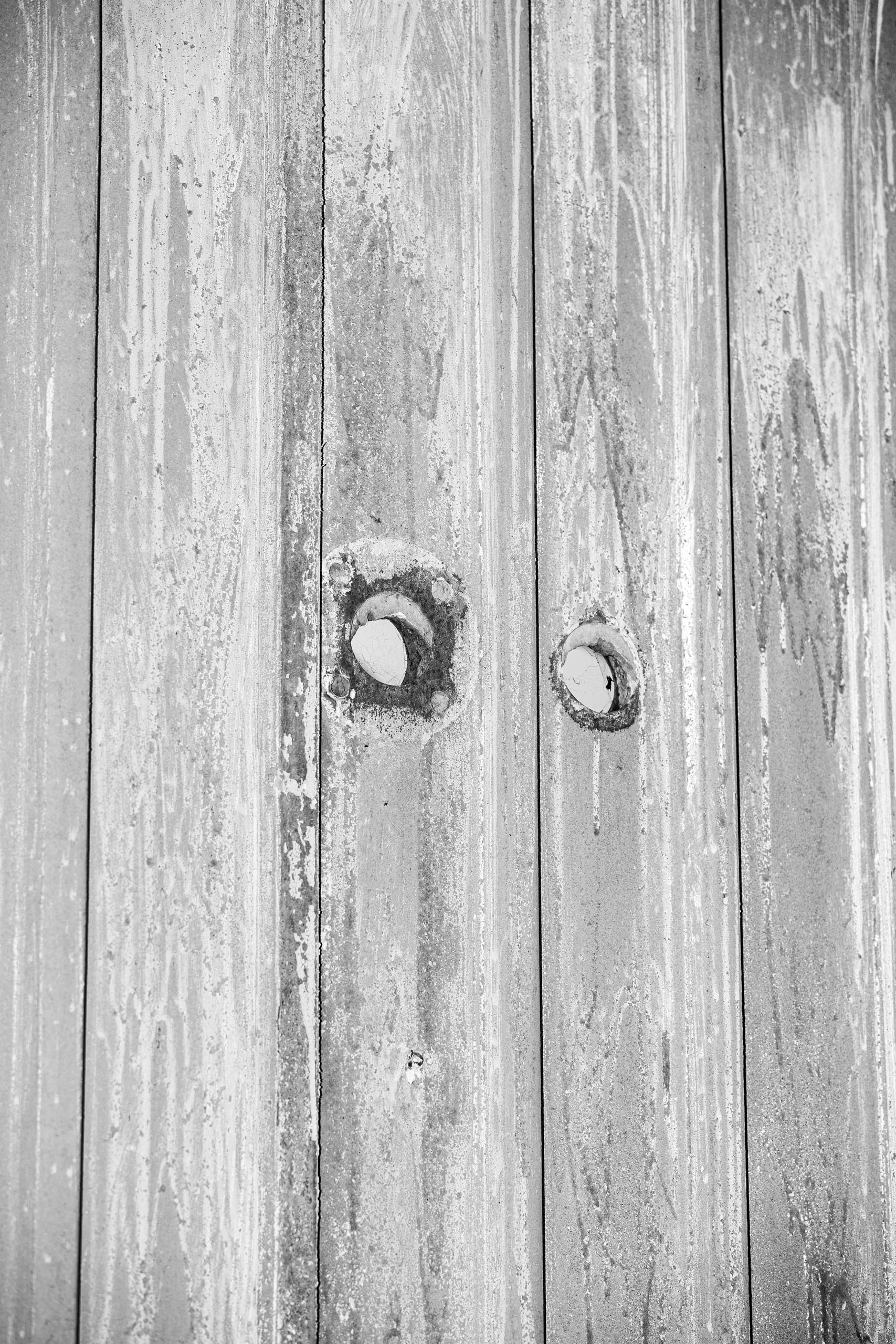
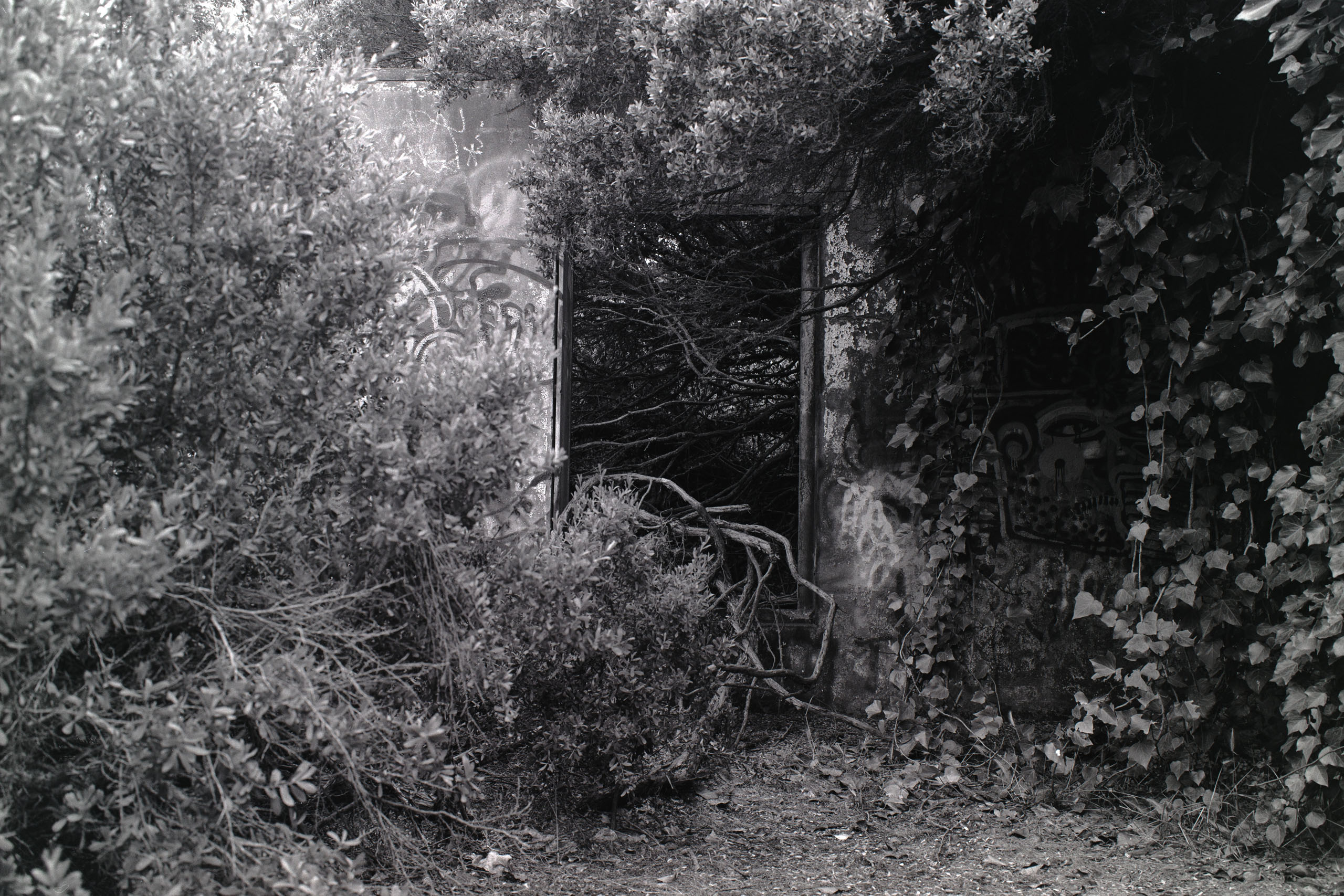
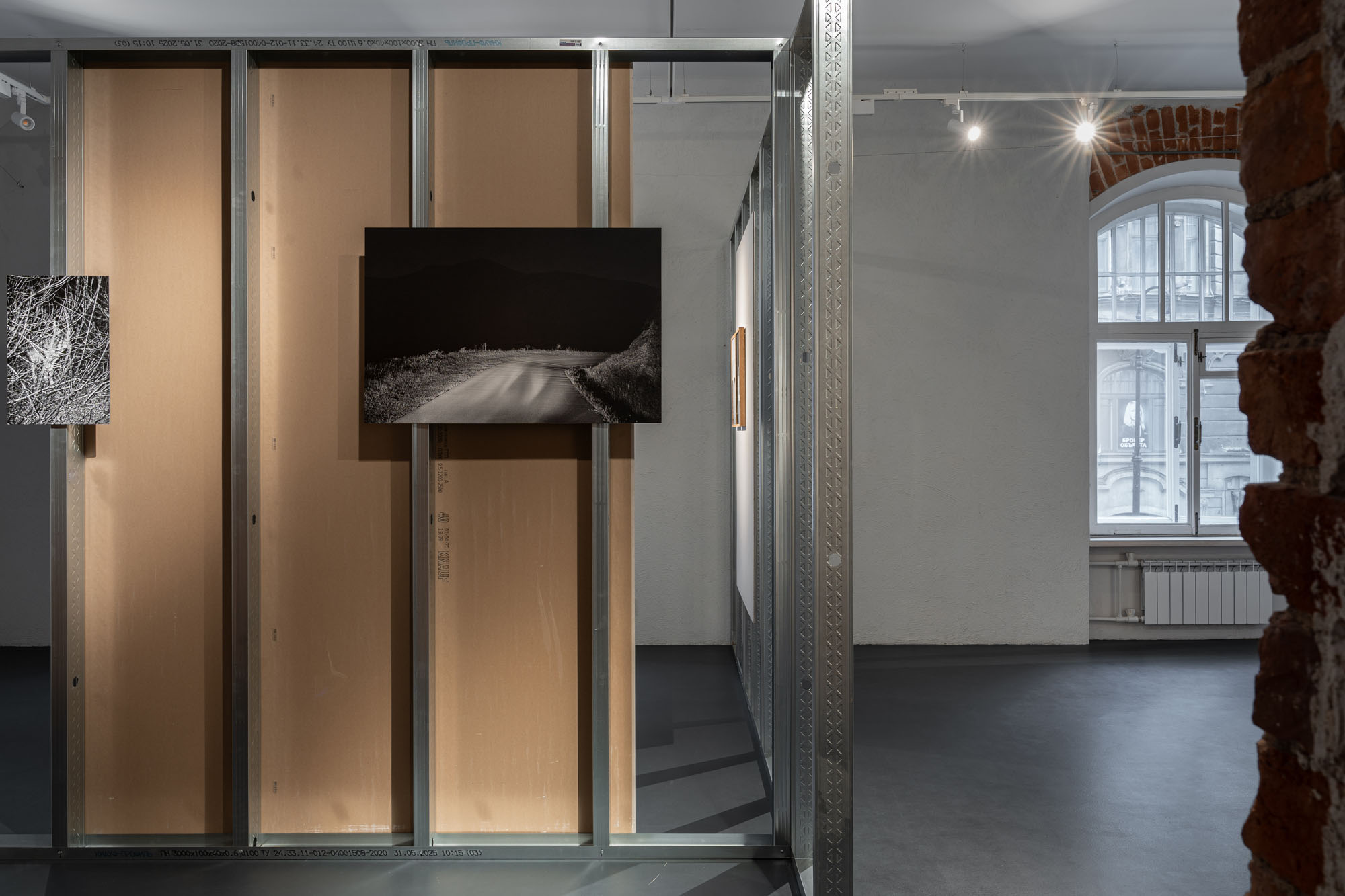
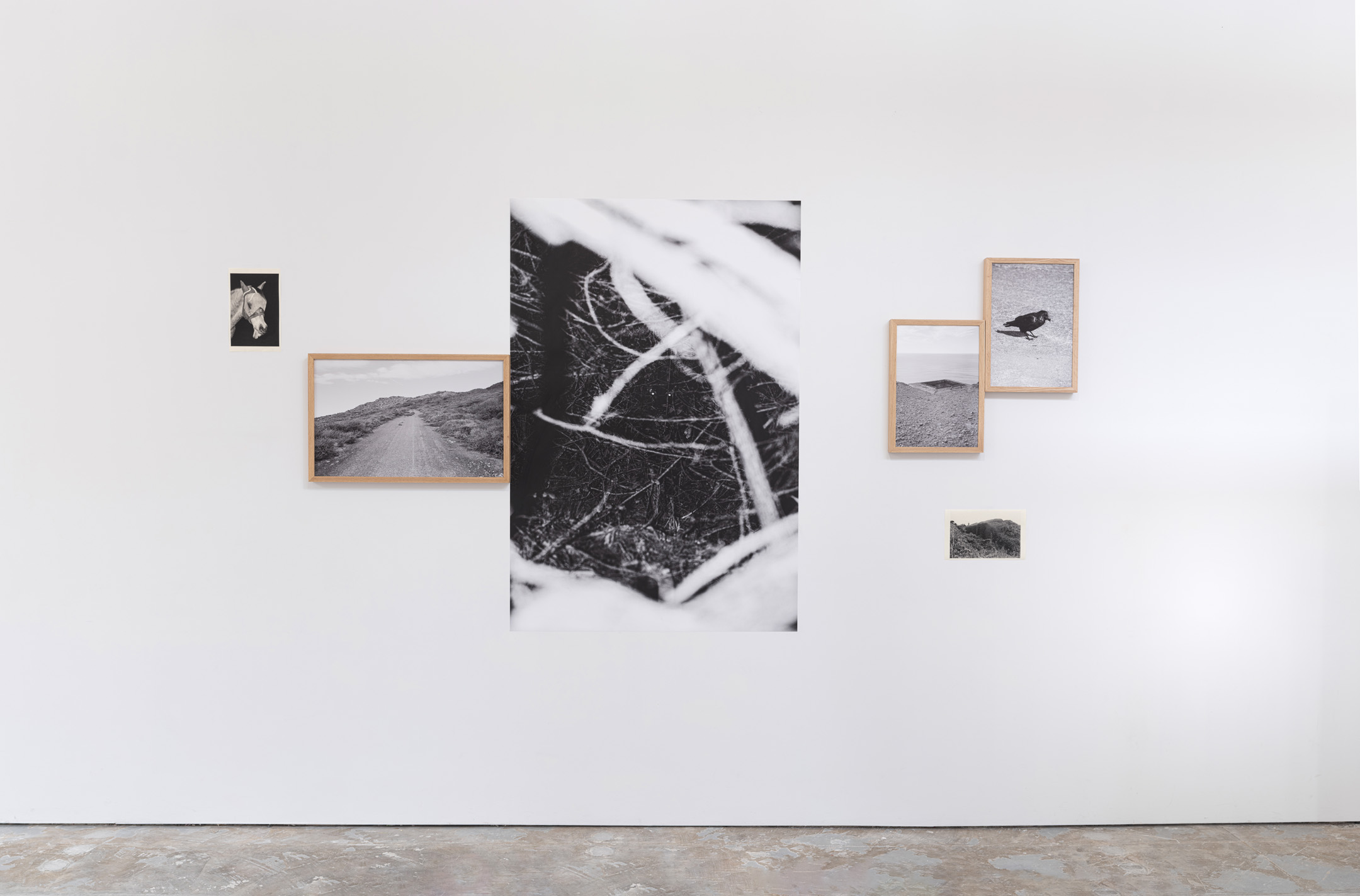
During the military occupation, the natural landscape experienced significant changes. Soldiers built roads, dug tunnels, and relocated rock that had been blasted from its original site. The coastline is scattered with observation posts, bunkers, and batteries, all staring intently into the ocean's vast emptiness, altering the landscape's innocent beauty with tension. The military structures are slowly being overtaken by ivy, cracking and decaying, symbolizing an invisible presence—emblems of an unfulfilled history of conflict.
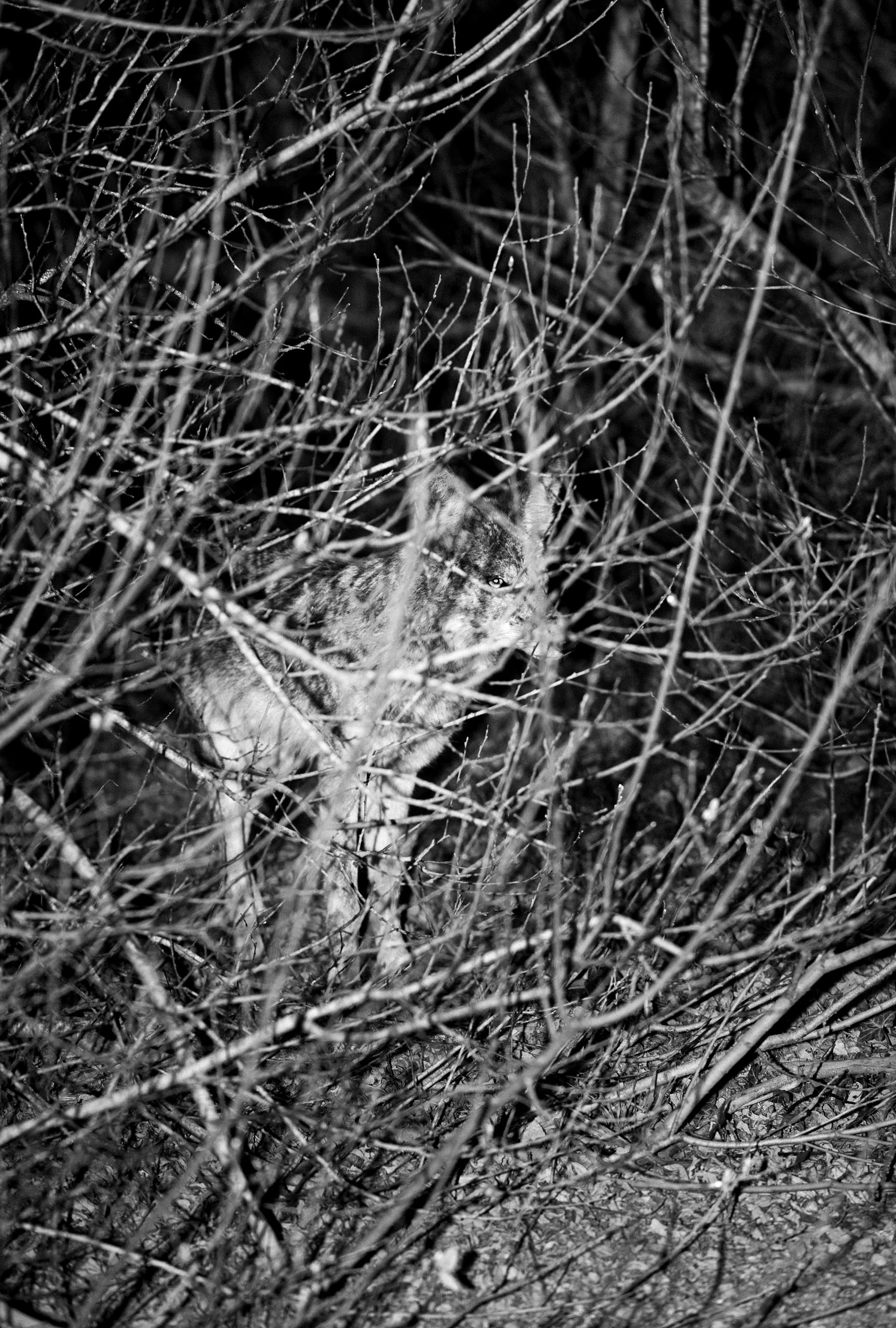
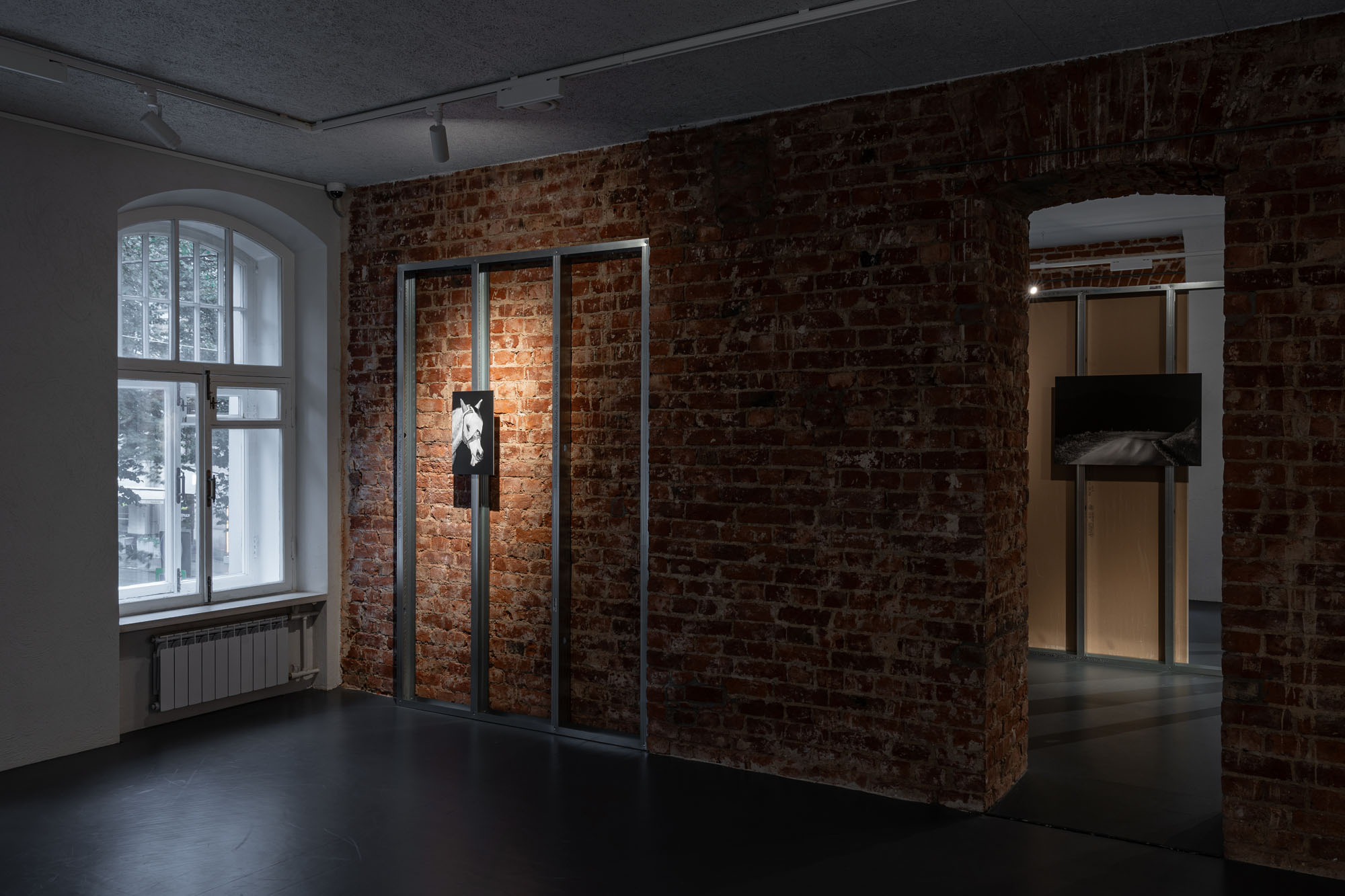
They reveal the hidden trauma of the area, with scars surfacing unexpectedly through the vegetation undermining the visitor's trust in the visible, alluring beauty; beneath it lies darkness. Through the eyes of animals, nature seems to gaze back at human outsiders—with a direct, unfocused, and unseeing stare, as if looking into the distance—a thousand-yard stare.
The term "thousand-yard stare" describes the blank, unfocused gaze seen in individuals who are dissociating due to intense stress or trauma. Initially associated with soldiers exhibiting signs of post-traumatic stress, it has now also come to refer to the distant gaze seen in people under high levels of stress or those with specific mental health conditions. As a citizen of the Russian Federation, Oleg seeks indirect ways to express the personal trauma of being involuntarily connected to the actions of an aggressor state. He also explores the hidden socio-cultural undercurrents embedded in the art residency landscape.















Nostalgia For Ruins
2023
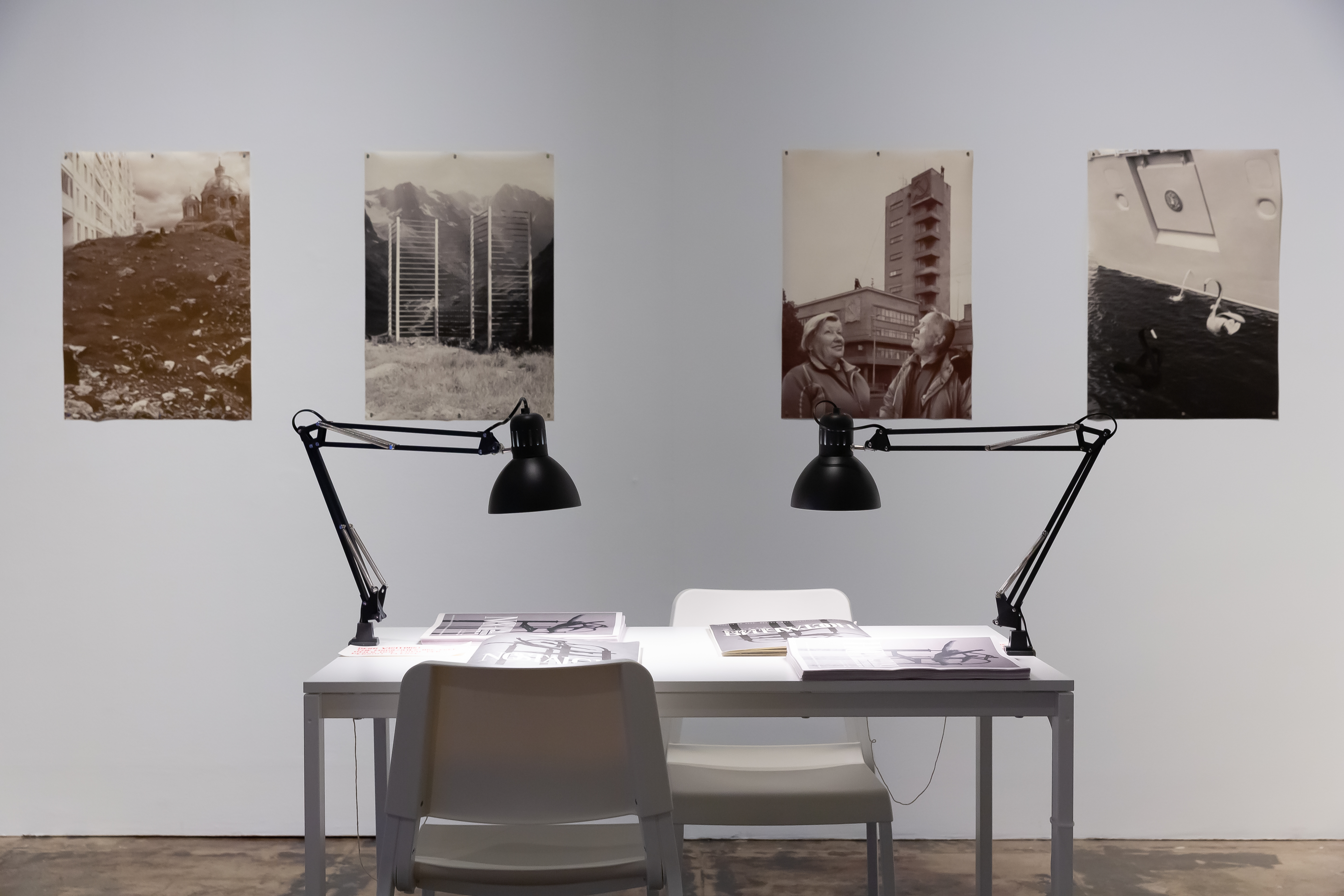
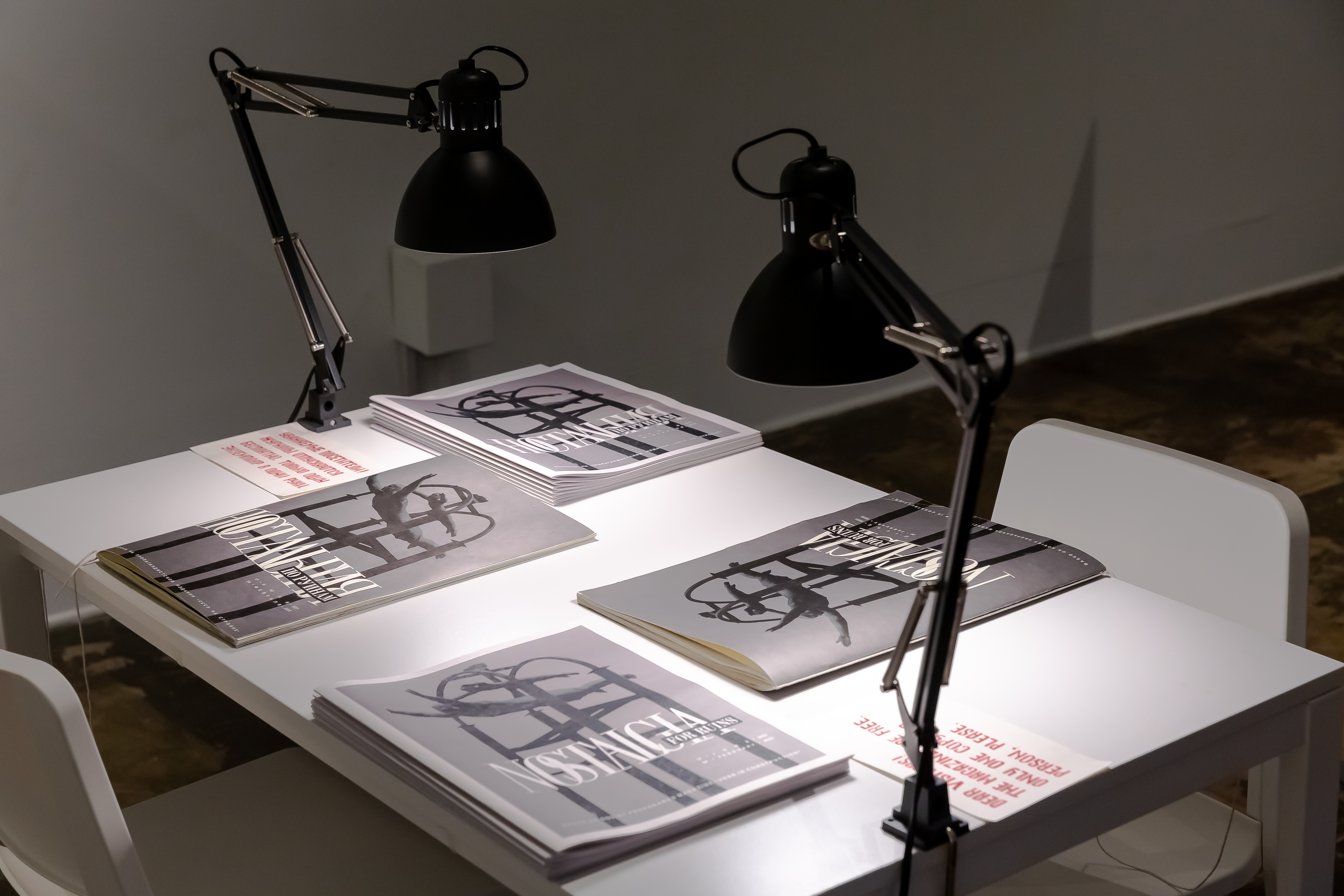
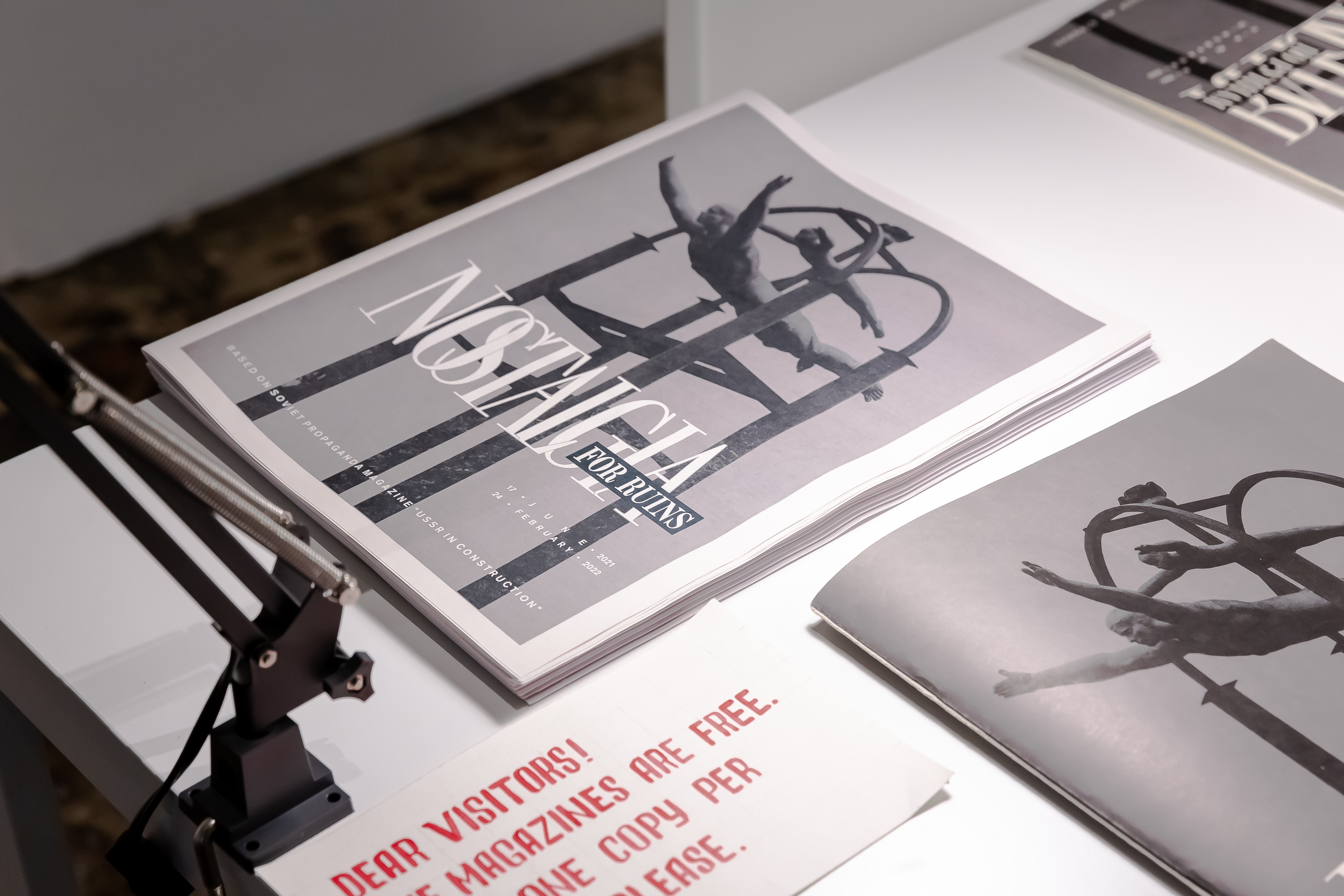
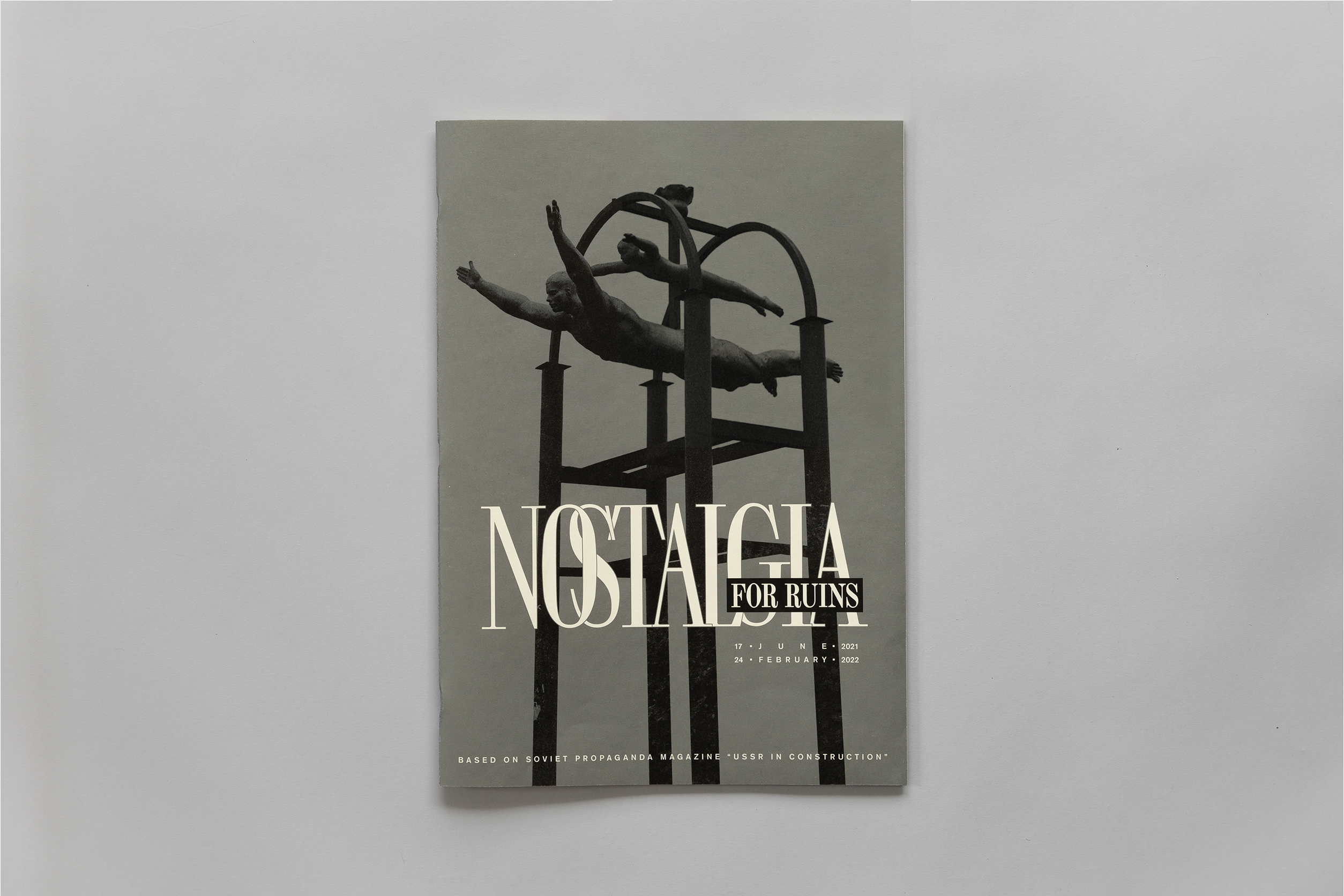
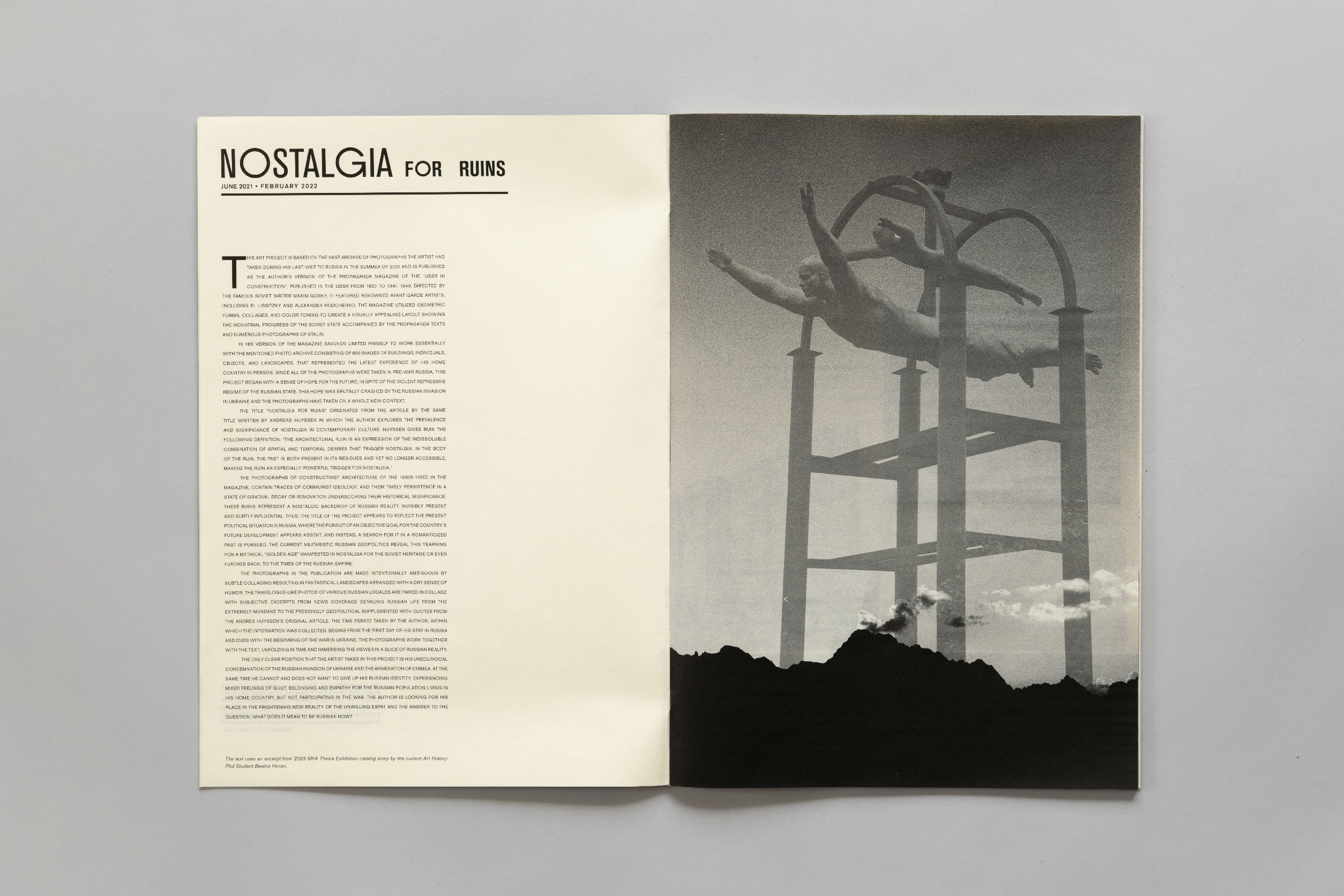
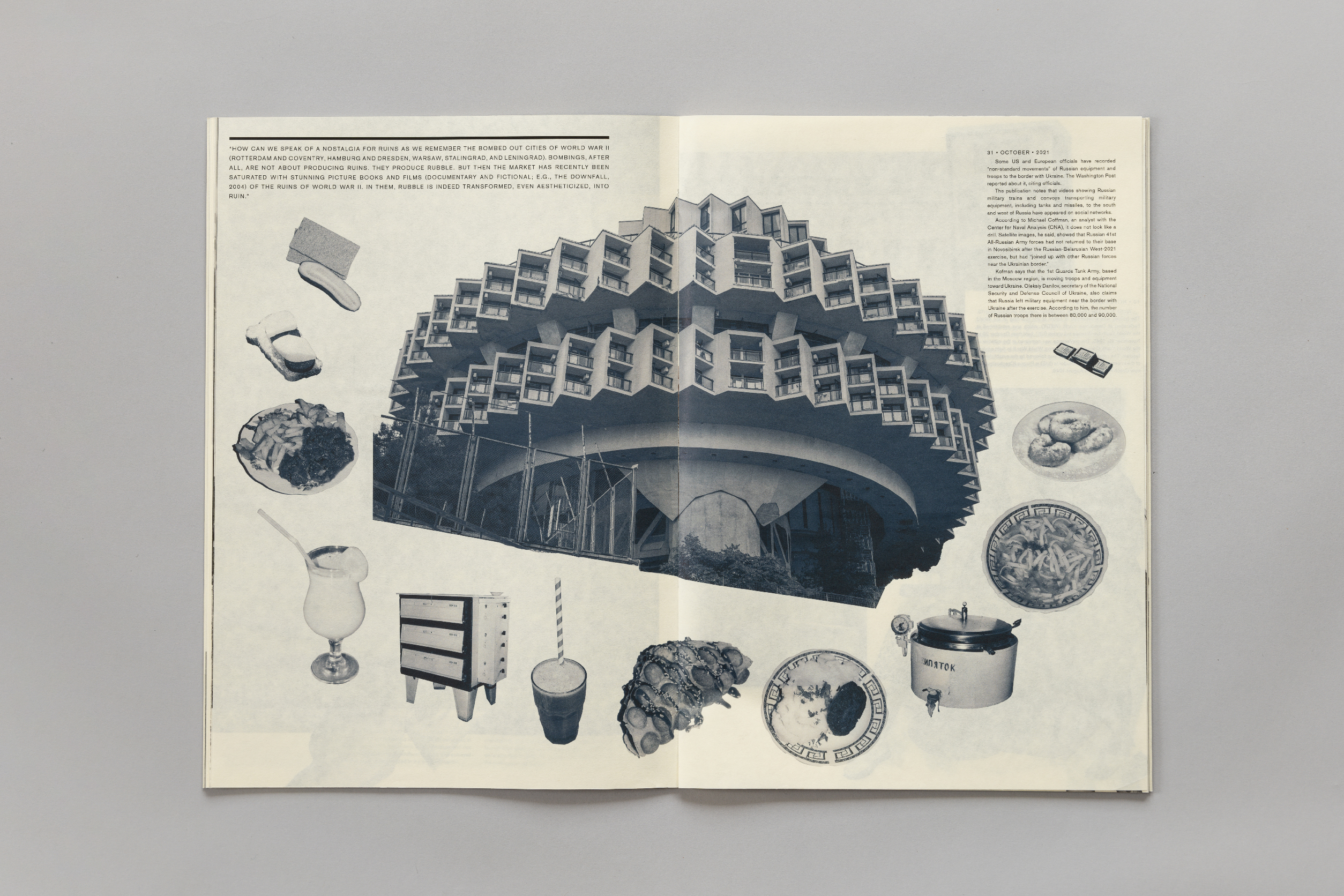
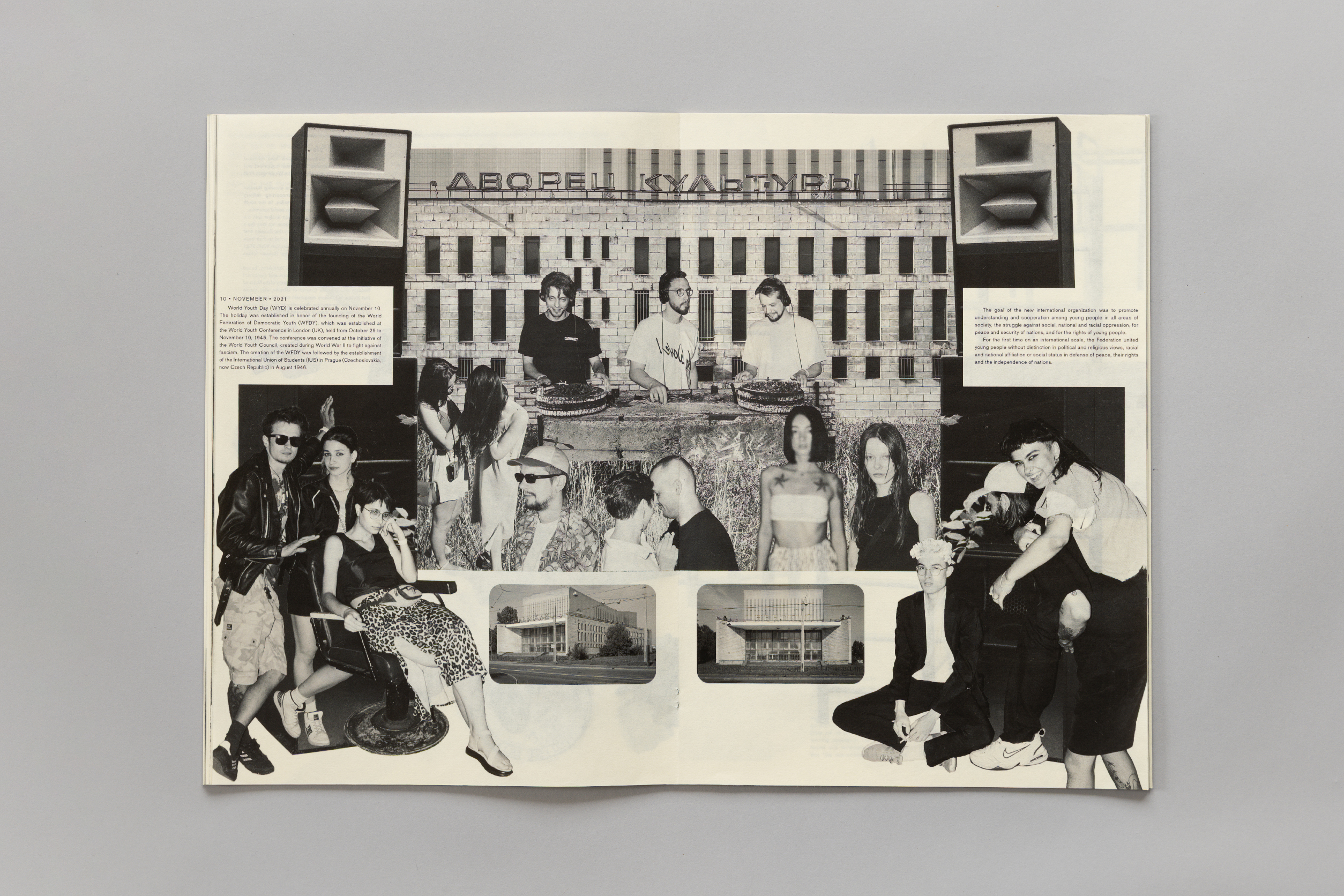
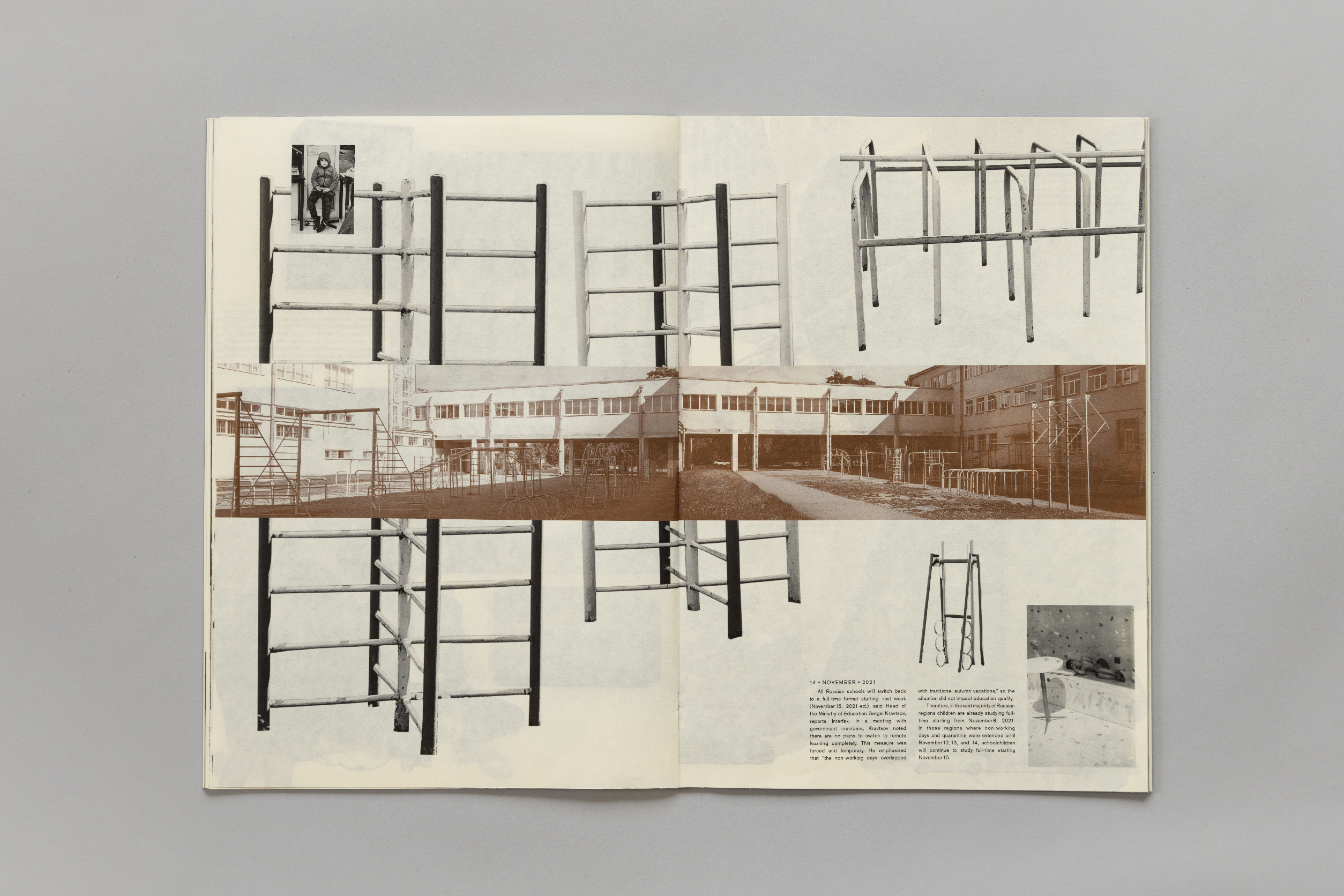
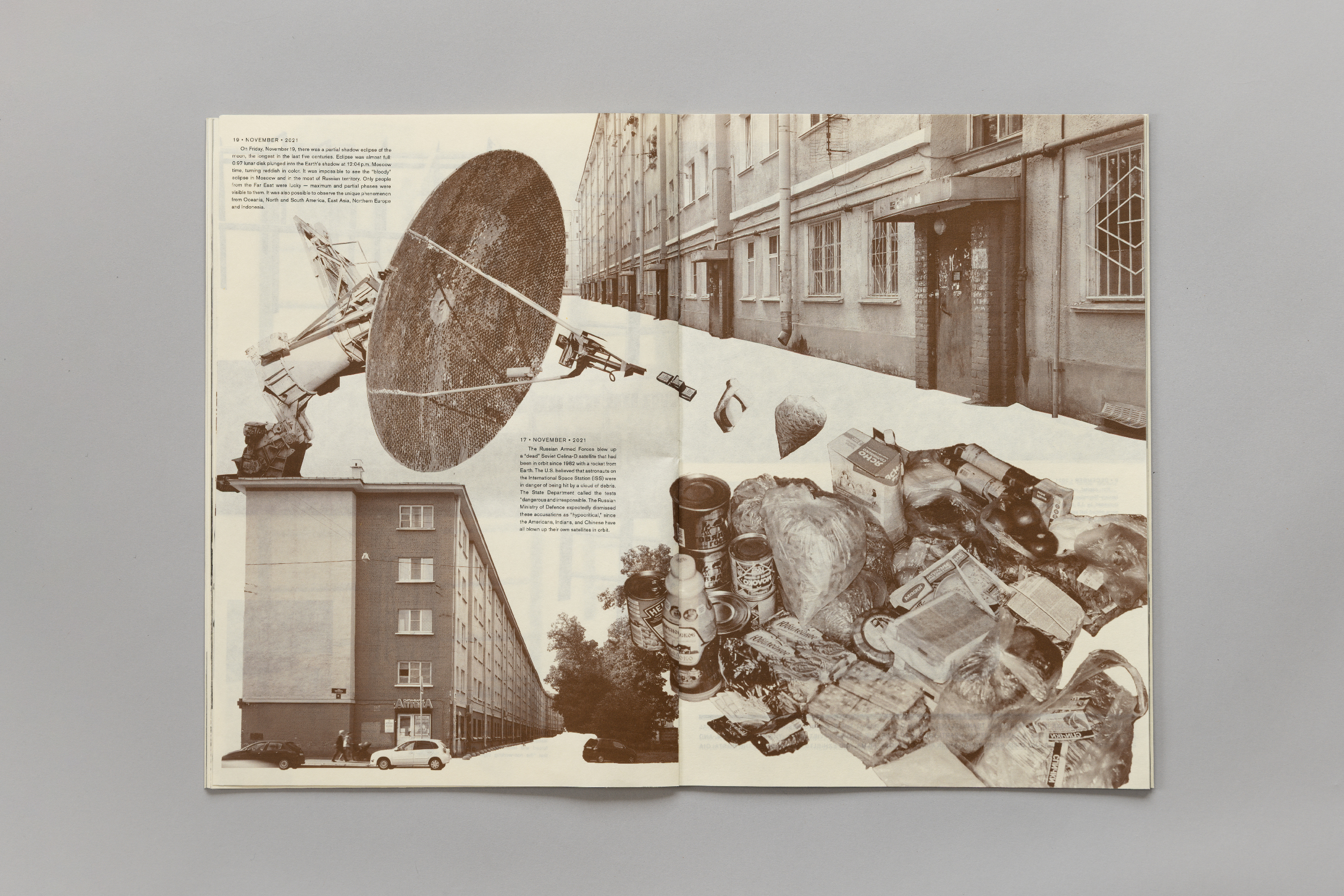
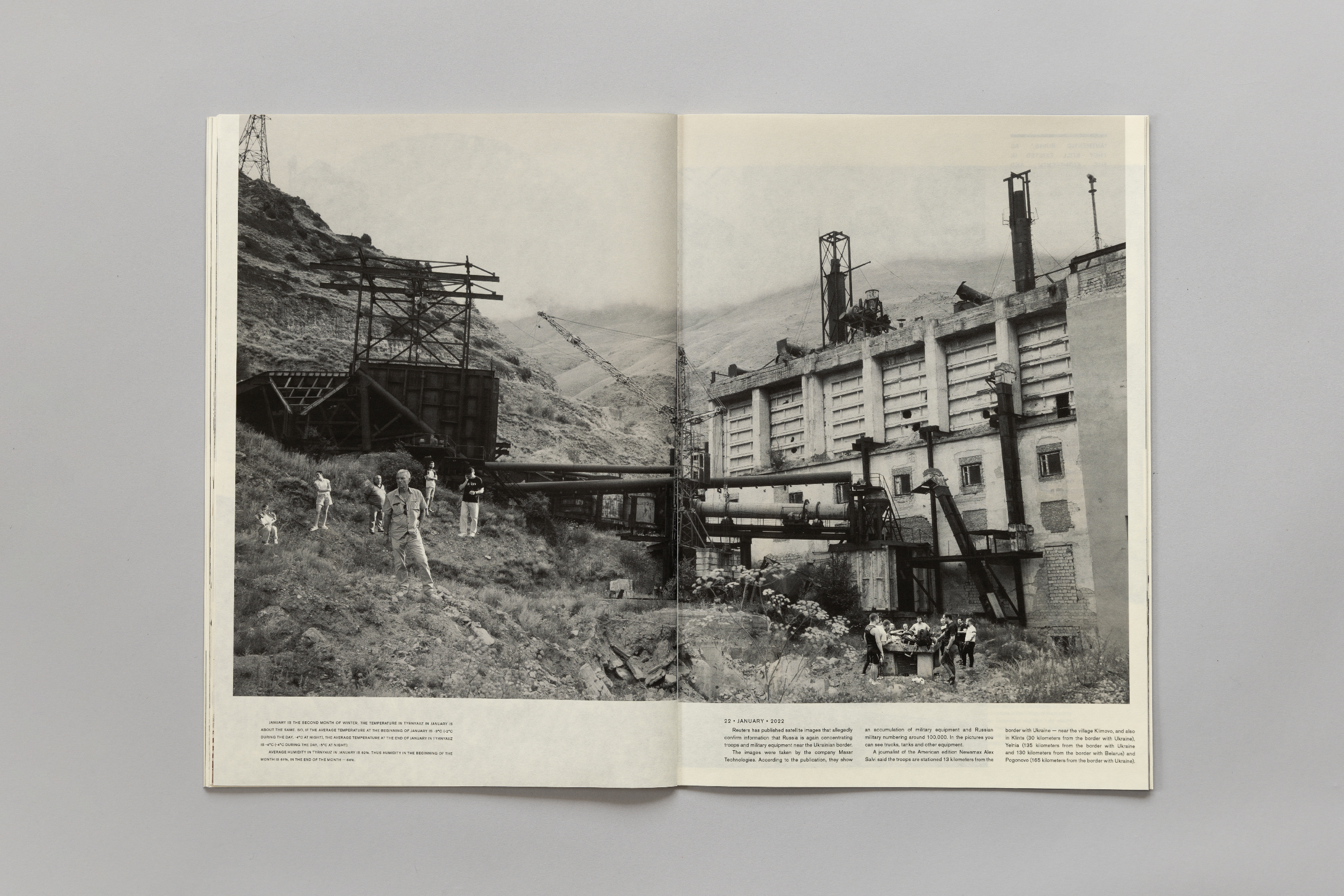
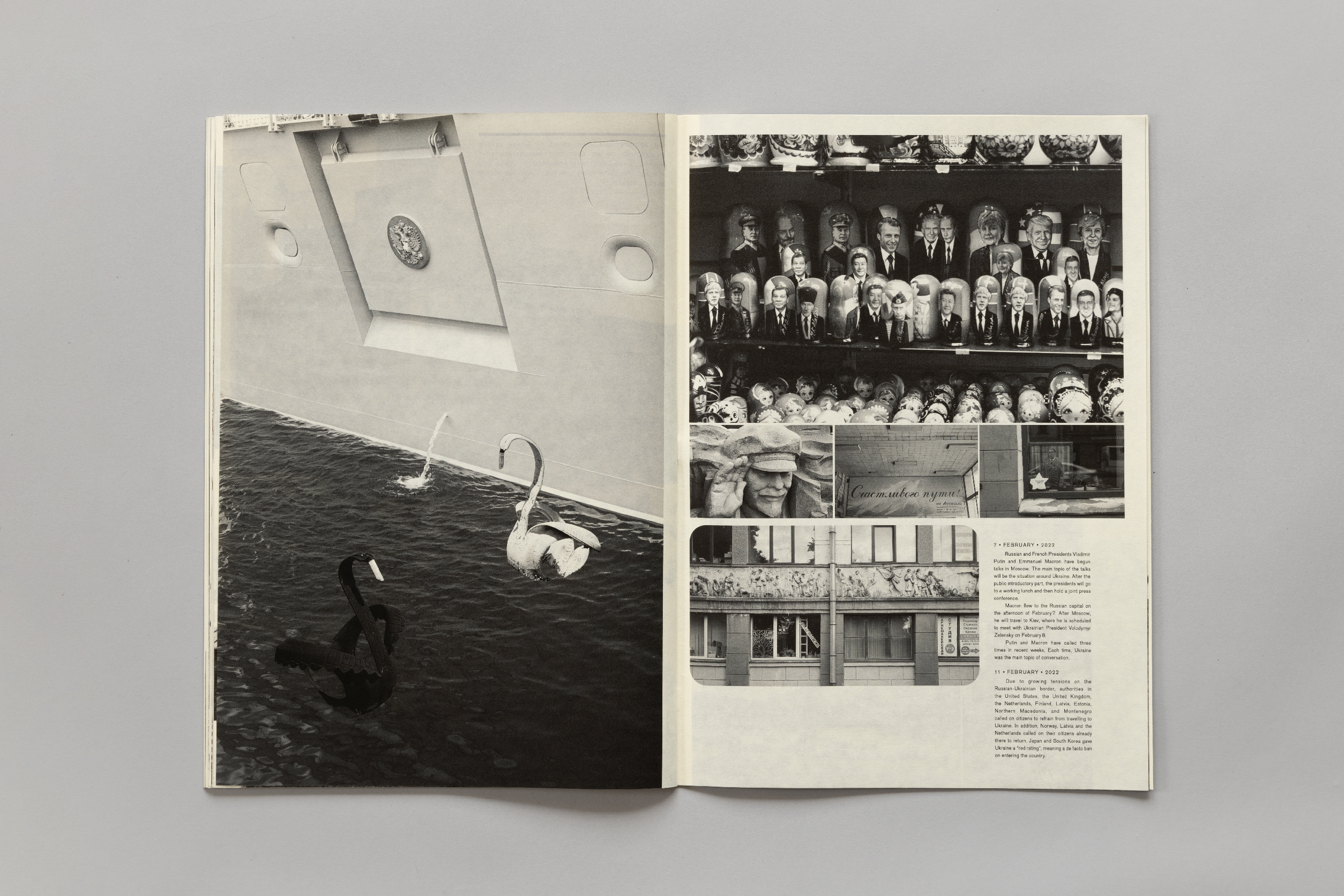
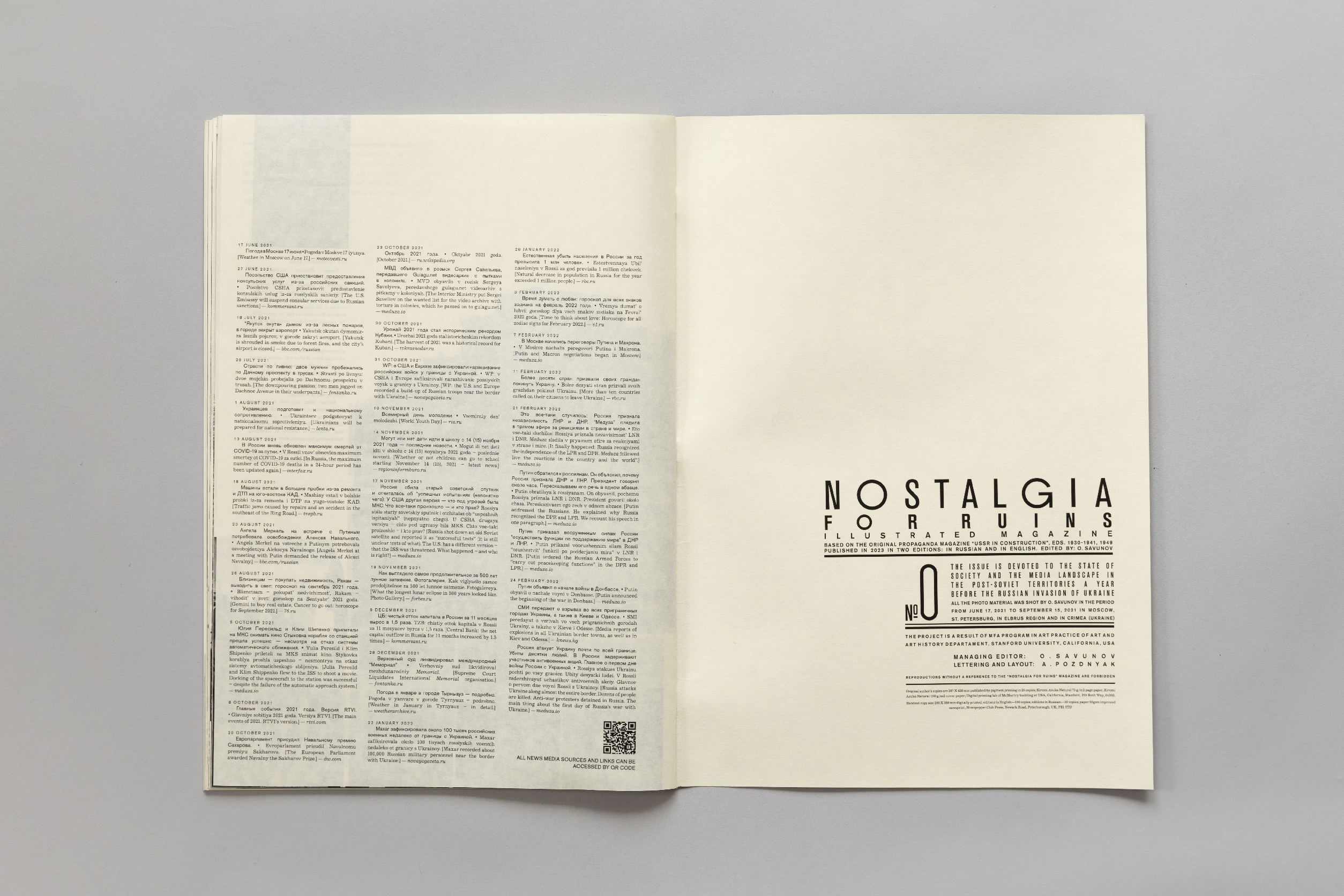
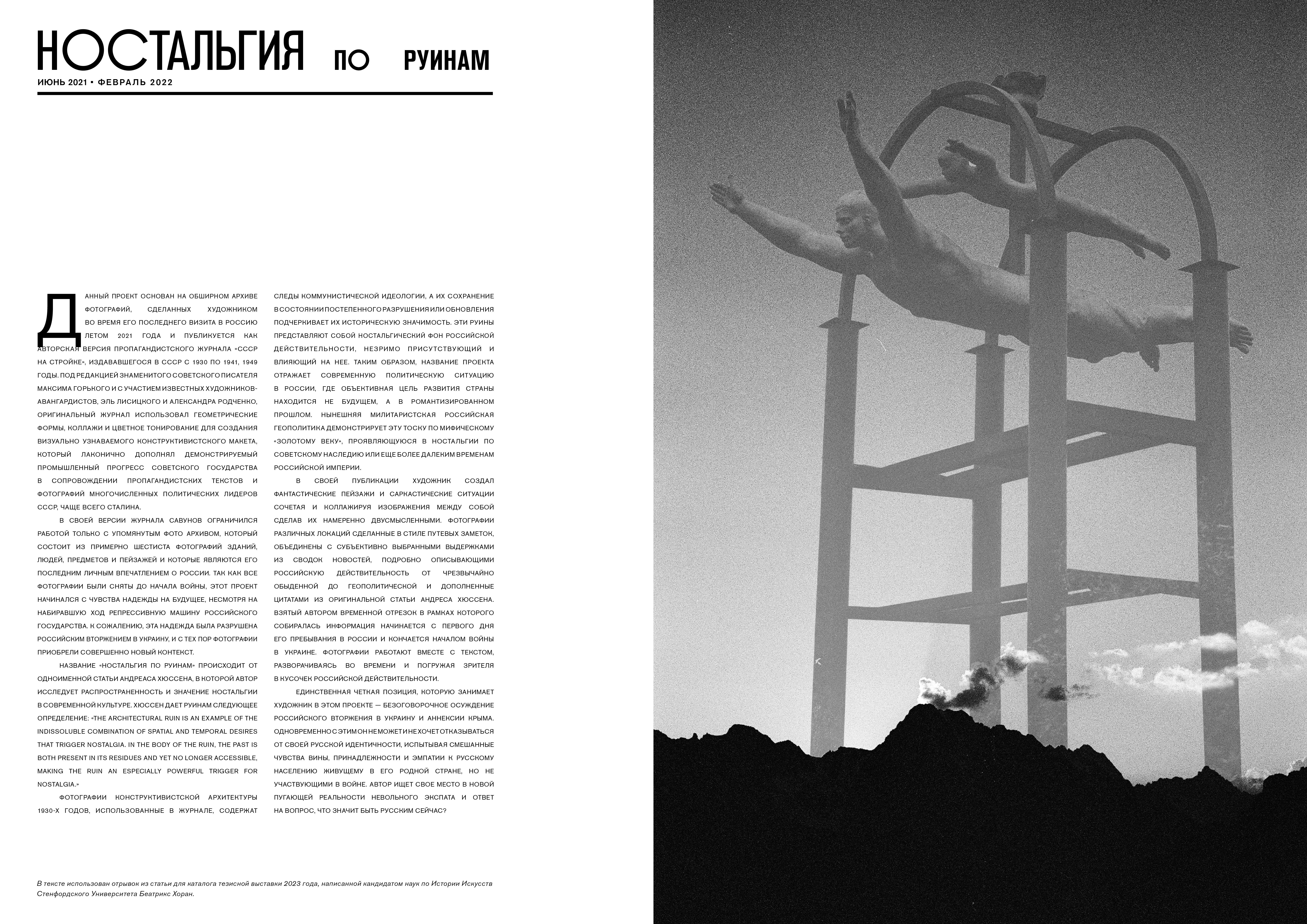
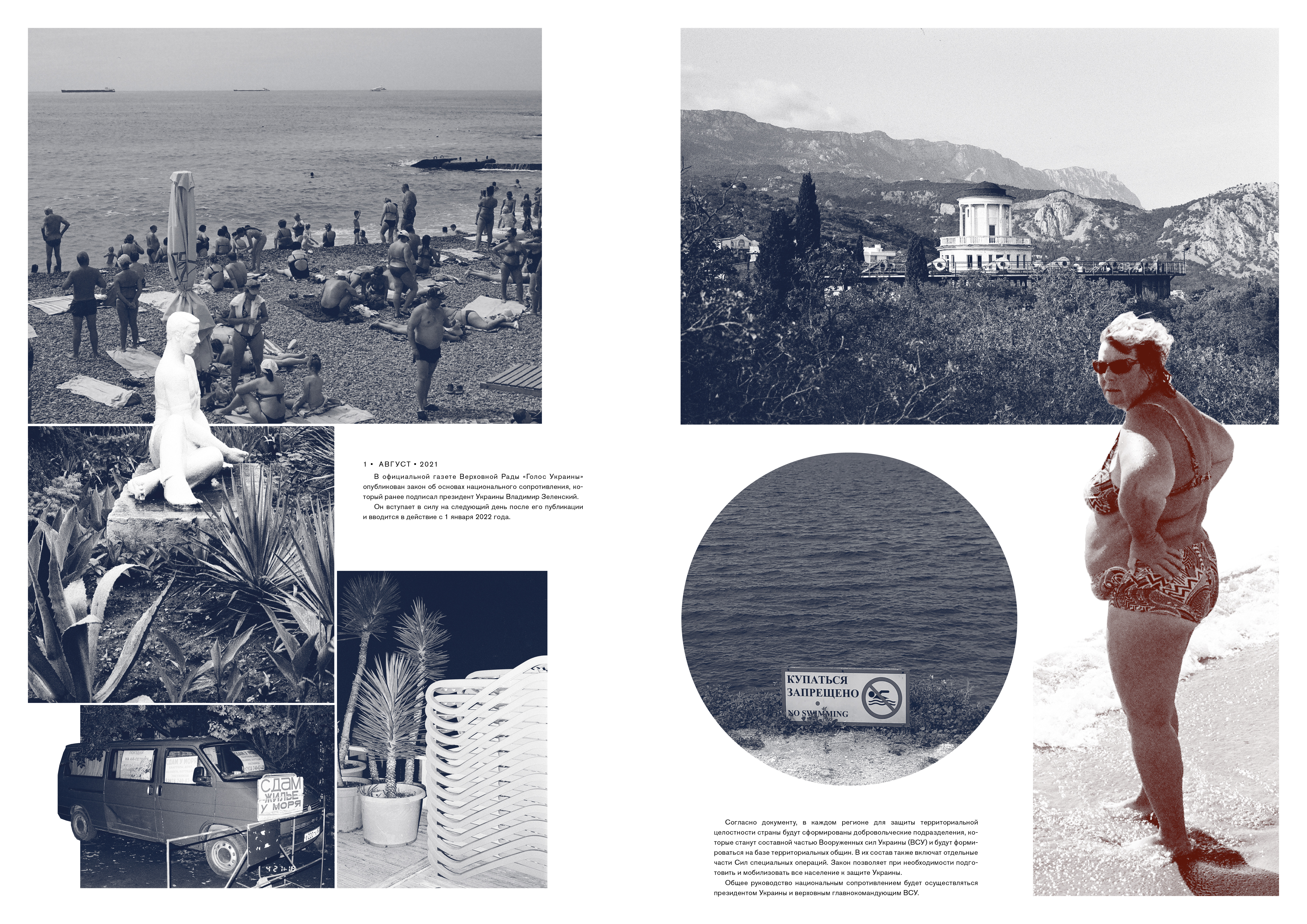
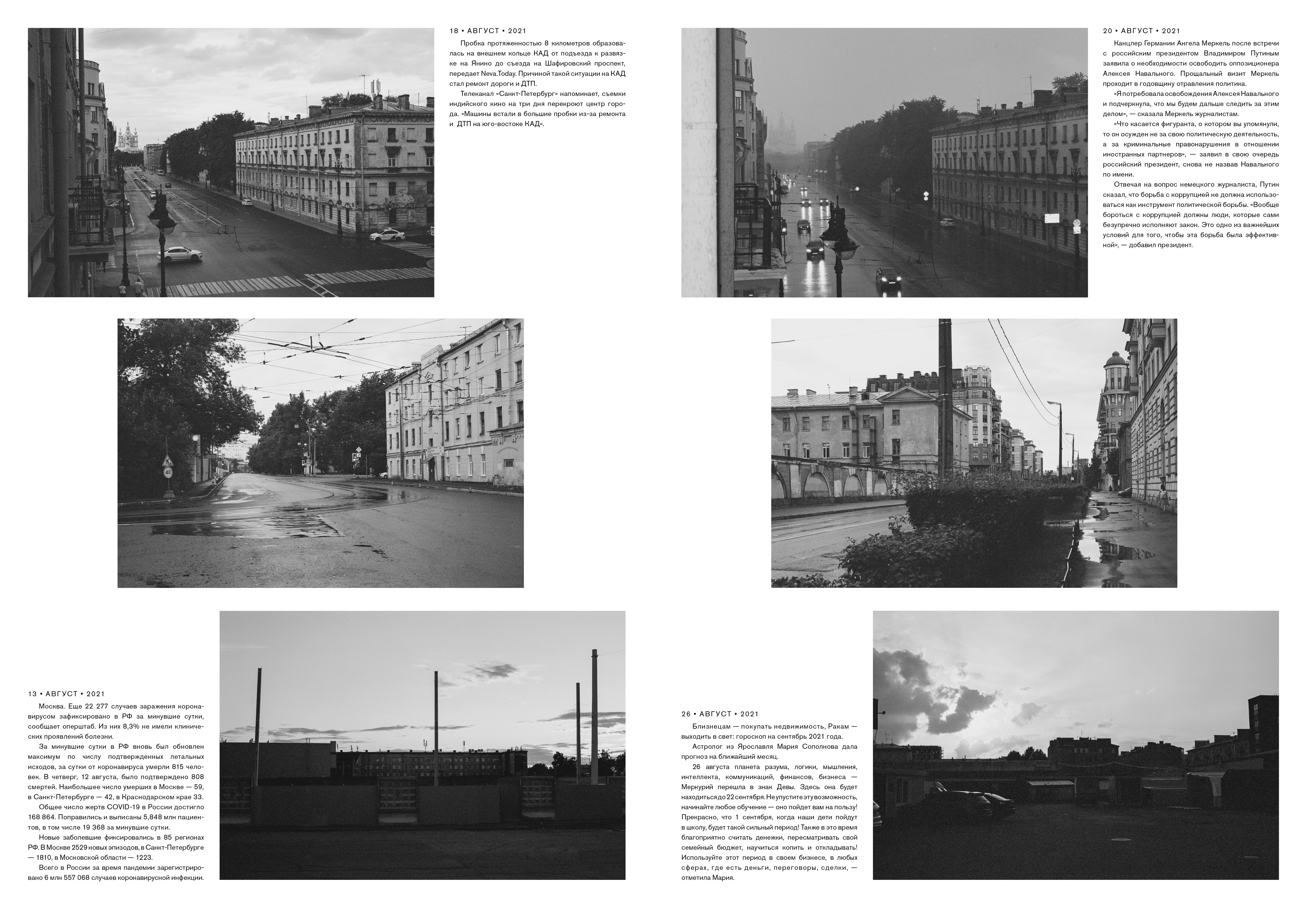
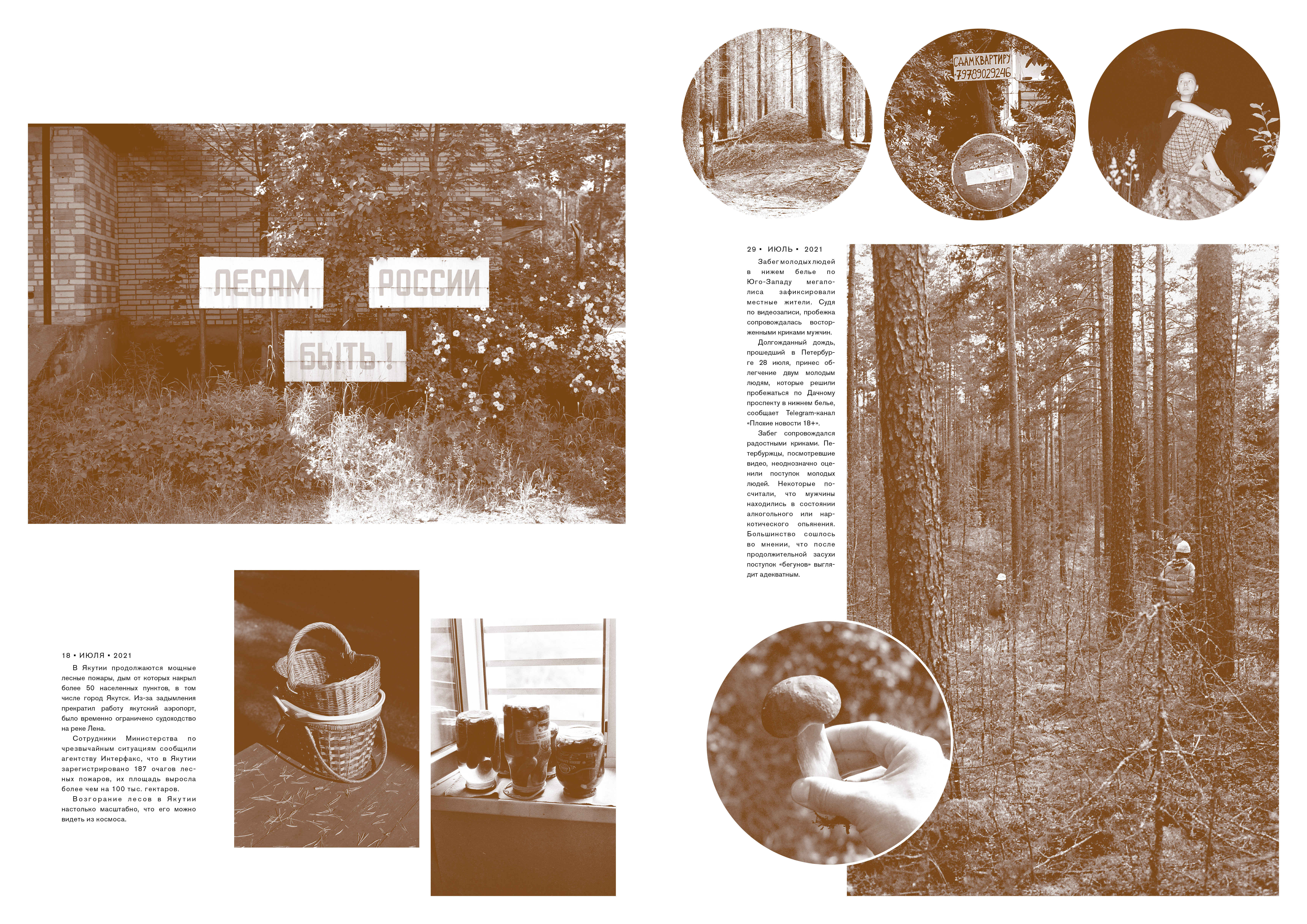
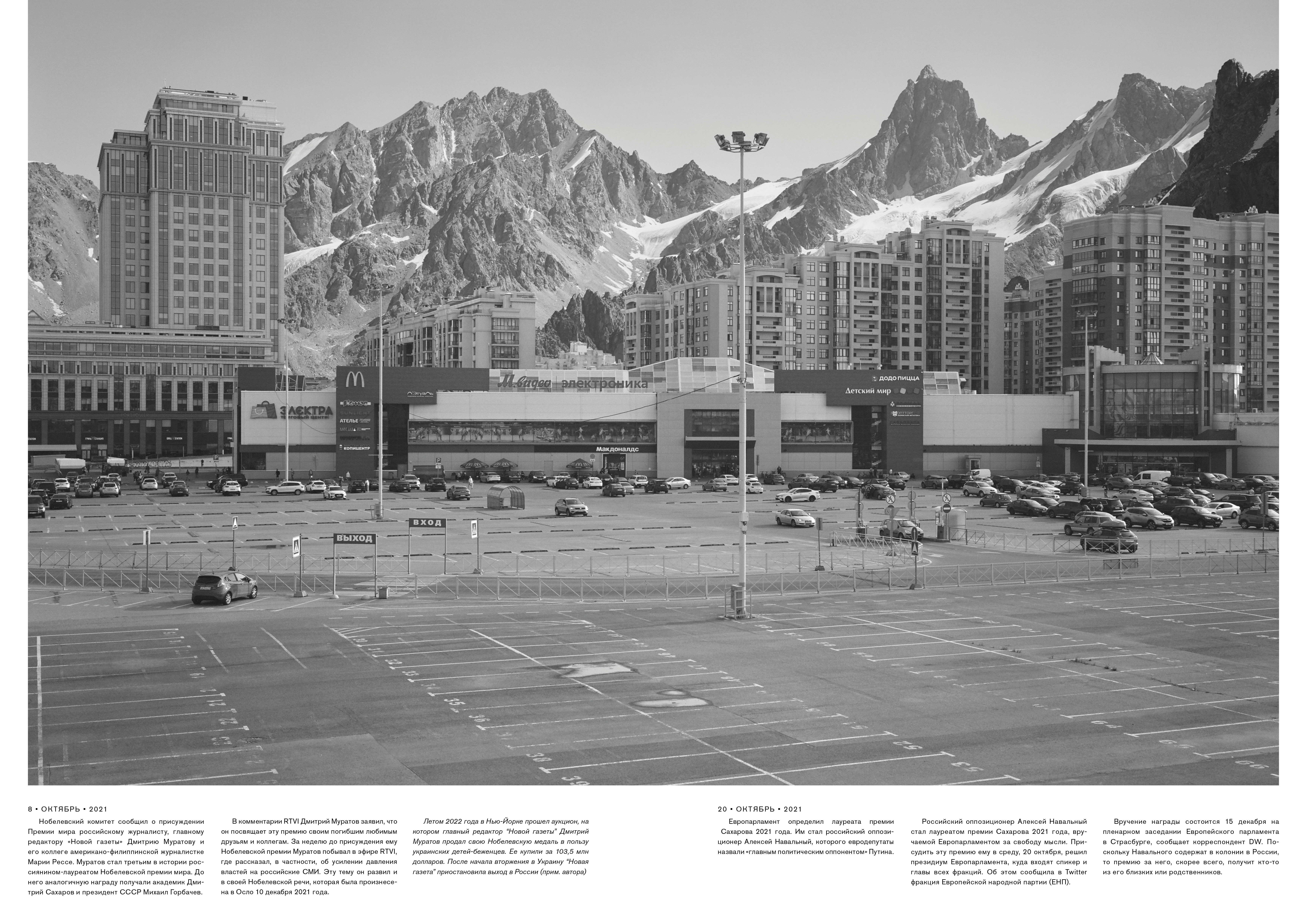
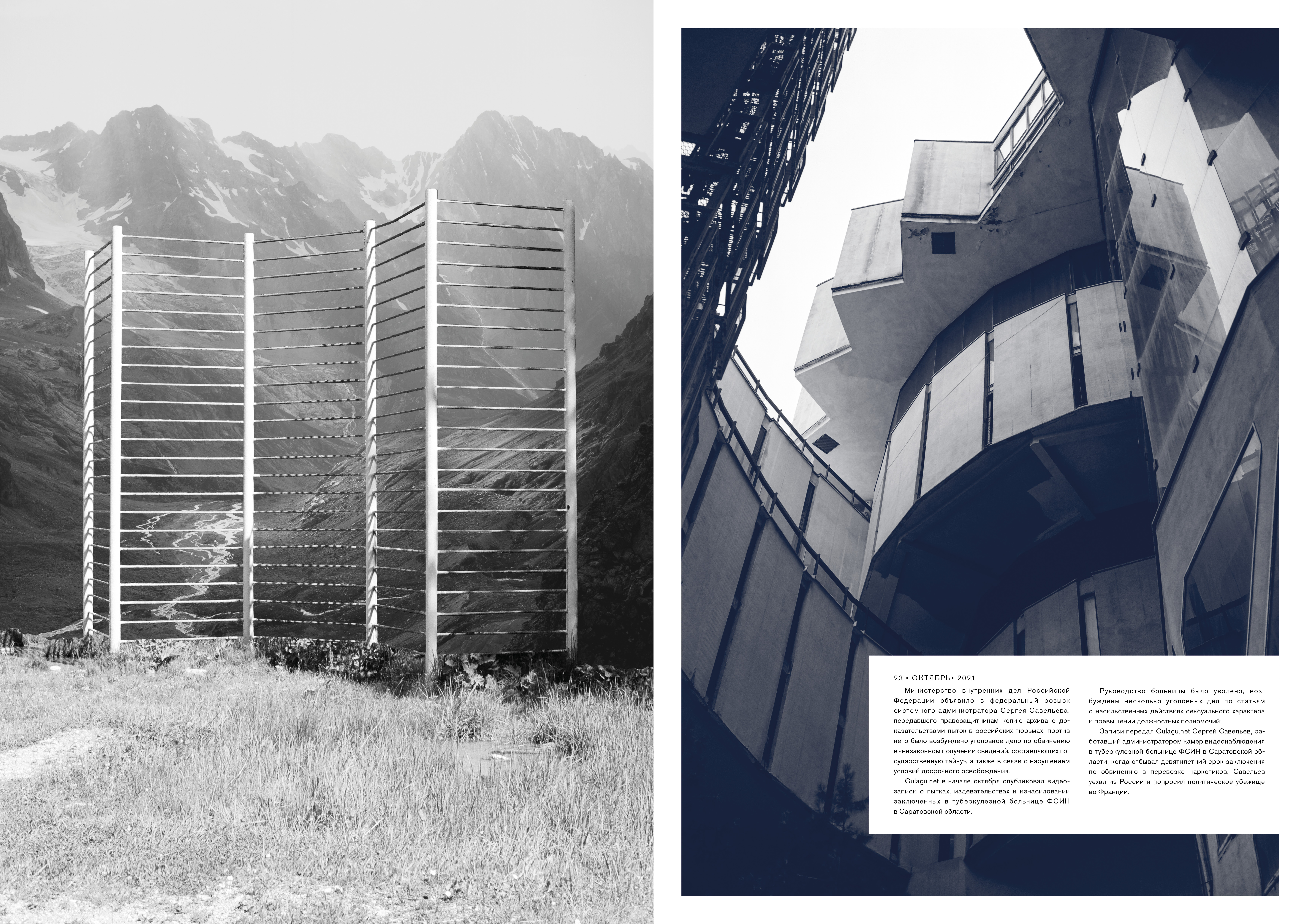
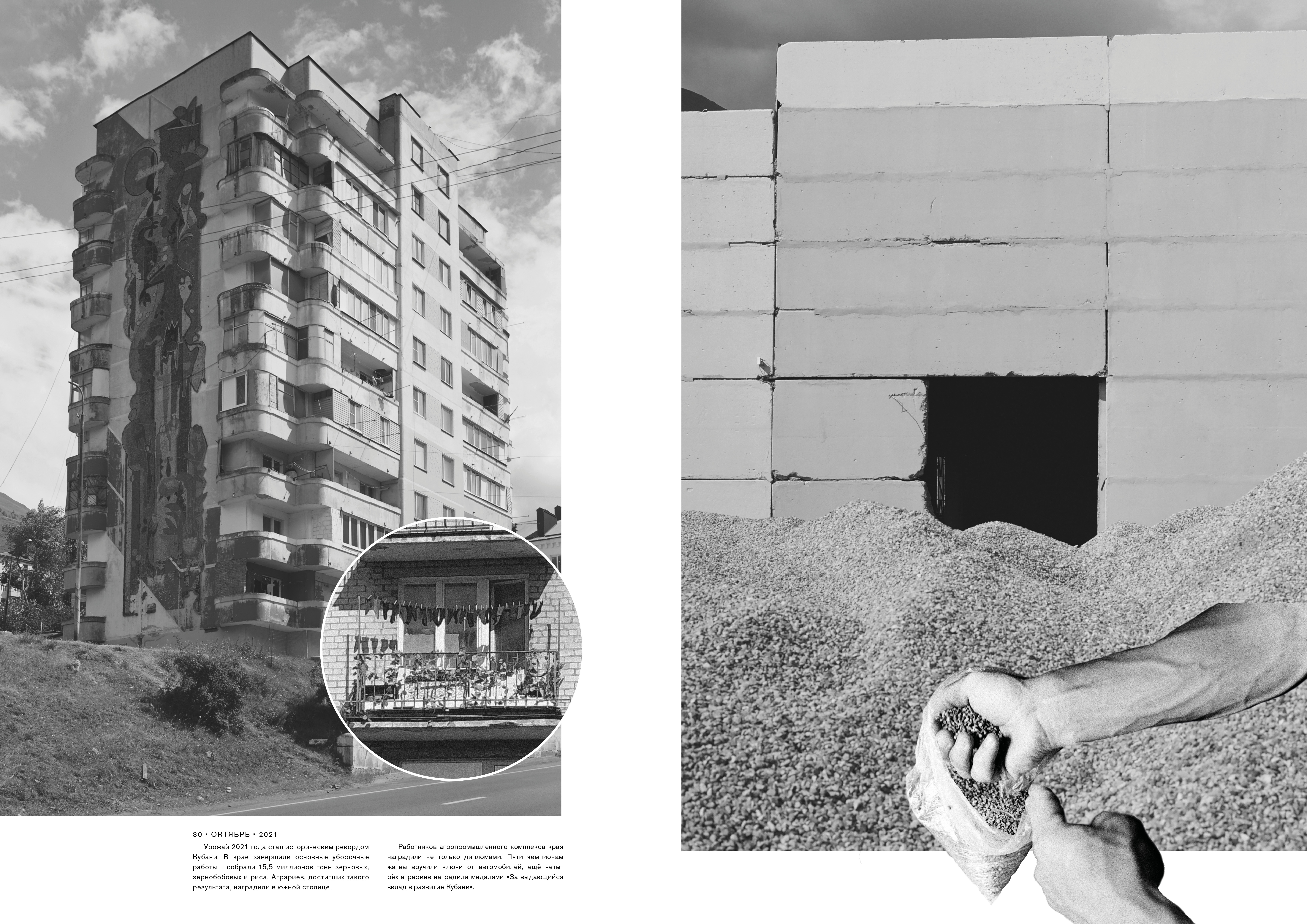
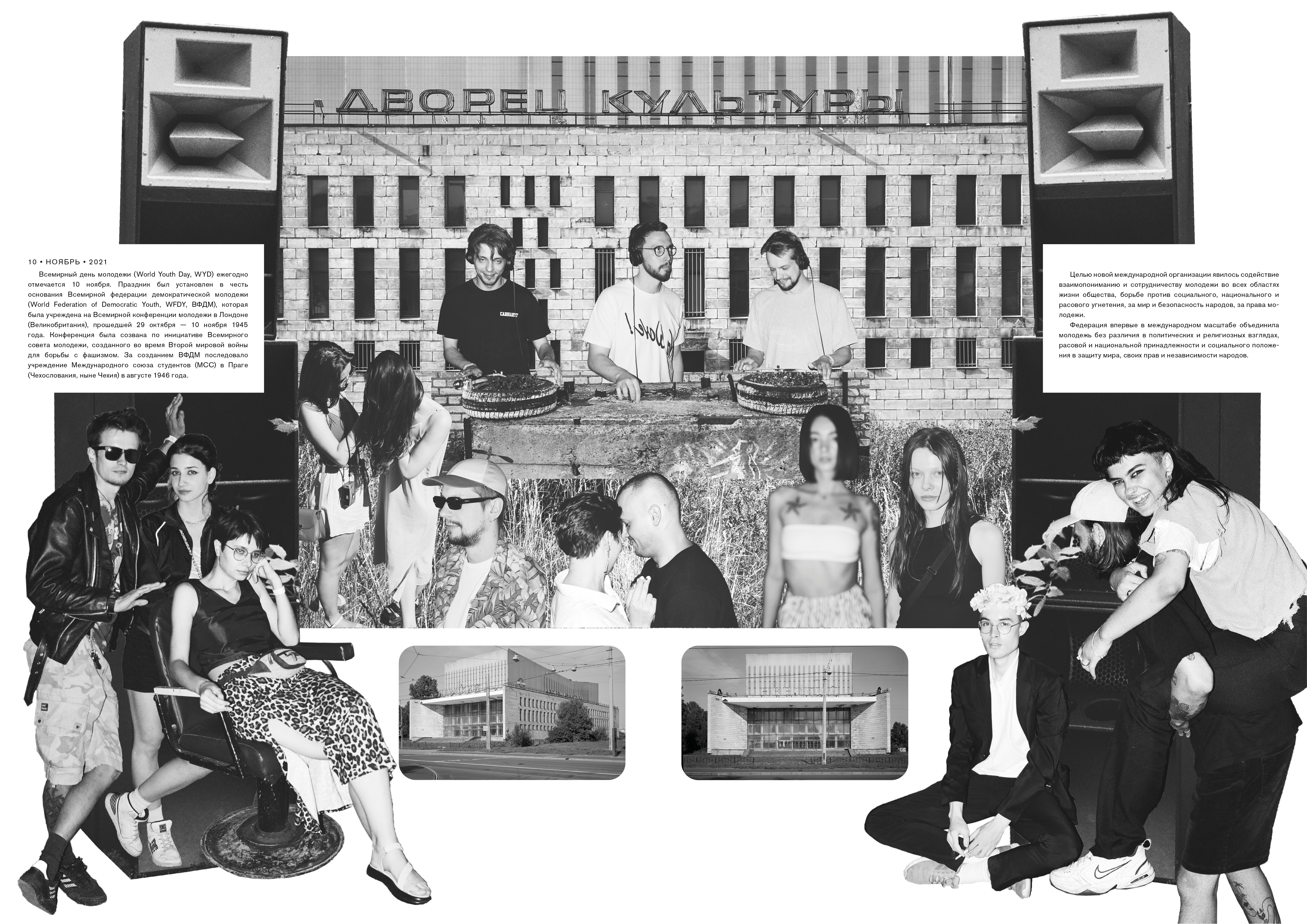
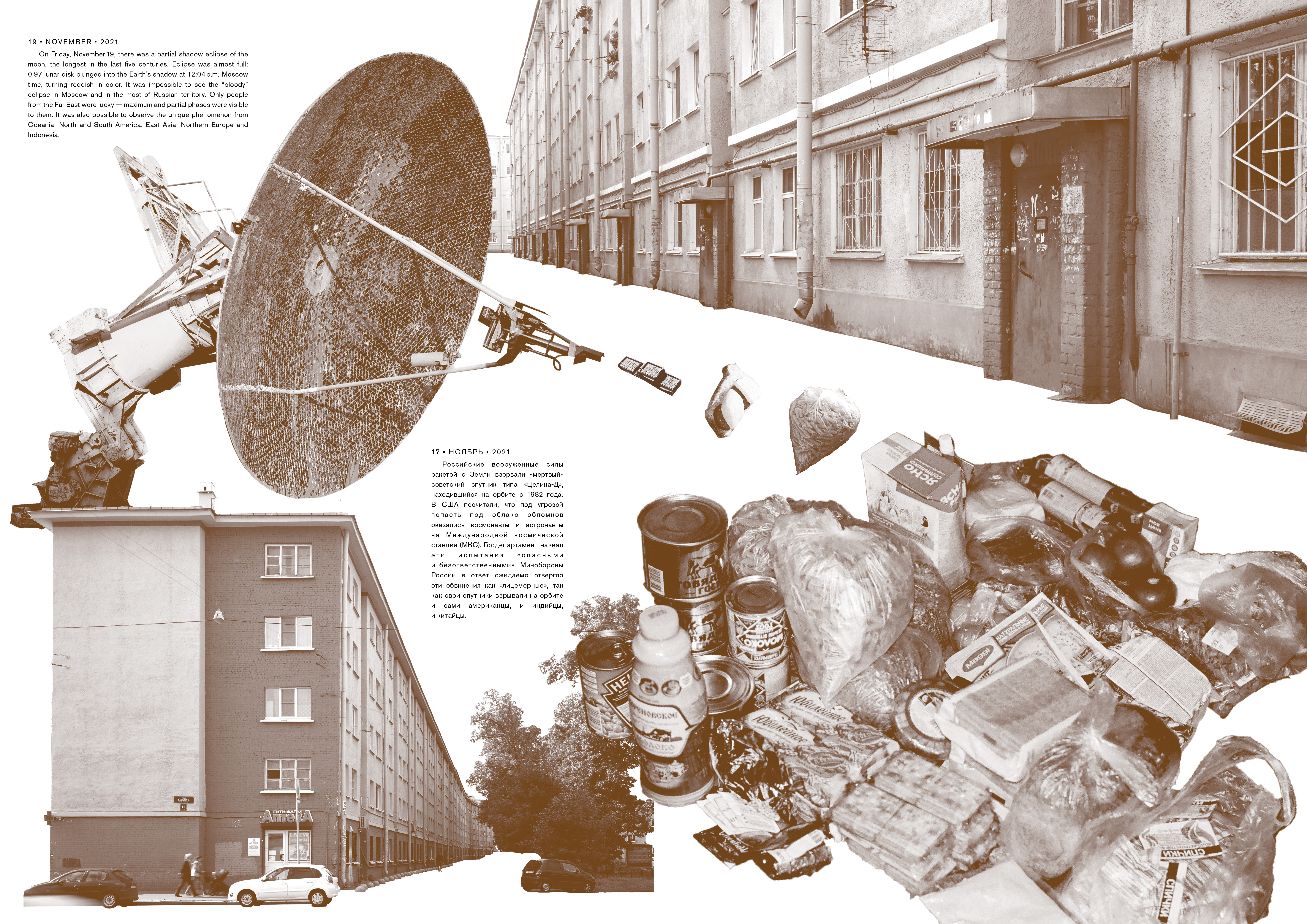
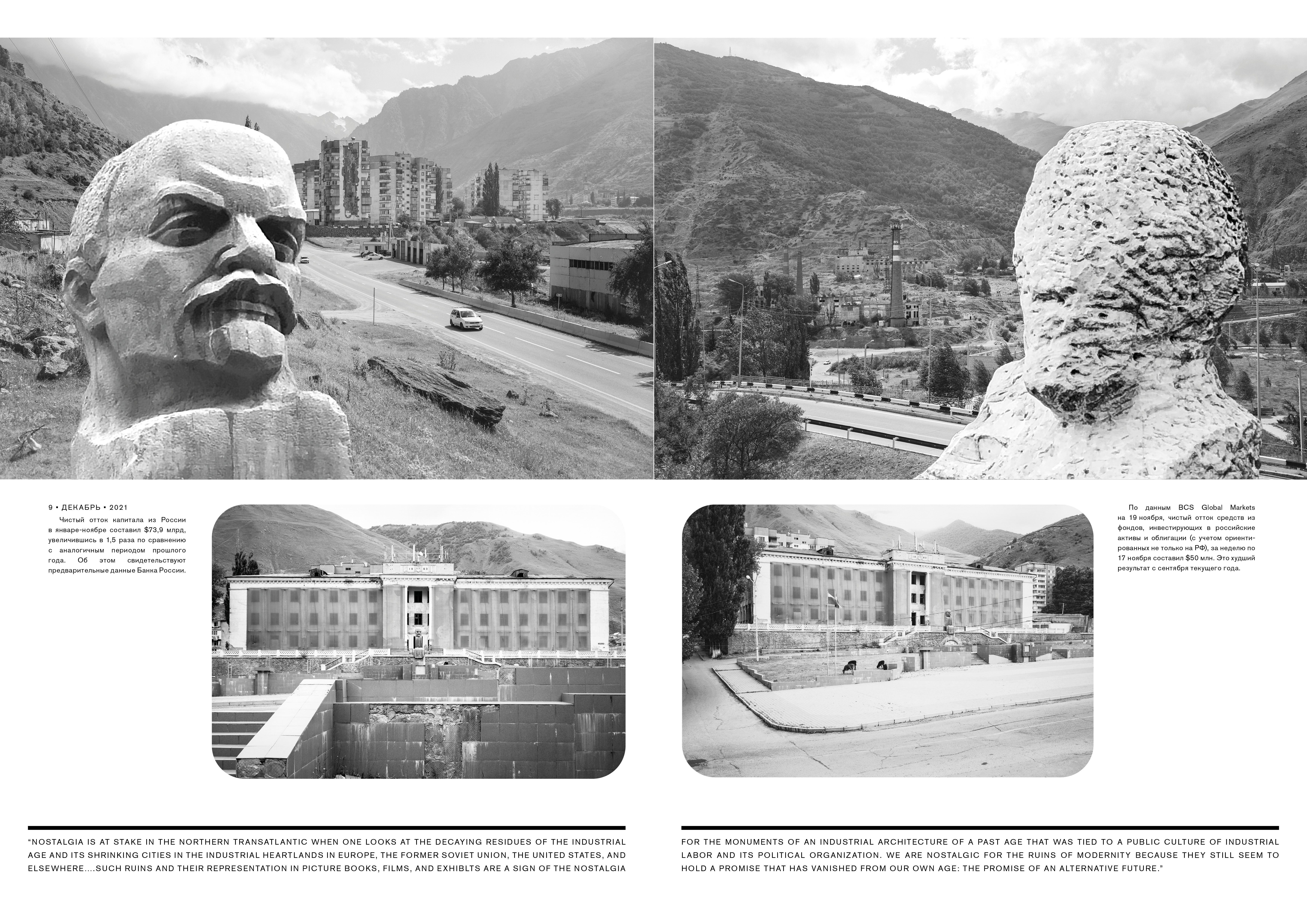
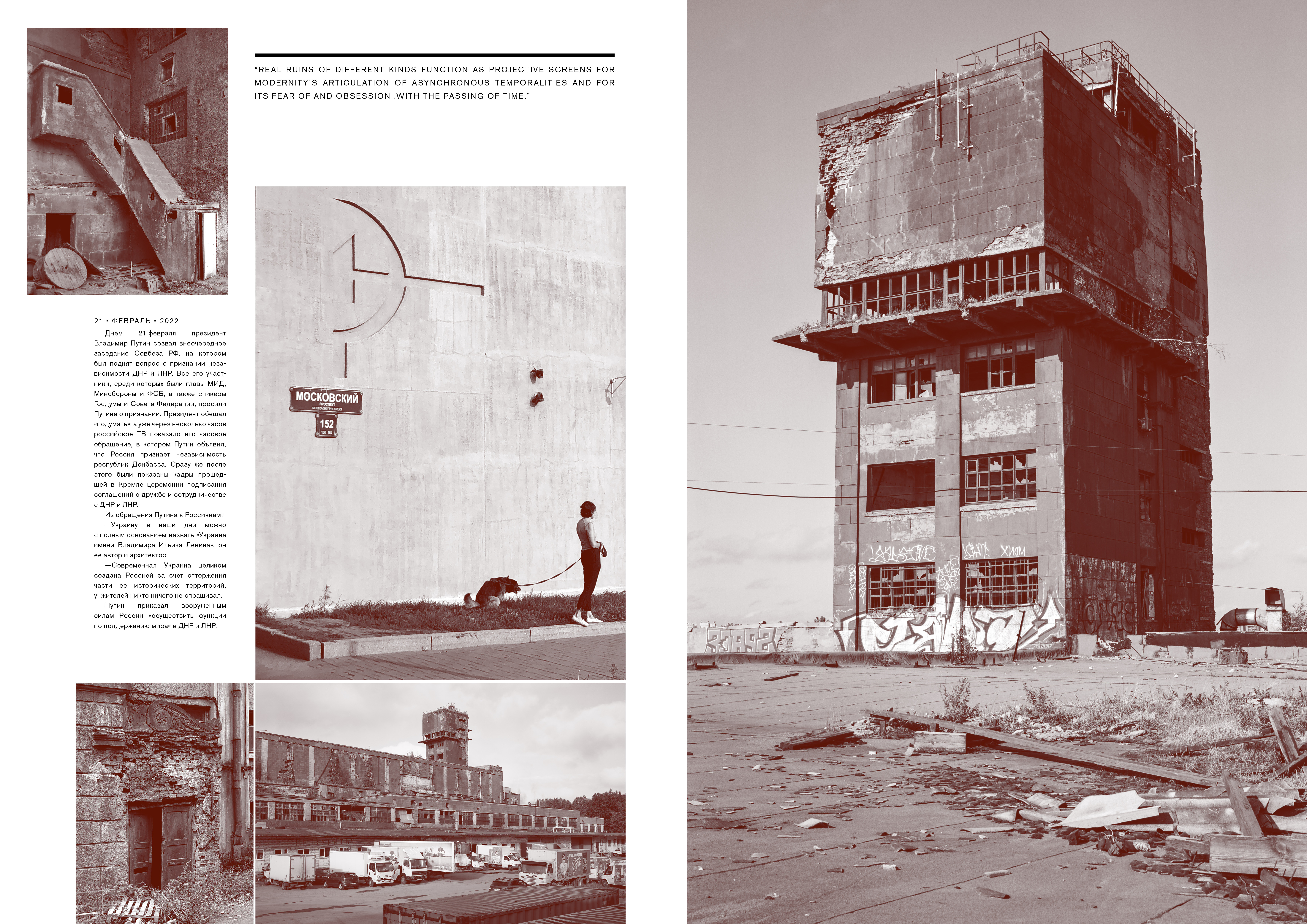
The project is based on the vast archive of photographs the artist had taken during his last visit to Russia in the summer of 2021 and is the author's version of the propaganda magazine, "USSR in Construction", issued in the USSR from 1930 to 1941, 1949. Directed by the famous Soviet writer Maxim Gorky, the publication featured renowned avant-garde artists, including El Lissitzky and Alexander Rodchenko. The magazine utilized geometric forms, collages, and color toning to create a visually appealing layout showing the industrial progress of the Soviet state, accompanied by propaganda texts and numerous photographs of the Soviet leaders.
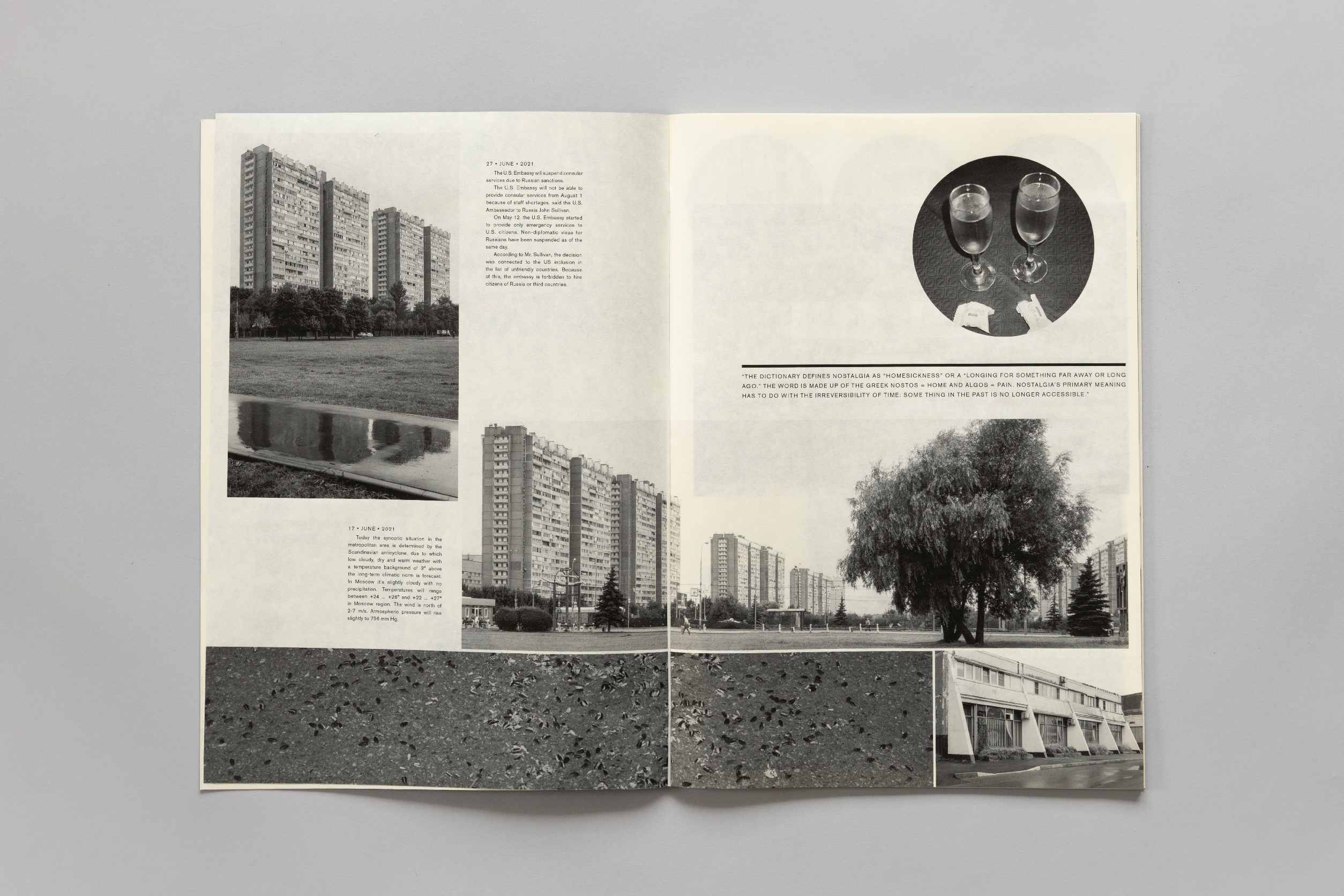
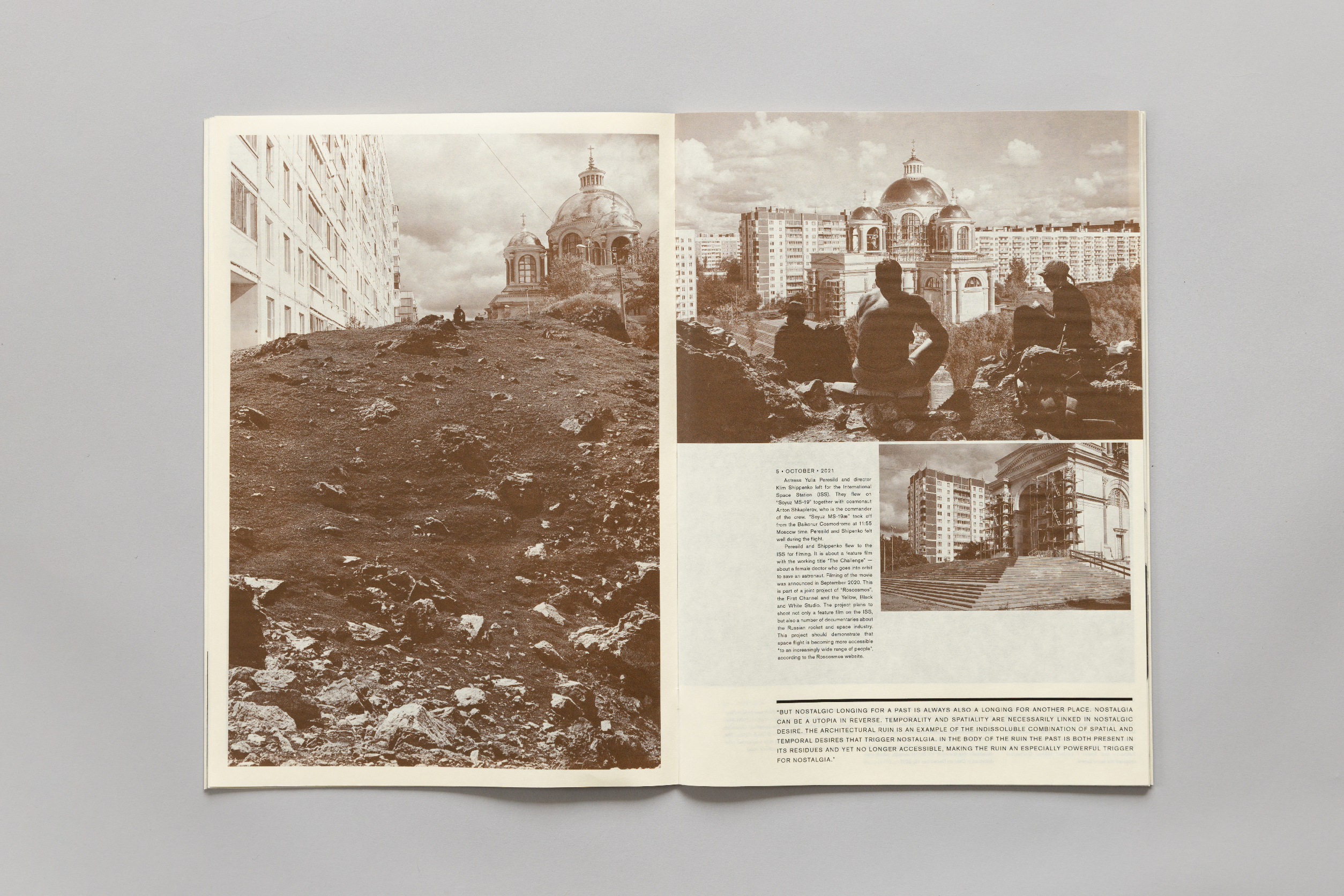
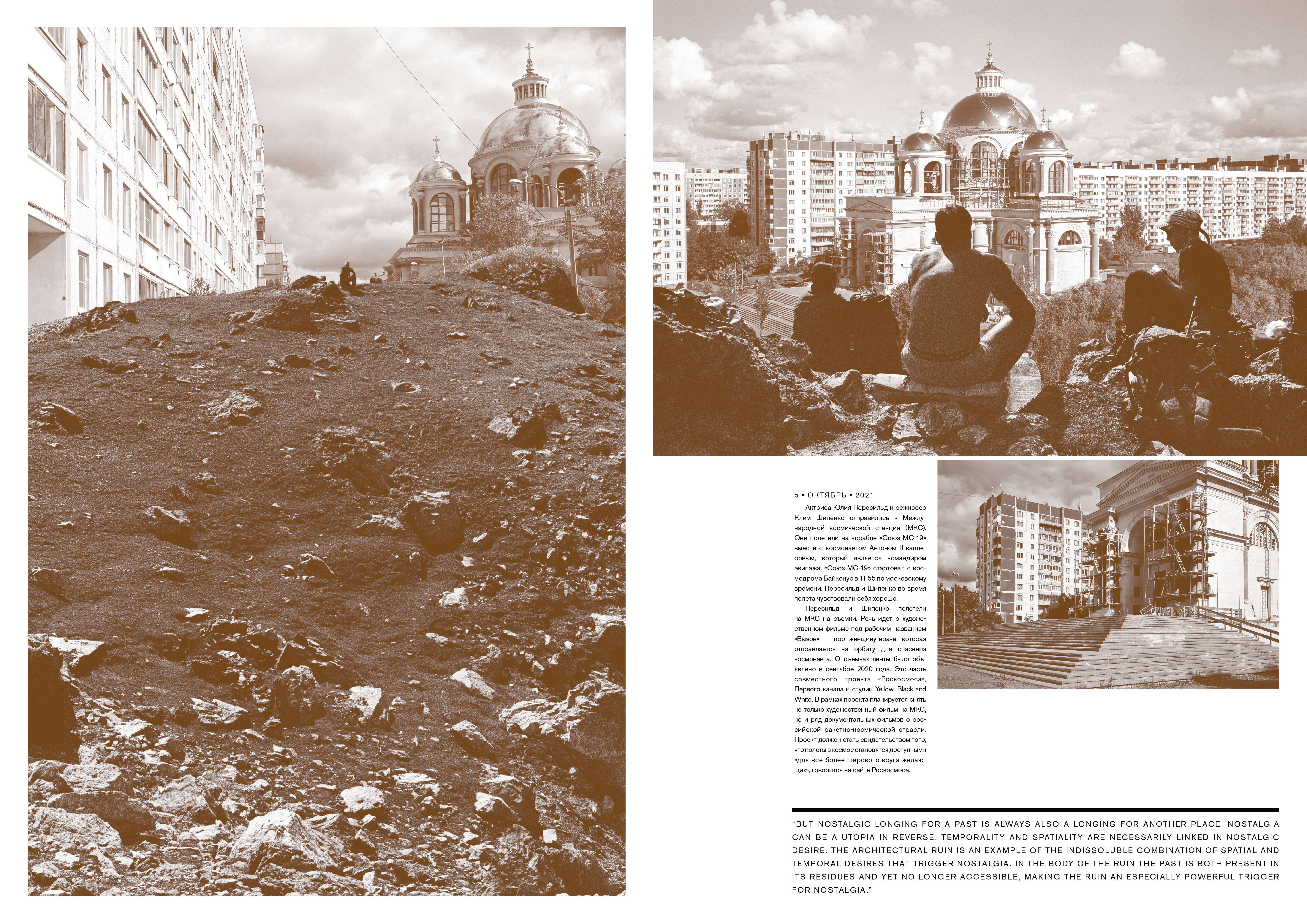
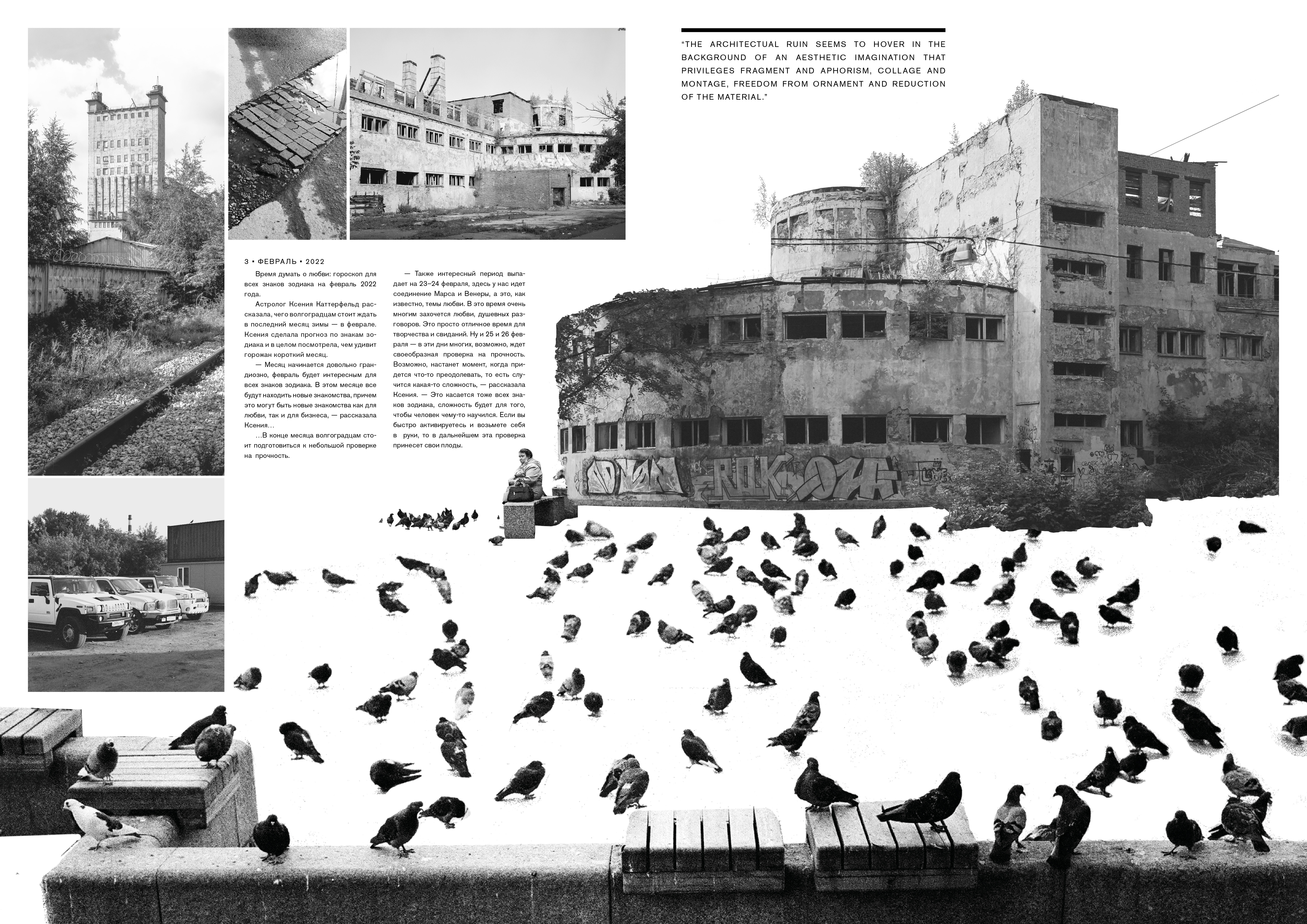
The title "Nostalgia for Ruins" originates from the article of the same title written by Andreas Huyssen in which he explores the prevalence and significance of nostalgia in contemporary culture. Huyssen gives “ruin” the following definition: "The architectural ruin is an expression of the indissoluble combination of spatial and temporal desires that trigger nostalgia. In the body of the ruin, the past is both present in its residues and yet no longer accessible, making the ruin an especially powerful trigger for nostalgia.
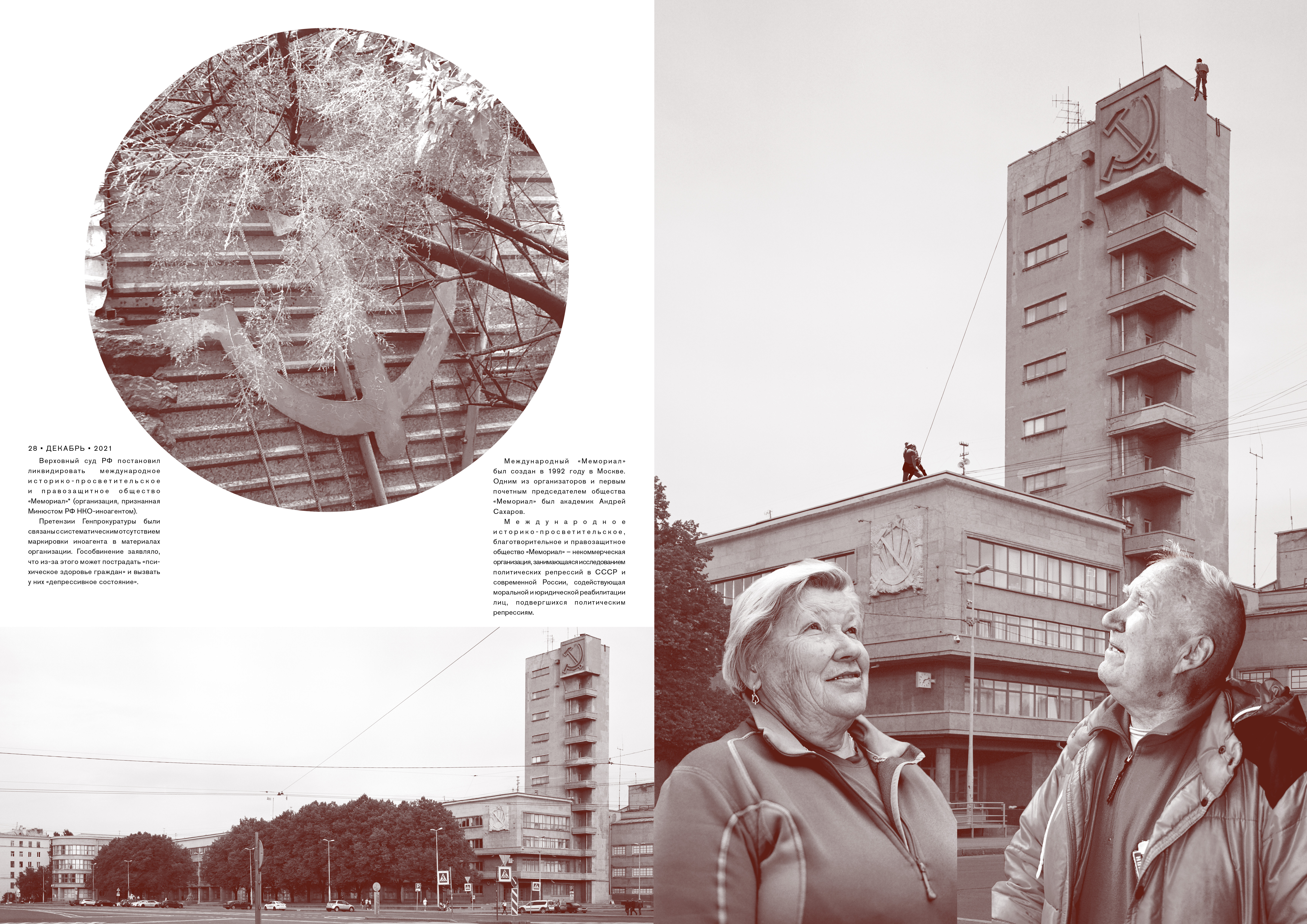
The photographs of constructivist architecture of the 1930s used in the magazine contain traces of communist ideology, and their timely persistence in a state of gradual decay or renovation underscores their historical significance. These ruins represent a nostalgic backdrop of Russian reality, invisibly present and subtly influential.
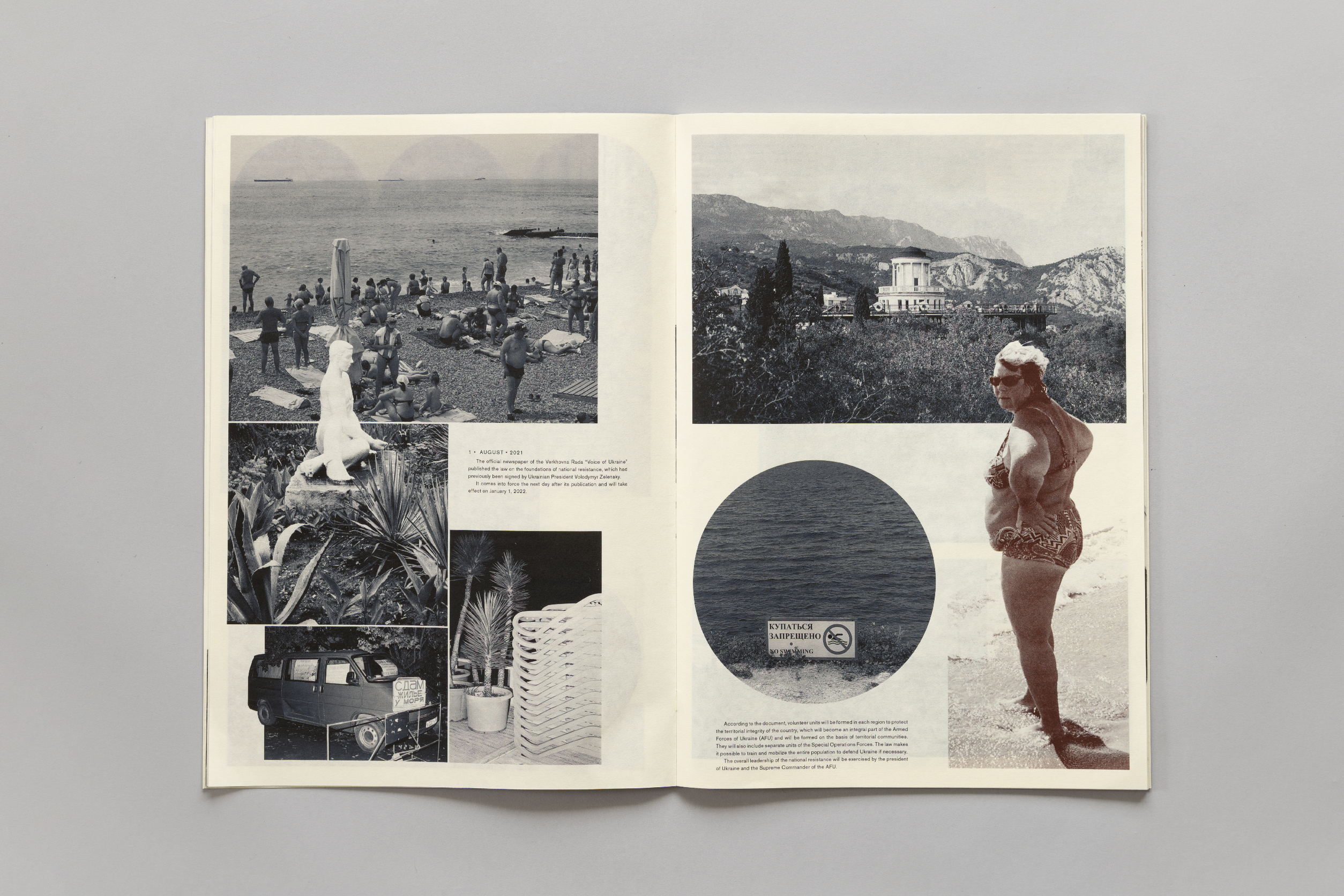
The photographs in the publication are made intentionally ambiguous by subtle collaging, resulting in fantastical landscapes. The travelogue-like photos of various Russian locales are paired in collage with subjective excerpts from news coverage detailing Russian life, from the extremely mundane to the pressingly geopolitical, supplemented with quotes from the Andres Huyssen's original article. The photographs work together with the text, unfolding in time and immersing the viewer in a slice of Russian reality.
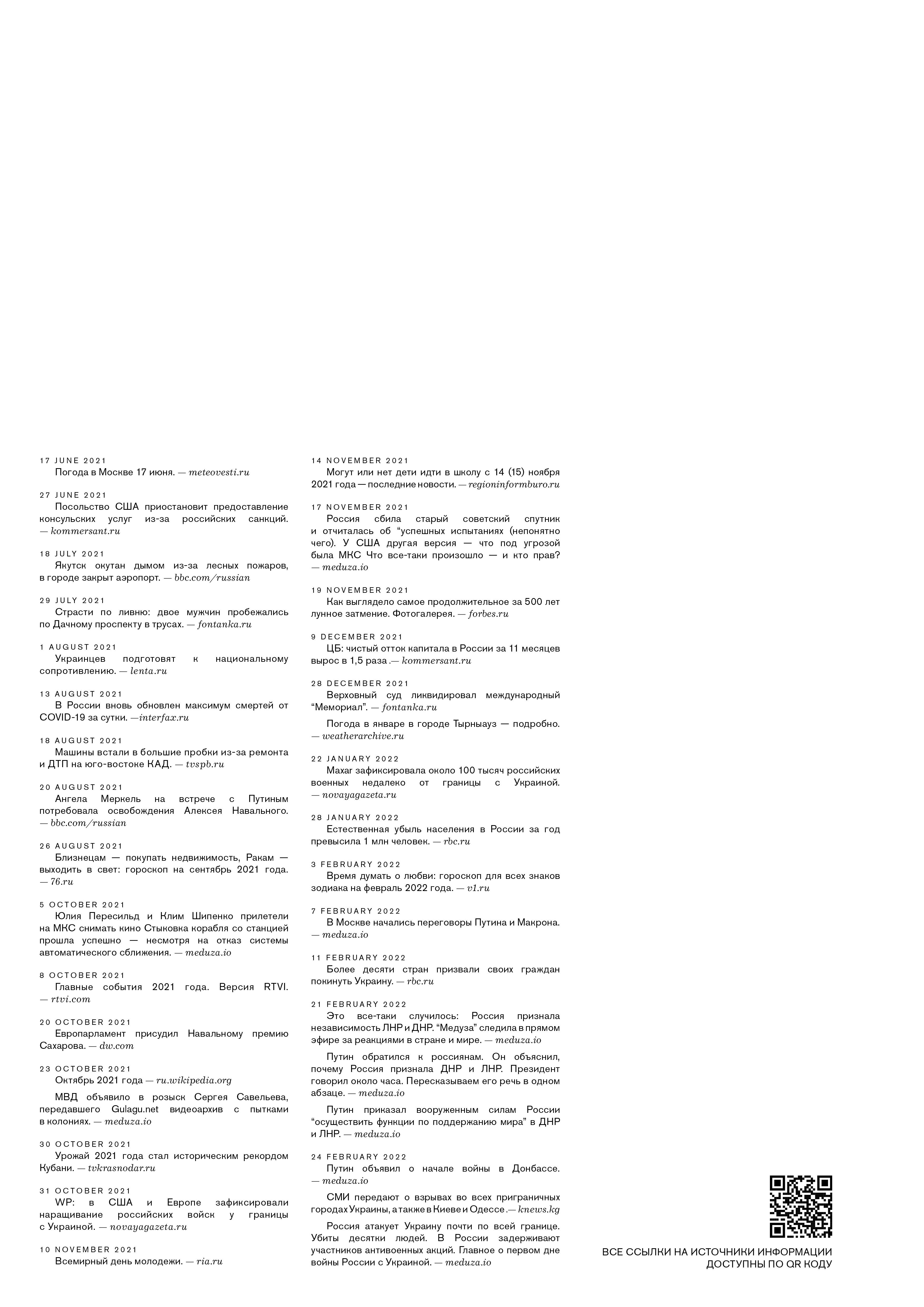
Used info links page


















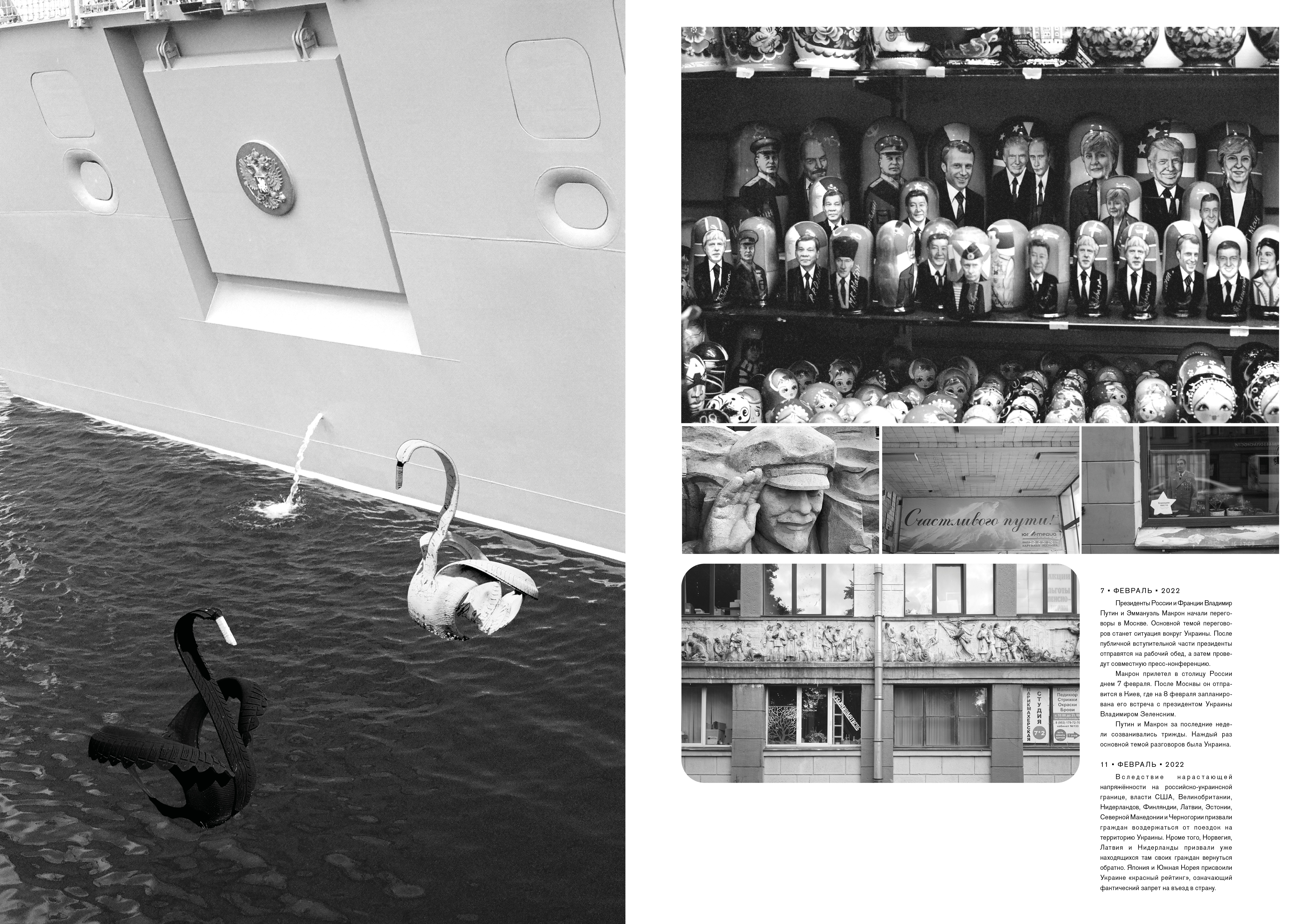


- June 17th/17 июня
- June 27th/27 июня
- July 18th/18 июля
- July 29th/29 июля
- August 1st /1 авуста
- August 13th/13 августа
- August 18th/18 августа
- August 20th/20 августа
- August 26th/26 августа
- October 5th/5 октября
- October 8th/8 октября
- October 20th/20 октября
- October 23th/23 октября
https://meduza.io/news/2021/10/23/mvd-ob-yavilo-v-rozysk-sergeya-savelieva-peredavshego-gulagu-net-videoarhiv-s-pytkami-v-koloniyah
- October 30th/30 октября
- October 31st/31 октября
- November 10th/10 ноября
- November 14th/14 ноября
- November 17th/17 ноября
- November 19th/19 ноября
- December 9th/9 декабря
- December 28th/28 декабря
- January 22nd/22 января
- January 28th/28 января
- February 3rd/3 февраля
- February 7th/7 февраля
- February 11th/11 февраля
- February 21st/21 февраля
https://meduza.io/paragraph/2022/02/21/putin-obratilsya-k-rossiyanam-on-ob-yasnil-pochemu-rossiya-priznala-dnr-i-lnr
https://meduza.io/news/2022/02/22/putin-prikazal-vooruzhennym-silam-rossii-osuschestvit-funktsii-po-podderzhaniyu-mira-v-dnr-i-lnr
- February 21st/21 февраля
https://meduza.io/news/2022/02/24/putin-ob-yavil-o-nachale-voennoy-operatsii-v-donbasse
https://meduza.io/feature/2022/02/24/rossiya-atakuet-ukrainu-pochti-po-vsem-granitsam-ubity-desyatki-lyudey-v-rossii-zaderzhivayut-uchastnikov-antivoennyh-aktsiy
Autumn Forest
2022
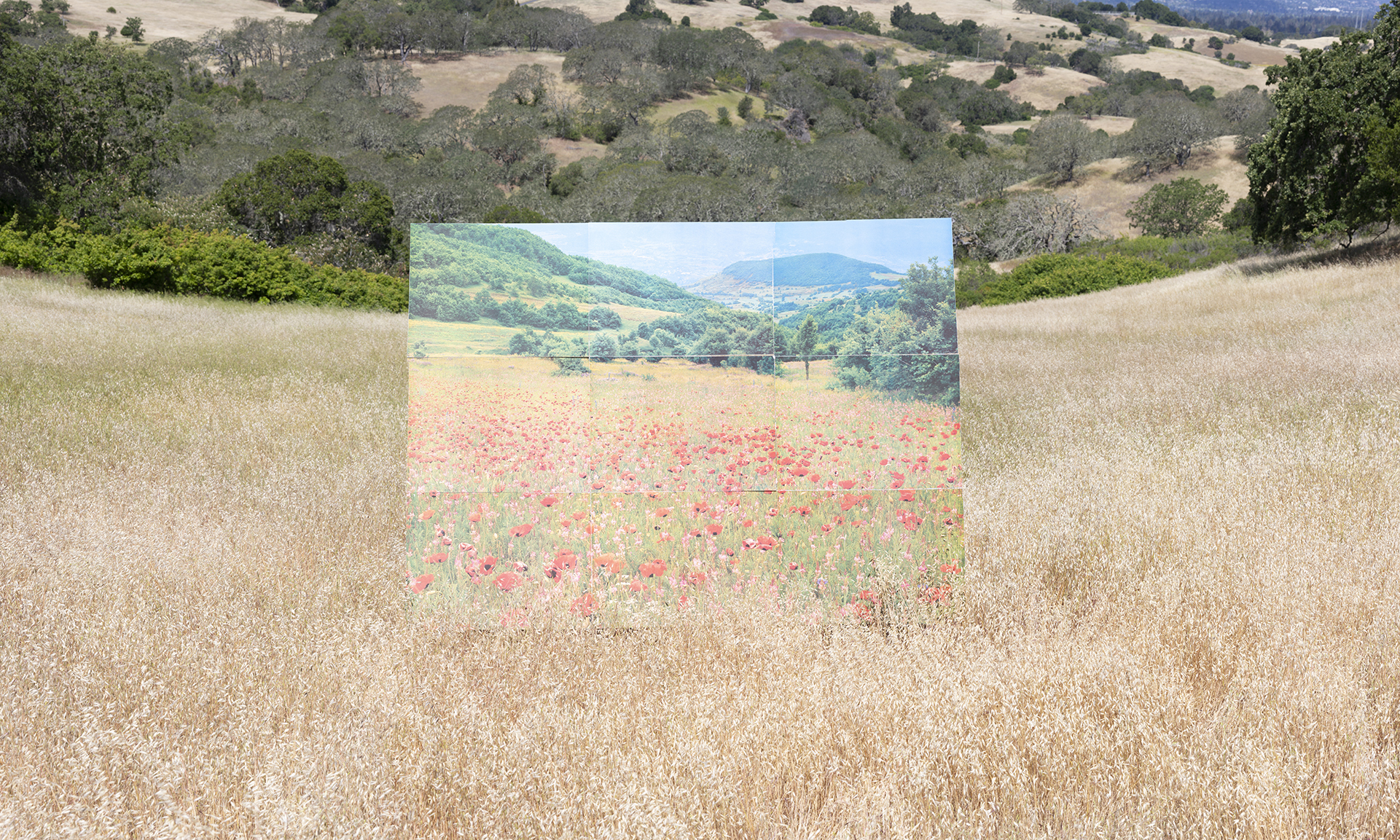
"Autumn Forest" is a project about the universality of the landscape as an all-encompassing space in which humans exist, as well as the author’s adaptation process to a new place of residence. The series is a documentation of physical interventions into the Bay Area landscape by positioning the panel installations with mounted photo wallpapers.
These wallpapers were mass-produced in the Soviet Union in the 1980s and were significant for the decade of the 80s in which Oleg was born. The sights and composition were accurately selected so they could merge with the image on the panel. The title of the work refers back to the cliche titles of such wallpaper packs such as “Lakeside view”, “Golden Autumn” or the ”In the Caucasus mountains”.


Sun for fire/ Drought for water/
Dust for air
2022
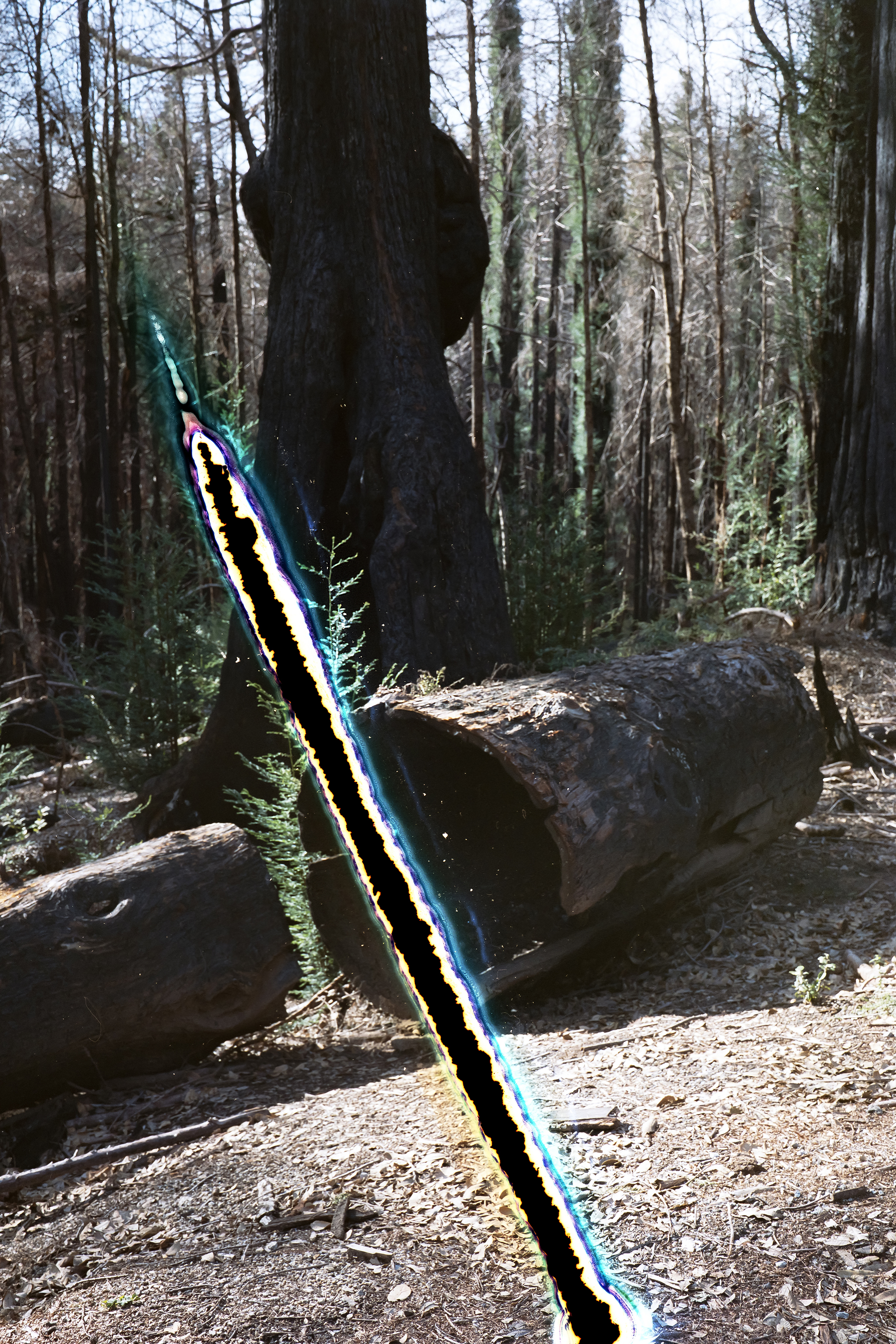
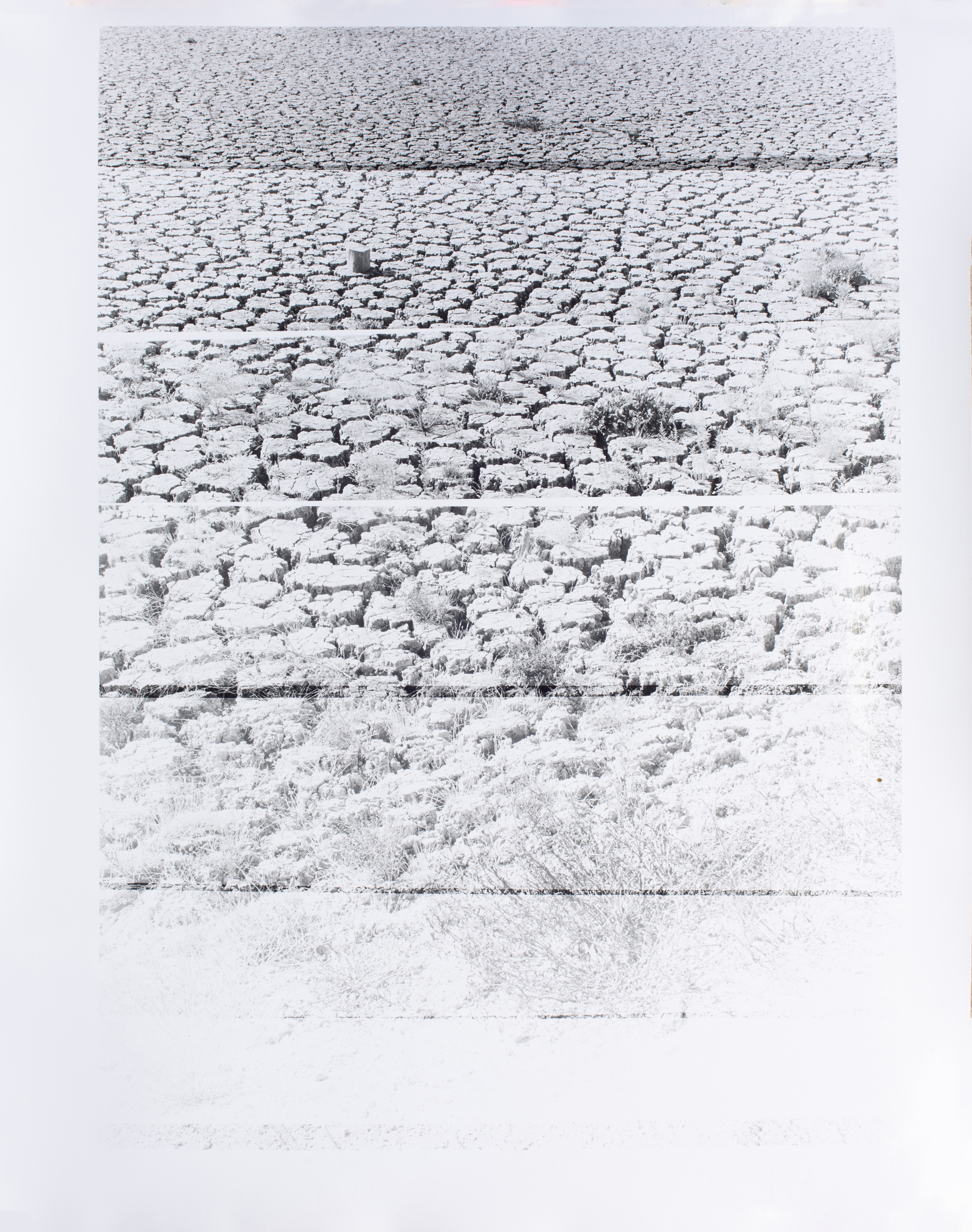
For most of the history of photography, film was the most common imaging medium. Nowadays, due to the development of digital technology, this material has become much less used, but it has become even more valuable, more specific, and has moved from amateur use to semi or fully professional. Because of the tremendous decrease in demand and the increase in product prices, there is a great danger of the complete disappearance of film as photographic material.
On top of that film as material needs to be handled very carefully, it is very easy to scratch, incorrectly develop or print. I used this sensitivity of photographic material as an analogy for the sensitivity of the environmental balance. The three photographs presented represent three environmental problems of California through three different ways in which the elements of nature affect the photographic medium.
Fire - a negative burned with a magnifying glass from approximately 10 am to 2 pm
Water - contact print made in a water bath with diminishing exposure times
Air - a negative left on a bridge over a highway for 48 hours

Self-eclosed
2022
Russia's land use is characterized by an open and borderless landscape accessible to all for leisure and recreation. This perception of nature as a national treasure is an enduring legacy of the Soviet past.
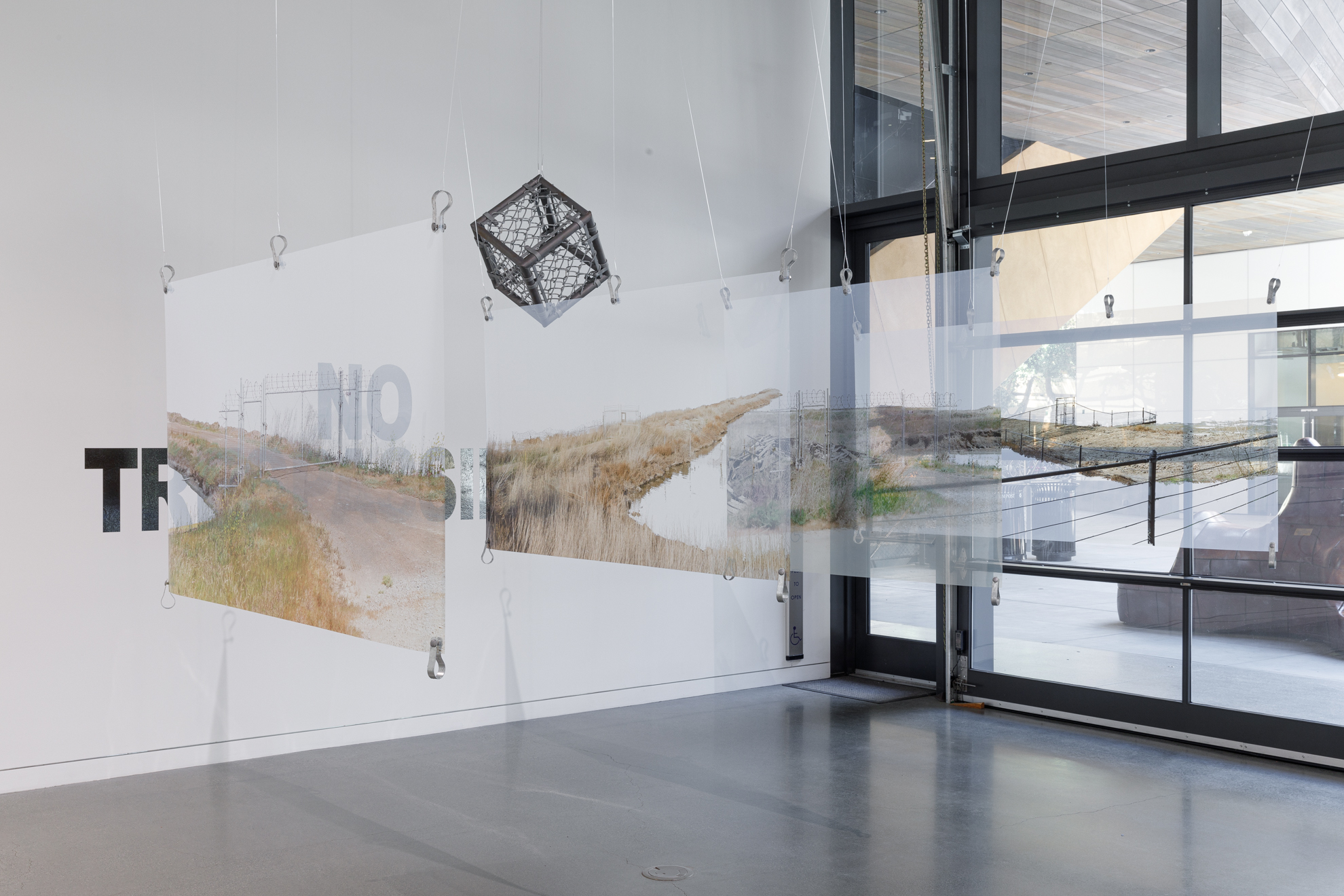
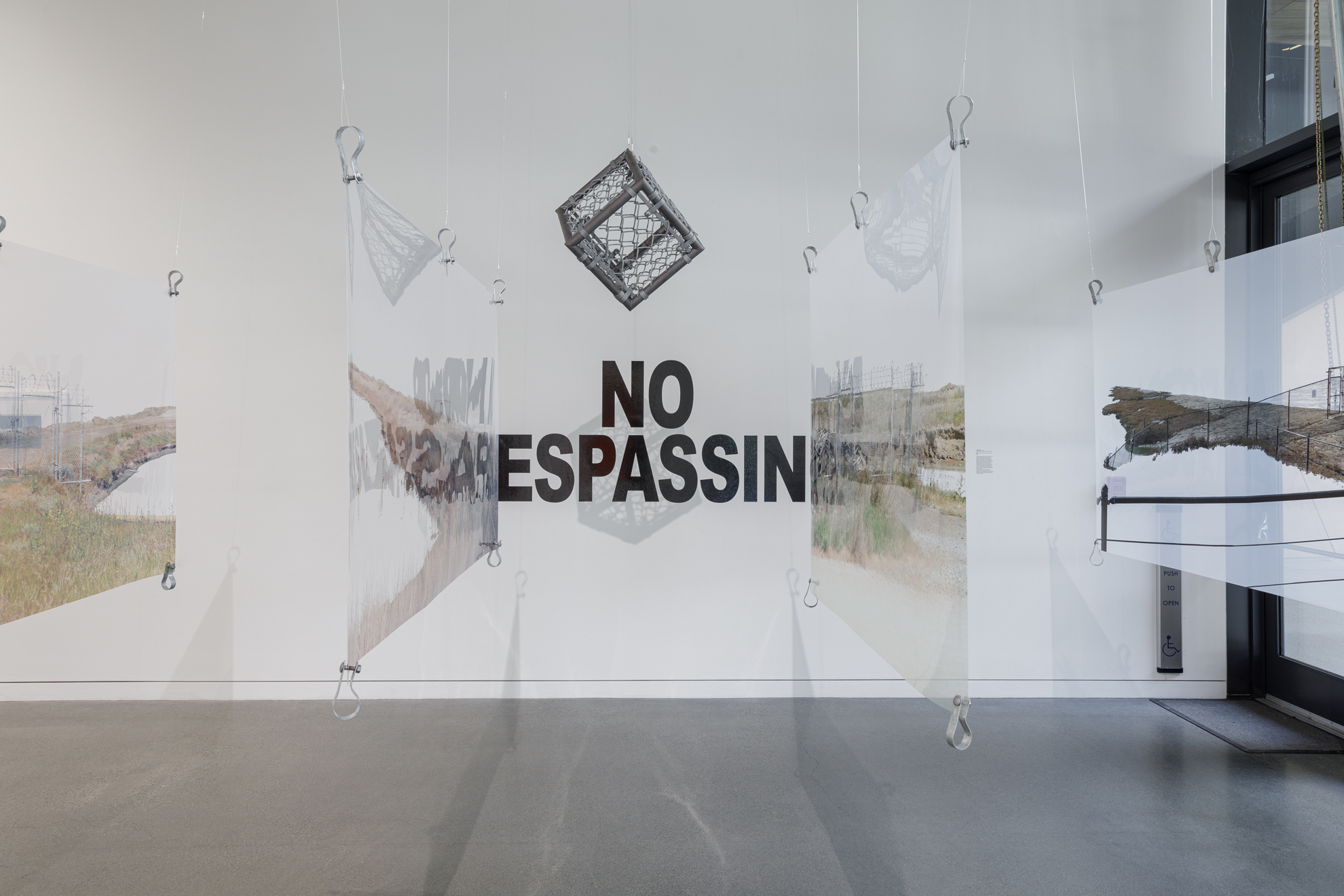
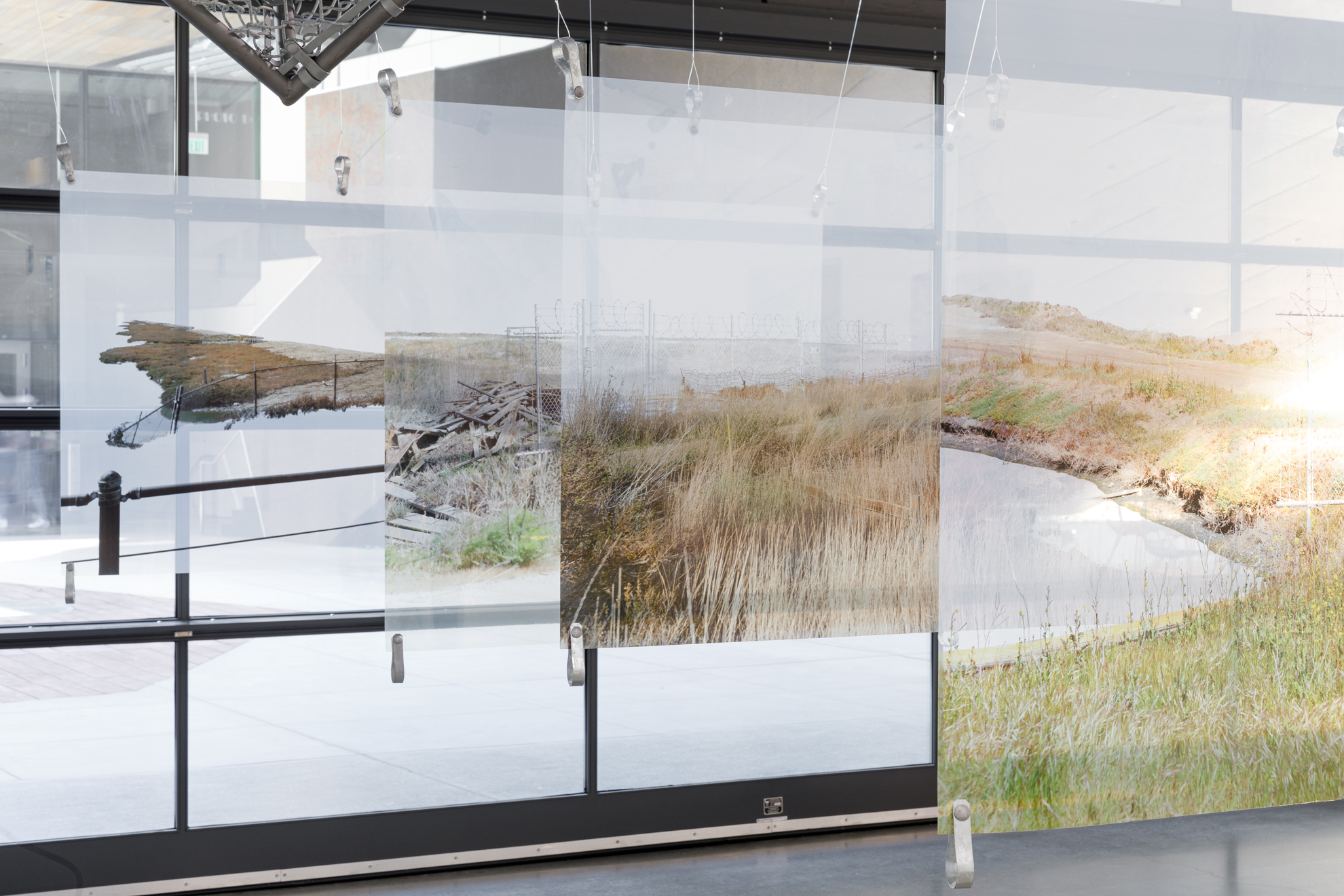
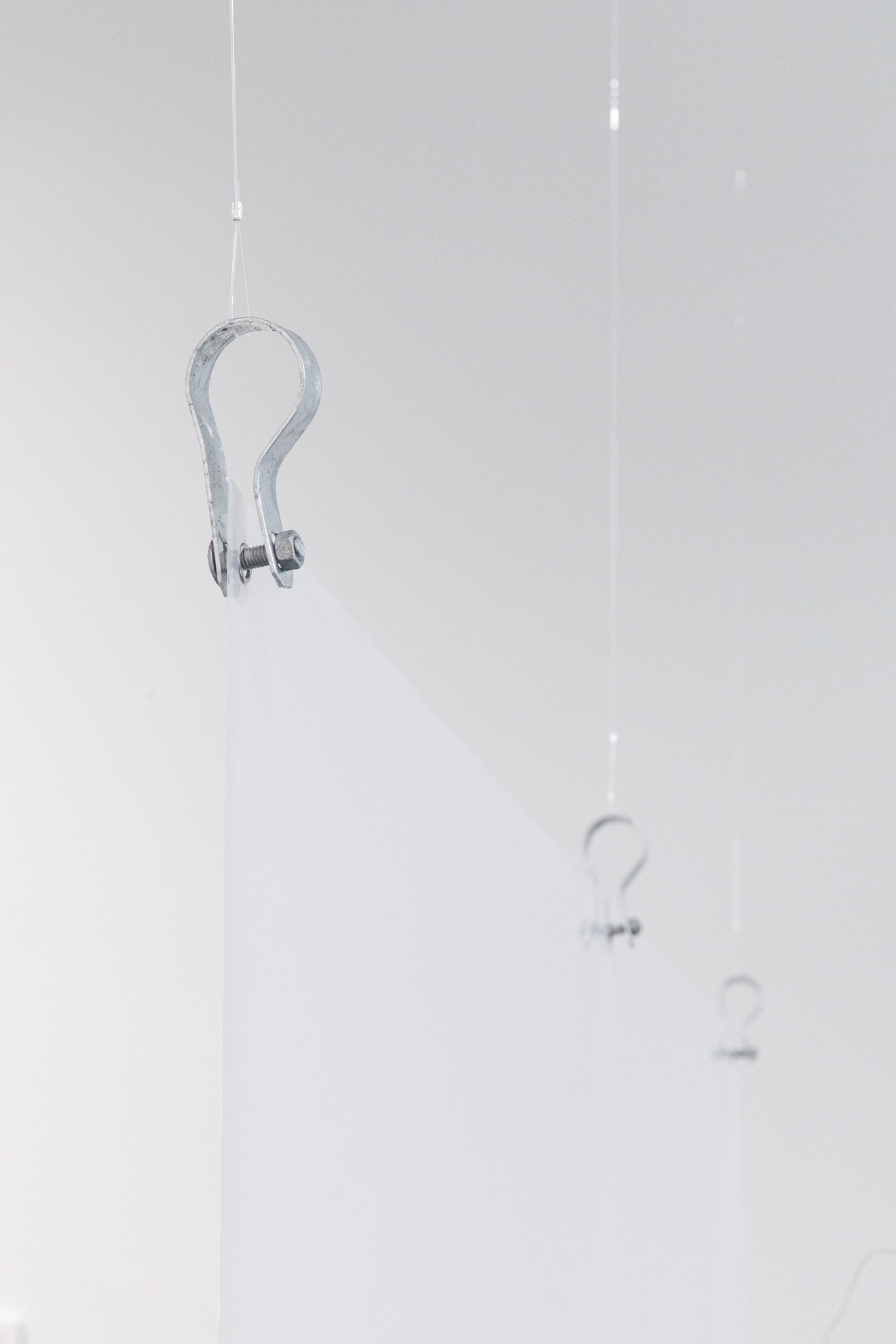
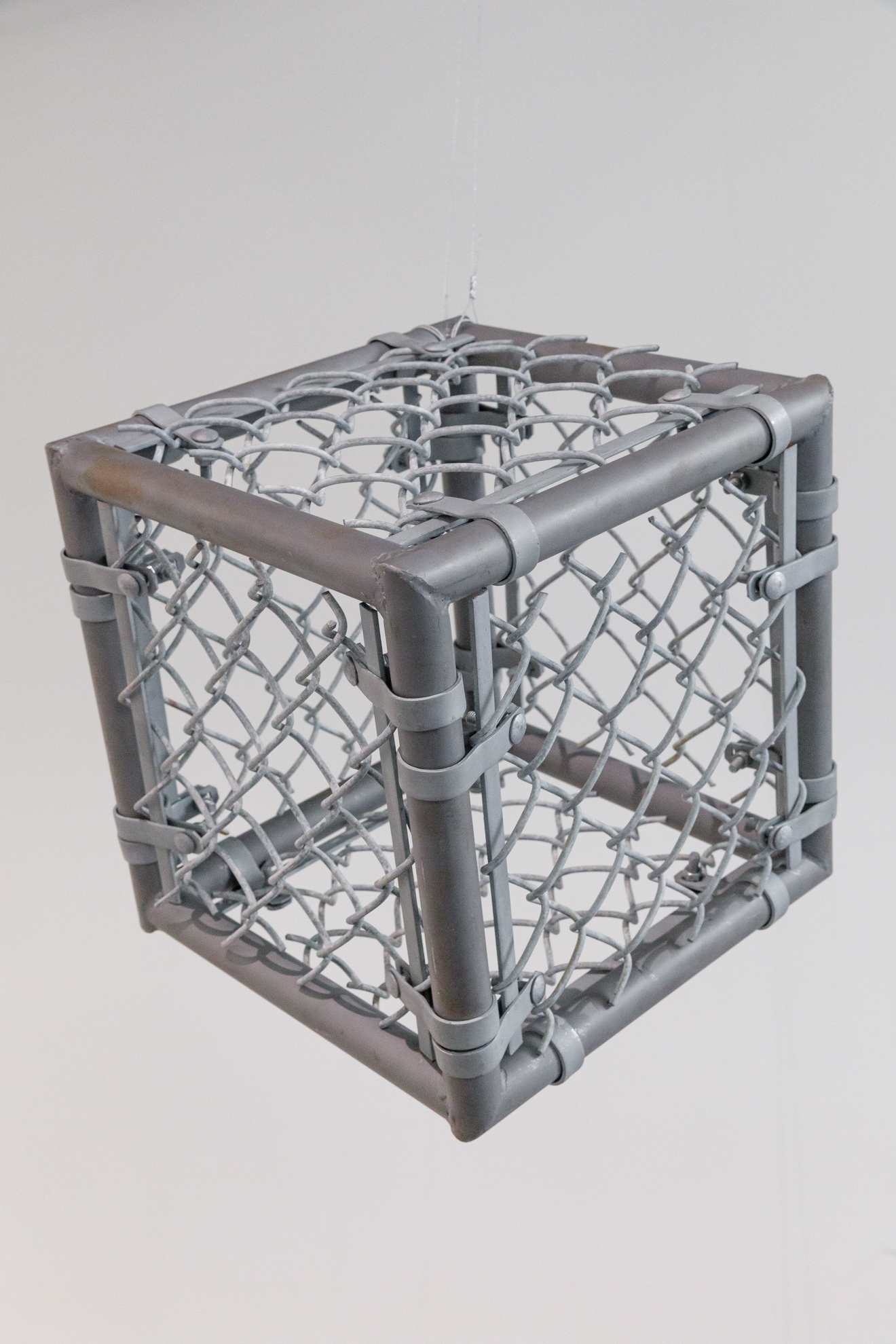
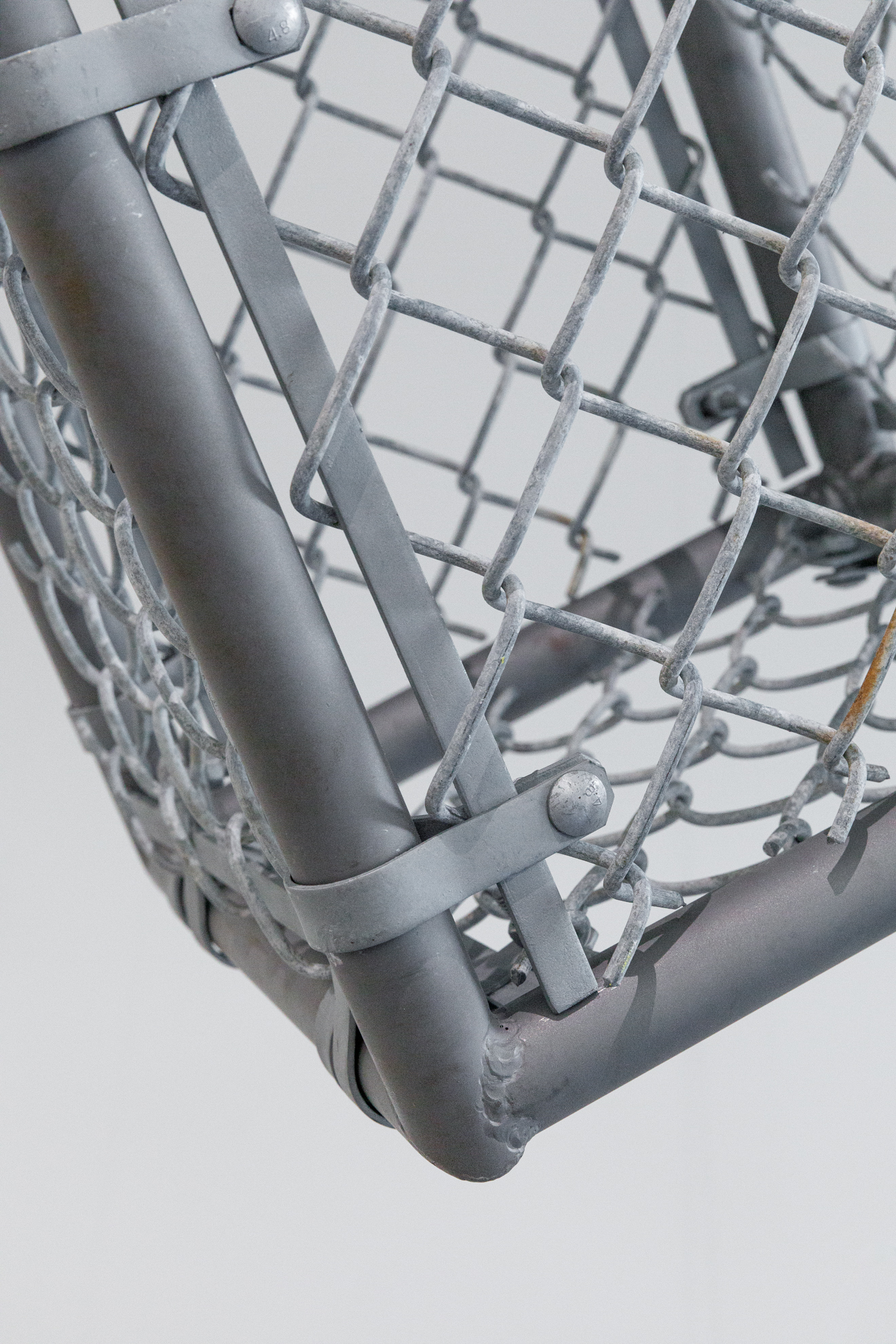
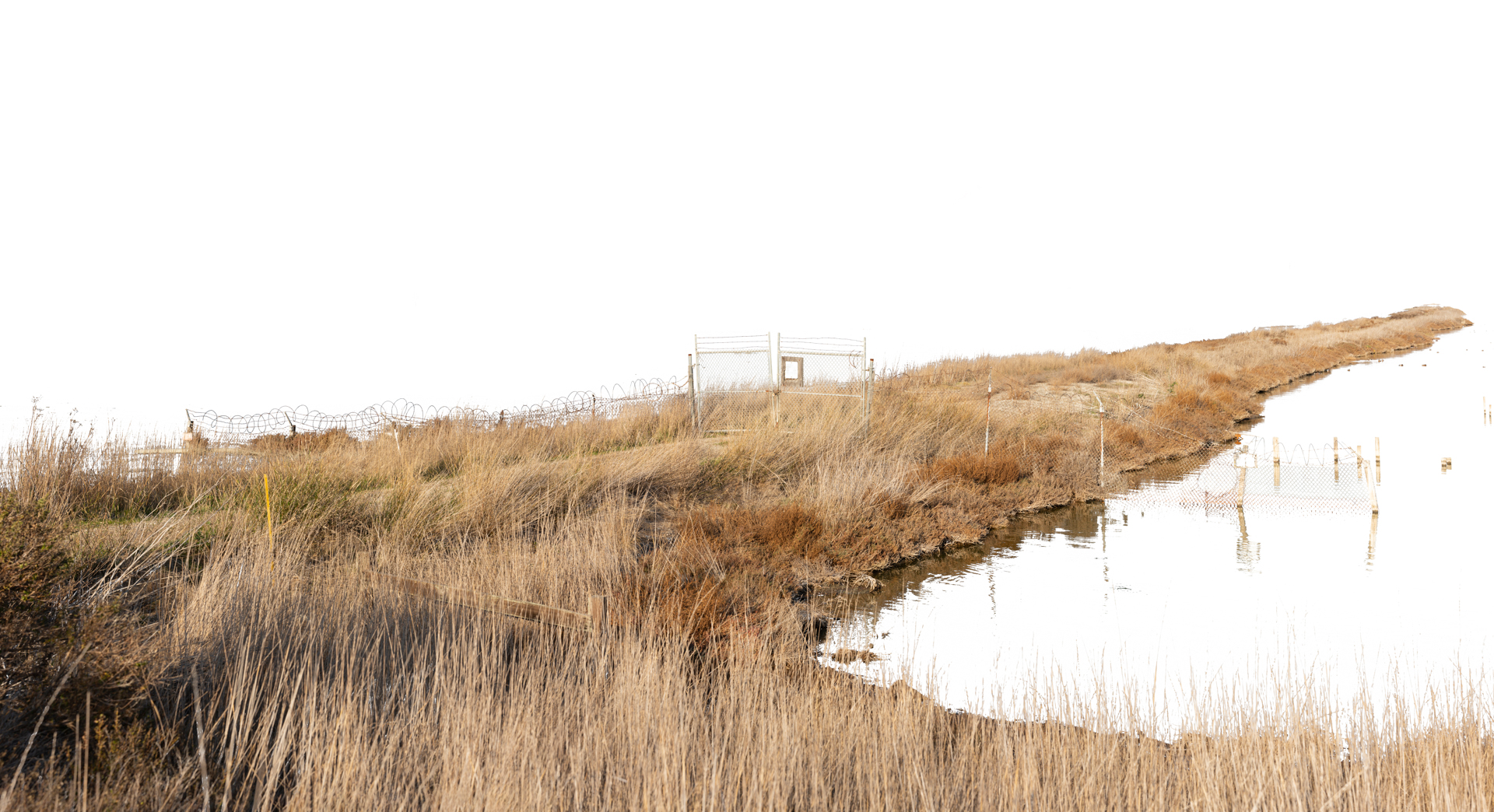
In contrast, the proliferation of private land ownership in the US, coupled with the regulatory role of the state and national parks, imposed an artificial limit on unimproved nature. The ubiquitous presence of chainlink fencing, a standard means of confinement and guidance for the human body in the landscape, piqued the artist's interest in exploring its symbolic and functional significance.